

 Get a Quote
Questions a 2K Injection Molding Supplier Should Answer About the Tool
Approving a two-material part does not mean its mold is ready to run on any two-component press. Before ordering tooling, ask a 2K injection molding supplier to connect the component design, mold movement and intended machine in one proposal. JY Pretech publishes dedicated two-shot molding configurations and supports both molded-part production and export tooling. The important first distinction is whether you are buying parts produced here or a tool that must operate at another factory.
That distinction changes the information needed before steel cutting. A parts order needs an agreed production route and delivered condition. An export mold also needs receiving-machine interfaces, accepted mold standards and a defined trial handoff. Our 2K molding service and export tooling capability address those connected but different requirements.
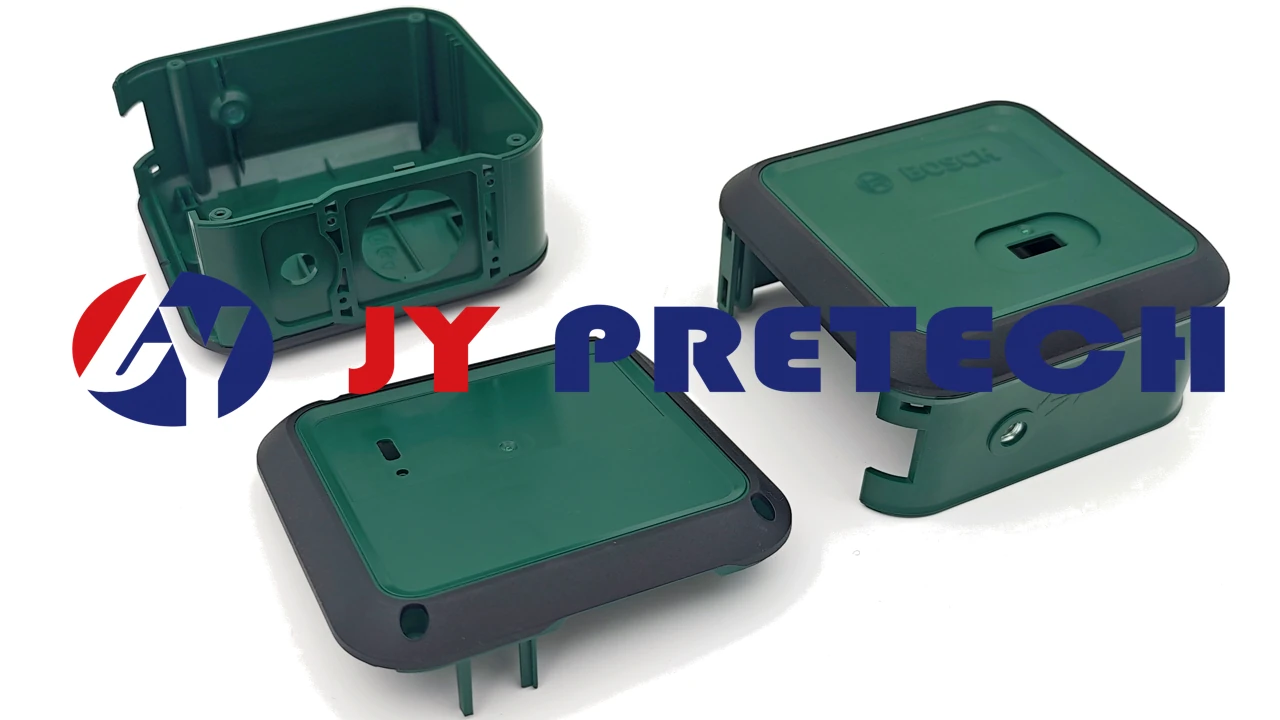
Ask the 2K injection molding supplier to walk through one complete cycle
In the process described by JY Pretech, two plastic materials are molded on the same specialized machine before the completed component is ejected. The tooling must manage both material stages and the movement between them. Our published guidance discusses accurate opening, closing and 180-degree rotation. The supplier should explain the proposed arrangement for your geometry rather than offer a general animation of two-shot molding.
First-shot retention determines what arrives at the second cavity
The first molded section has to be held and presented correctly for the second operation. Ask which surfaces locate it and which features remain supported. A thin wall around a connector opening may need a different arrangement from a thick handle core. Its position at the second stage influences both the soft-material boundary and the dimensions that remain available for assembly.
For a hypothetical instrument housing, the second material might sit around a hand-contact area beside a latch. The mold concept should show how the rigid section reaches that cavity without losing the reference that positions the latch. Describing the rotation angle alone does not answer the question. The drawing and the tooling section should make the intended locating relationship understandable.
Second-shot shutoffs must match the first shot’s actual shape
The steel boundary that contains the second material meets a molded substrate rather than an ideal CAD surface. Review where the tool closes against that substrate and which regions cannot tolerate flash. If a soft layer must stop beside a screw boss, the shutoff design belongs in the tool discussion before the appearance sample is approved.
Our DFM and sampling workflow includes review of wall thickness, draft, gates and parting lines. For 2K work, ask that the discussion identify which observations relate to the first shot and which relate to the second. A single undifferentiated drawing can hide the fact that the two stages impose different constraints.
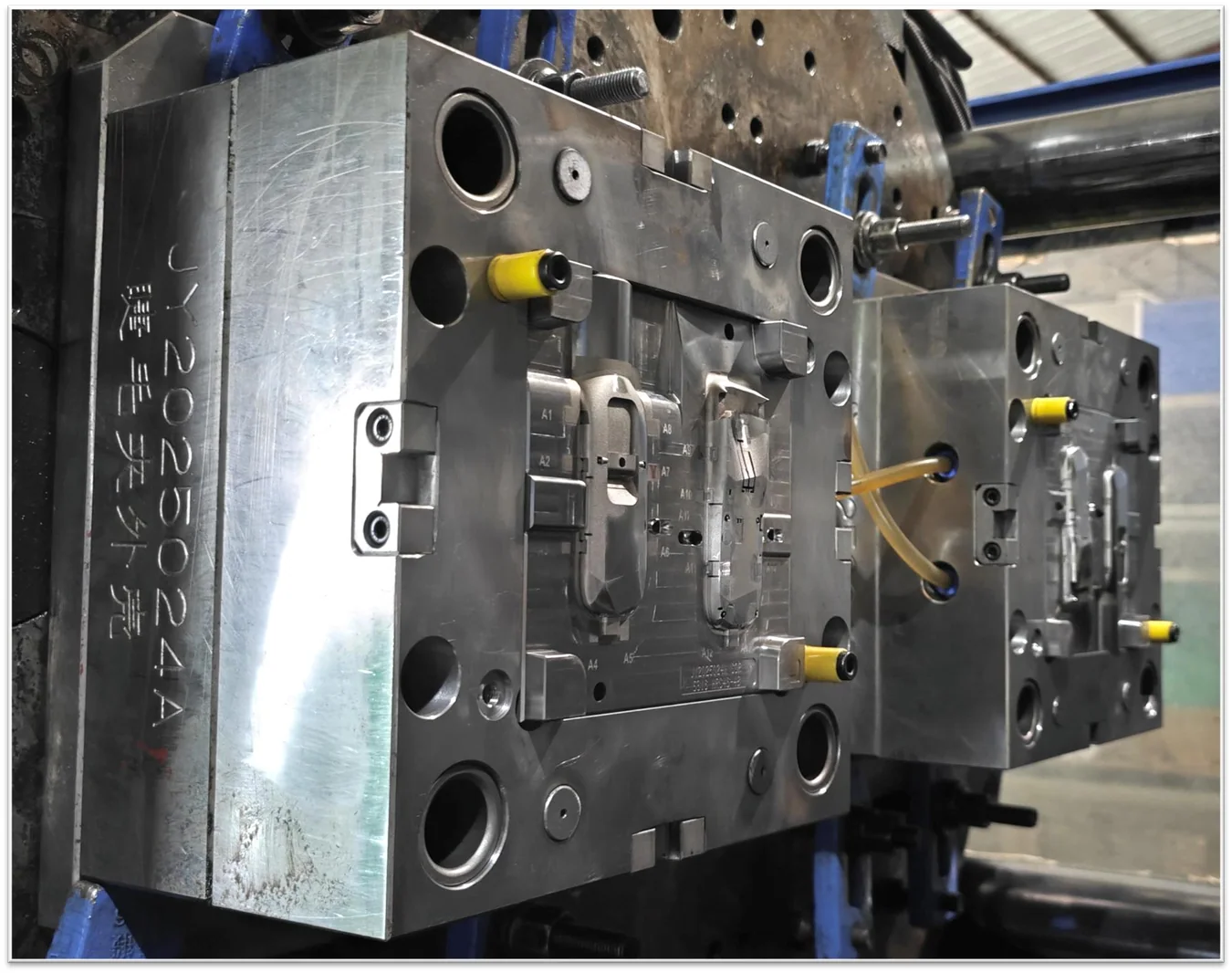
A published 2K machine list starts the compatibility review
JY Pretech’s two-shot service lists one 400T MULTIPLAS machine, one 268T Chen Hsong machine and three 250T HAITIAN machines. These are published equipment configurations, not a promise that a particular machine is currently free for your order. Their value to a buyer is that the tooling conversation can refer to an identifiable production platform rather than an unspecified “advanced machine.”
400T, 268T and 250T are not complete mold-interface specifications
Clamp tonnage does not by itself establish whether a tool fits a press or whether the proposed injection units suit the two shots. The review also needs the relevant machine and mold interface information, including the arrangement of the injection units, available installation space and the transfer mechanism. Have the tooling team identify what must be confirmed for the proposed platform.
Do not select a larger machine as a substitute for checking the smaller details. A material stage, locating feature or connection can still be incompatible even when the press has sufficient clamping capability. For an export tool, the receiving factory should provide its machine data before the design is frozen. Matching a brand name without matching the configuration is an incomplete approval.
PA, PBT, PC and PP require grade-specific process planning
Our two-shot range names PA, PBT, PC and PP as rigid material options and several TPE families for the second component. The two materials can have different preparation and processing requirements. The selected grades and their technical information should therefore accompany the mold design, particularly when they influence the permitted molding sequence or first-shot stability.
General producer guidance can inform the review. Avient’s processing guidance, for example, emphasizes the role of grade-specific preparation and substrate condition. Those principles are background for assessing a proposed pair; they are not a substitute for the data sheets of the materials actually specified in the JY Pretech order.
Decide whether the quotation buys a production tool or a manufacturing result
A hypothetical buyer ordering finished two-color housings may reasonably focus on approved samples, repeat order quantity, appearance and delivery. A second buyer exporting the same design’s mold needs a wider handoff because another plant will install, maintain and operate it. Both buyers need clear scope, but their acceptance evidence will differ.
| Decision at tool approval | Parts manufactured by JY Pretech | Tool transferred to another plant |
|---|---|---|
| Operating platform | Agreed local production configuration | Receiving-machine data and interfaces |
| Sample acceptance | Delivered-part requirements and agreed inspection | Part results plus agreed tool trial evidence |
| Tool standard | Project tooling specification | Customer standard and receiving-plant requirements |
| Later changes | Effect on the continuing parts order | Effect on tool design, installation and future maintenance |
JY Pretech lists DME, HASCO and other standards within its export tooling offering. A buyer should specify the applicable standard and any exceptions rather than write “export quality” in the order. The standard does not automatically define the receiving machine or every spare component. Those details should be resolved in the approved tool specification.
In the housing quotation, identify whether the price includes a two-shot trial demonstrating the latch relationship and material boundary, or a wider export-tool acceptance package. If the tool stays at JY Pretech, clarify which released two-material configuration a later parts order will use. If it ships, identify the receiving press and the interfaces the handoff must describe. These are different purchases even when the cavity produces the same housing.
Let order stability justify the integrated 2K route
Our service comparison distinguishes a specialized 2K tool from regular overmolding using a transferred substrate and generally two tool sets. The integrated approach can be attractive for repeat production because the material sequence is built around one production system. It also puts more responsibility into the original tooling concept. A design change affecting one material boundary can influence the complete cycle.
For a development program with unsettled grip geometry, rapid and prototype tooling may provide a different route to evaluating the component before committing to the longer production plan. That does not mean every two-material design can be validated with a simpler tool. It means the development question should be separated from the eventual production quantity.
The older 2K comparison includes a 5,000-piece minimum batch reference, while the broader site advertises no-minimum options for selected molding services. Obtain a project-specific quantity agreement. Do not apply a general low-volume statement to dedicated 2K production without confirming its commercial and technical conditions.
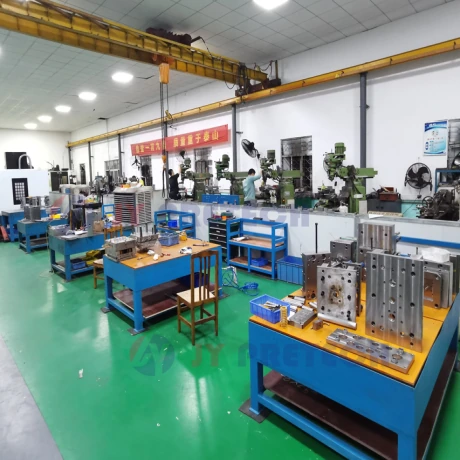
Use the first 2K trial to close specific tool questions
A trial should produce more than attractive samples. For the instrument housing, the useful evidence may include the position of the soft boundary relative to the latch, the stability of the first shot and the fit of the assembled halves. If material attachment is critical, agree the assessment method and sample condition before the trial. Avoid adding a new undefined test after the tool has been presented for approval.
JY Pretech’s broader manufacturing portfolio includes inspection, insert molding, overmolding and secondary operations. Bring any required printing, insert installation or joining into the trial scope when it can change the delivered part. An unfinished sample should not silently become the appearance reference for a decorated production component.
Distinguish an observation from its cause. Flash near a joint may involve shutoff geometry or substrate variation; a visible line between materials does not by itself prove weak attachment. The response should investigate the feature in relation to the tool and specified materials. Approving a cosmetic repair without understanding its effect on the joint can leave the original functional problem unresolved.
Keep agreed changes tied to a tool revision and part revision. If the customer moves a screw boss after the first trial, identify whether the change affects only the rigid cavity or also the second-shot boundary and movement. This is especially important for exported tooling, where the receiving plant needs to know which configuration the documentation represents.
Approve a 2K tool with the receiving team already in the conversation
A tool transfer needs an agreed boundary between trial and installation
For the exported 2K tool, establish who checks the proposed transfer movement and both material-feed arrangements at the receiving plant. A trial on a published 250T, 268T or 400T configuration should not be represented as proof of compatibility with a different press. The receiving engineer needs the intended platform information and the agreed trial conditions before deciding which installation questions remain open for the first local run.
The handoff drawings should describe the particular two-stage mold arrangement that was approved, including the relevant movement and machine interfaces. Identify any agreed spare components for that arrangement. A general mold drawing does not necessarily explain how the first-shot housing reaches the second cavity while preserving its latch reference. Resolve that information scope with the receiving engineer while the tool design can still respond to the production platform it will actually use.
Future color variants should be discussed before a common tool is promised
A purchasing team may expect several housing colors from the same 2K tool. The geometry may remain common, yet a new material or color formulation still deserves technical review. Identify which variants belong in the initial sampling scope and which will be treated as later changes. This prevents a single approved sample from being interpreted as approval for an entire untested material combination list.
The same reasoning applies to a soft grip offered at different hardnesses. Changing a label on a drawing does not establish that the new grade fills, attaches or releases in the same way. A supplier evaluation should therefore look for a defined change process rather than a blanket statement that all future variants are covered. Keep the commercial convenience of one tool separate from the evidence needed to qualify each delivered component.
Before shipment of an export mold, agree how exposed interfaces and loose components will be protected and identified for that particular tool. For finished housings, identify the appearance surfaces and material boundaries that packing must preserve. These are different delivery objects with different vulnerabilities. JY Pretech’s quotation should state the applicable arrangements, while the buyer’s acceptance record should make clear whether it refers to the tool, trial samples or continuing production parts.
For an export order, the receiving engineer should review the proposed interfaces and trial obligations before final approval. For local parts production, the buyer should understand which samples, materials and delivered operations define the continuing order. The same discipline makes a second production run easier to specify without pretending that a previous sample answers every later change.
Our article on tooling and molding as separate manufacturing activities is useful when dividing those responsibilities. Send the intended press information together with the two material specifications and the component drawing. A credible tool proposal should then show where the mold will run, how both shots reach their cavities and what evidence will establish that it is ready for your production arrangement.