

 Get a Quote
Choosing a Plastic Injection Mold Manufacturer Around the Part You Need
The cover looks right on the desk, yet its connector opening binds when the equipment is assembled. This is where choosing a plastic injection mold manufacturer becomes an engineering decision. A buyer needs a tool that can produce the intended component, in the approved material, with the interfaces and appearance the project actually requires. A photograph of a mold cannot establish those outcomes.
JY Pretech connects custom mold manufacturing, injection molding and project-specific finishing in Zhongshan, China. For an equipment developer, industrial purchaser or distributor ordering made-to-drawing parts, the useful starting point is our manufacturing capabilities together with the development-to-production process. Establish the part revision, resin, expected quantities and receiving arrangement before comparing tool prices. These inputs determine what the mold must do and what the first samples must prove.
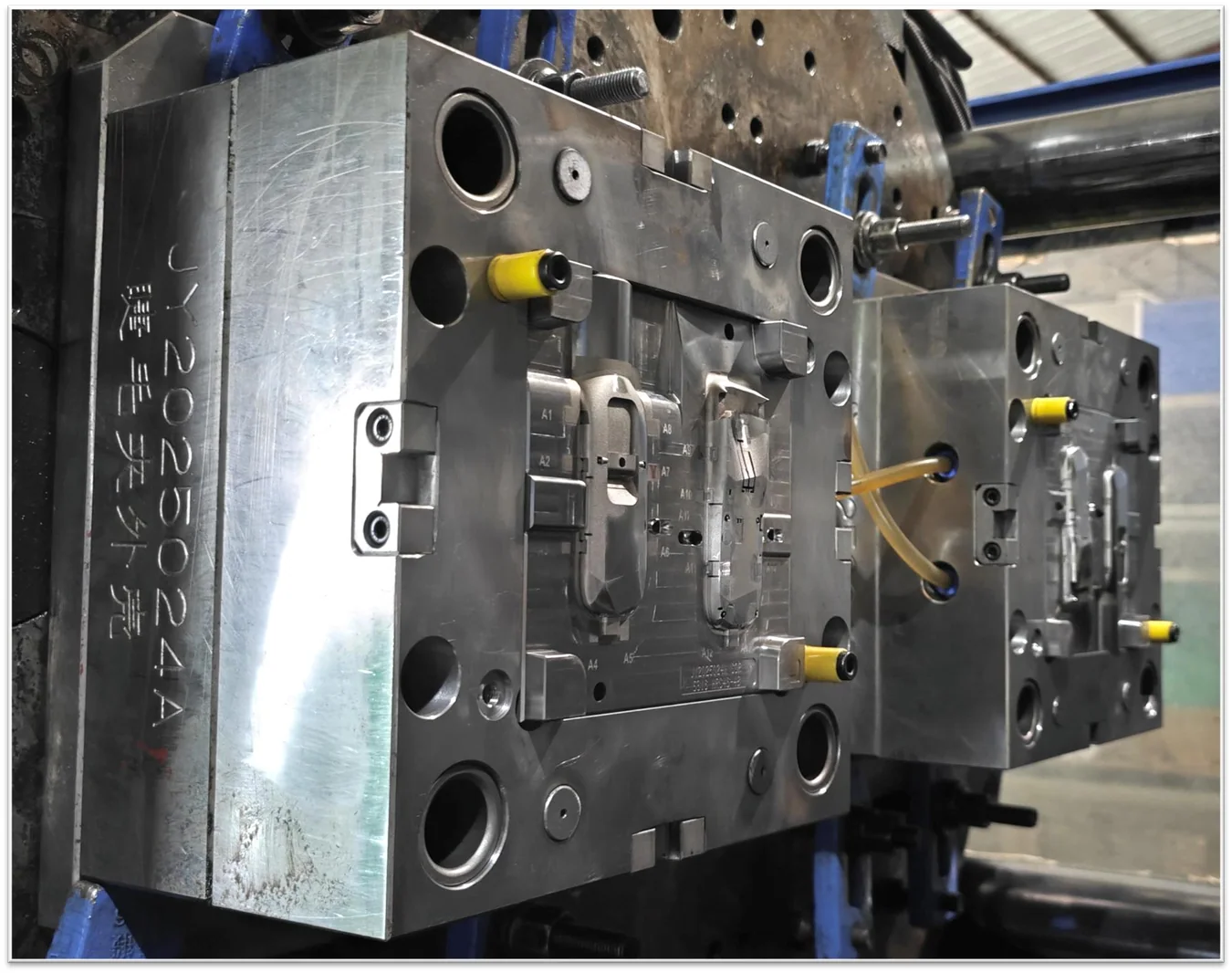
A plastic injection mold manufacturer should read the assembly before choosing the tool
A mold reproduces geometry through a material and a process. It therefore needs more information than the outside shape of a component. JY Pretech’s engineering review addresses parting lines, gating, draft, ejection and wall thickness. Discussing those features while the drawing can still change is more useful than discovering their consequences after the cosmetic surface has been approved.
Connector openings and mounting bosses need functional references
For an industrial enclosure, a connector opening may need to locate relative to the circuit-board mounts rather than to an attractive outside edge. Give the toolmaker the dimensioned drawing that expresses that relationship. A STEP or IGS model communicates the solid geometry; the drawing identifies critical dimensions, datums and acceptance conditions. A dimension that controls assembly deserves an explicit instruction rather than an assumption about general accuracy.
Consider a buyer ordering a pilot enclosure with a removable cover. If the cover is assessed alone, its mounting pattern may appear acceptable. The real test includes the mating body, fasteners and any inserted hardware. Identify which of these items JY Pretech supplies and which the buyer provides for evaluation. This turns sample approval into a decision about the intended assembly rather than an isolated plastic shape.
Gate positions and ejector marks affect the component you receive
A visible panel and an internal support do not place the same restrictions on molding marks. Mark cosmetic regions and forbidden gate or ejector locations on the drawing. Then review the manufacturing consequences with the moldmaker. Moving a gate away from a visible face can change filling conditions or tool complexity; an agreed location should satisfy the product’s function as well as its appearance.
Our published engineering material shows this type of parting-line and gating review. The mold manufacturing overview connects those decisions with later construction stages. For general background, the Protolabs design-for-moldability toolkit explains why draft, walls and tool access belong in early design discussions. Those principles help frame the review; they do not establish a universal tolerance or guaranteed result for a JY Pretech order.

Custom injection mold manufacturing can follow different development routes
A released production component and a changing development part should not automatically receive the same tool proposal. JY Pretech offers rapid and prototype tooling alongside mold manufacturing. The useful choice depends on the evidence needed from the next batch, the expected production program and the cost of modifying geometry that is still unsettled.
P20, H13 and aluminum tooling answer different project questions
The rapid-tooling service lists P20, C50 and H13 steels, with 7075 or 6061 aluminum considered for simpler applications. These are available discussion routes, not interchangeable specifications. Resin, surface requirements, geometry and intended use influence construction. An aluminum development tool may be worth reviewing for a suitable simple part, while another component needs a different steel or a more involved mechanism.
Suppose a product team wants actual molded parts before freezing a handheld housing. The grip shape remains open, but the mounting interface has been released. The proposal should identify which changes the chosen construction can accommodate and which would require new inserts or substantial work. Paying for a rapid tool does not mean every later change is inexpensive.
| What the buyer needs next | What to resolve with JY Pretech | What the next sample should demonstrate |
|---|---|---|
| Material and assembly validation | Development geometry and change-sensitive areas | Behavior of the intended molded configuration |
| A bridge production order | Demand assumptions and repeat-order requirements | Approved interfaces and repeatable finished condition |
| A mold for another molding plant | Receiving equipment and transfer documentation | Tool compatibility as well as acceptable parts |
For a buyer comparing these alternatives, distinguish initial tool expenditure from the whole project. Trial parts, inspection, modifications, finishing and eventual transfer can alter the decision. A lower tool quotation is meaningful only when the included scope and approval obligations are comparable.
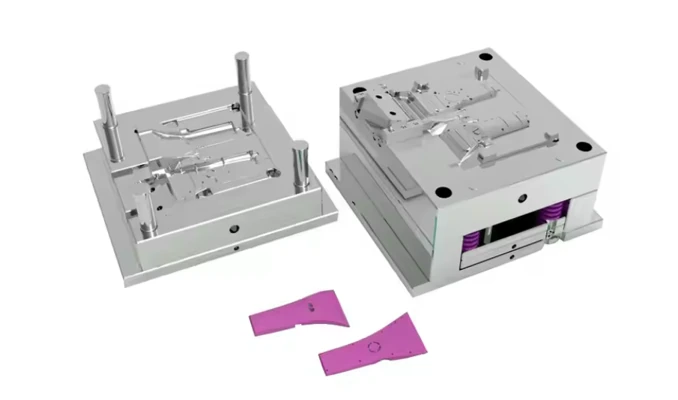
Undercuts can change how the enclosure is released from the mold
An internal latch may look like a small feature in the component model, but it can affect the tool’s opening and release arrangement. JY Pretech’s rapid-tooling information describes hand-loaded inserts for appropriate undercuts and hydraulic sliders for more involved features. A buyer should understand the proposed operation before deciding that two mold quotations represent the same solution. Manual handling, moving mechanisms and part release can produce different project tradeoffs.
For the pilot enclosure, a hand-loaded feature may be considered while the latch design is changing. If later demand makes handling a more significant concern, review whether the construction still suits the production program. That is a different question from whether the first molded sample fits. A short development run can establish useful component evidence without proving that the same operating arrangement is the preferred long-term production choice.
The same review should explain whether a two-plate or three-plate cold-runner arrangement is proposed and how the gate and runner will be separated from the supplied part. Our tooling service lists both arrangements and hot-runner trial options. The buyer does not need to prescribe a system without engineering support; the buyer does need to understand its effect on the part, the included work and the plant that will operate the mold.
Resist removing an undercut simply to make the quotation easier if that feature provides an essential assembly function. Instead, compare the consequences: a revised latch, a separate component, or a tool mechanism. Each changes a different part of the product and manufacturing plan. Give the moldmaker enough assembly context to explain those alternatives without assuming that a cheaper tool automatically creates a cheaper finished assembly.
Material and surface decisions belong in the mold manufacturing brief
Our portfolio includes conventional engineering plastics and high-performance polymers. A molded fitting, an instrument panel and a loaded gear face different operating conditions. Identify heat exposure, fluid contact, stiffness, appearance and the mating components before selecting the resin. A familiar polymer name alone does not settle the grade, color or processing requirements.
JY Pretech’s high-heat processing service covers projects involving materials such as PEEK, PPSU and PEI. Those options deserve review when the application calls for them. They should not become an automatic upgrade for an ordinary enclosure whose requirements can be met with another engineering resin. The buyer’s operating conditions should lead the comparison.
A polished clear cover needs a different surface agreement from a textured grip
A clear component draws attention to visible flow effects and surface condition; a textured housing may instead need a controlled appearance reference. JY Pretech lists polished, high-gloss and VDI or Mold-Tech texture options in its tooling material. Define the intended reference and the regions it applies to. “Good finish” does not identify whether the buyer expects a specific texture, an appearance sample or a protected viewing area.
Secondary work changes the delivered condition too. Printing, coating, laser marking or insert installation should be included in the review if they affect acceptance. A cover approved before decoration may not prove that its final artwork aligns with a connector opening. Approval should represent the component the next operation will receive.
For an enclosure that combines a rigid frame with a softer contact surface, JY Pretech also offers overmolding and two-shot molding. Ask whether the proposed manufacturing sequence requires a separately made substrate, how that substrate is located and which interface will be inspected. A drawing of the final outside shape does not communicate every requirement of the bond or mechanical retention between the materials.
This distinction matters when selecting the mold itself. A tool for the rigid substrate alone is a different delivery object from tooling and samples for the completed multimaterial part. If a buyer evaluates the first while expecting the second, neither the quoted scope nor the sample approval will answer the real purchasing question. State the supplied stage and intended material combination before comparing the construction proposals.
The published connector project makes the tooling scope concrete
JY Pretech’s medical connector tooling and molding project records a 1+1 family mold, S136 cavity and core material, PC identified as Lupilon S-3001R and an order of 1,000 parts. It also describes pad printing with customer-supplied ink. These are details of that documented project, rather than standard specifications promised for every connector.
The example is useful because it links tool construction, resin and downstream work. Its DFM discussion includes gating, parting lines, draft, ejection and wall thickness. The customer performs subsequent cleaning and sterilization. A purchaser should preserve that distinction: manufacturing a component used in a medical project does not establish device approval or make every downstream process the moldmaker’s responsibility.
A family mold also makes quantity definitions important. For a two-piece enclosure, does the order call for complete sets or individual components? Are trial quantities needed equally, and will replacement covers later be ordered separately? Those questions can influence how the molding program is evaluated. The mold arrangement should serve the actual demand rather than hide an imbalance between parts.
Approve molded samples, inspection scope and tool handover together
Our engineering and inspection approach describes dimensional checks and project-specific documentation. The company profile identifies 3D coordinate measurement and 2D projection equipment. The practical benefit comes from choosing a suitable method for the feature, not from listing equipment names. Define which dimensions require reports and how appearance or assembly is assessed.
For the enclosure example, a useful approval separates three questions. Does the molded cover meet its drawing? Does it fit the specified mating arrangement? Does the finished appearance match the agreed reference? These questions can require different evidence. A dimensional report cannot replace an application test, and a photograph cannot establish an internal dimensional relationship.
- Keep the release traceable: connect samples and reports to the approved drawing and material designation.
- Record unresolved changes: distinguish an accepted feature from one approved only for the pilot.
- Define the supplied condition: include required inserts, printing or coatings in the sample decision.
- Agree part protection: clear faces, thin projections and textured surfaces can require different handling arrangements.
Timing should follow the same specificity. Tool review, material availability, trials, buyer feedback and finishing all affect an order. JY Pretech’s rapid and production services provide different routes to discuss, but a confirmed project schedule must reflect its own scope. A general capability description should never be read as a fixed lead-time promise.
If the mold will leave the manufacturing site, extend approval to the receiving arrangement. Our export tooling and mold components service discusses DME, HASCO, MISUMI and project-specific requirements. Confirm machine interfaces, cooling, ejection and the documents needed by the plant that will run the tool. A mold is more valuable when that plant can understand and maintain it.
Return to the enclosure that bound at its connector. The useful purchasing decision is the one that resolves that interface, demonstrates it in the intended material and carries the approved definition into the next order. Give JY Pretech the current model, dimensioned drawing, resin requirement and the assembly problem that matters most. That creates a concrete basis for choosing the tool and judging the parts it produces.