

 Get a Quote
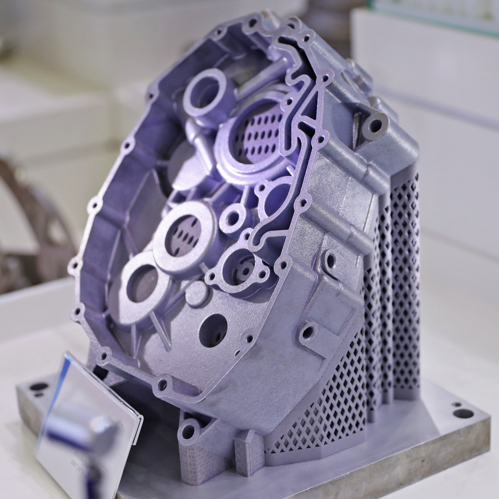
Metal 3D Printing + Post Machining
Combination of Metal 3D Printing and Post Machining make it more options for your precision parts. while the others only offer Metal 3D Printing with a +/-0.20mm tolerance, we could achieve a +/-0.02mm tolerance with perfect finish.
Metal 3D Printing + Post Machining Benefits
Enhanced Design Freedom
Combining metal 3D printing with post-machining offers unparalleled design flexibility. Complex geometries and internal structures, which are often challenging to achieve with traditional manufacturing, become feasible.
Improved Accuracy and Finish
Precision Machining: Post-machining ensures that parts meet stringent dimensional tolerances.
Surface Quality: Machining processes refine the surface finish, achieving the desired roughness and aesthetic.
Cost and Time Efficiency
Reduced Material Waste: 3D printing minimizes material usage, lowering costs.
Faster Turnaround: The combination of processes accelerates production timelines, reducing time-to-market.
Performance Optimization
Parts benefit from optimized material distribution and microstructures during printing, while machining enhances their functional performance and durability.
This combination leverages the strengths of both technologies, resulting in high-quality, precision-engineered metal parts.