

 Get a Quote
Export Injection Mold Manufacturer: Build for the Receiving Press
The tool has produced acceptable samples in China. Can the receiving plant install it, connect it, operate it and identify its service components without reconstructing the design? That is the central purchasing question for an export injection mold manufacturer. Part approval is essential, but an export mold also needs an agreed relationship with the equipment and people that will run it after delivery.
JY Pretech supplies custom tooling and mold components through its export tooling service. The website identifies DME, HASCO, MISUMI and project-specific requirements as discussion routes. An overseas buyer should begin with the receiving plant’s tool requirements, machine information and approved part definition. Our tool development process connects those inputs with design review, construction and trials.

An export injection mold manufacturer needs the receiving plant in the design review
A mold can be compatible with the maker’s trial equipment while still needing review for another press. Involve the receiving molding team before the tool layout is released. It should identify the relevant mounting, locating, nozzle, ejection and connection requirements. The buyer coordinating the purchase should not have to infer these details from the component model.
Platen mounting and locating features should be checked against the intended machine
For an industrial enclosure program, the receiving plant may already have a preferred press and installation practice. Provide the information needed to review the tool’s external envelope, mounting arrangement and locating interface. A press tonnage label alone does not define every physical interface. The actual machine requirements should be represented in the approved construction proposal.
JY Pretech’s company profile describes molding resources, but an export order should be evaluated around its destination rather than assuming that trial-machine compatibility settles the installation question. If the destination press changes during the project, review the affected interfaces. A receiving-machine change can matter even when the plastic component drawing remains identical.
Ejection stroke and coupling need an explicit handover definition
The mold’s ejection arrangement must work with the part and the receiving equipment. Identify the plant’s requirements and the mechanism proposed for the tool. A review of ejector marks on the component does not replace a review of how the equipment actuates and returns the ejection assembly. These are connected but distinct questions.
For a component with undercuts, the tool may also include a hand-loaded feature or a moving mechanism. JY Pretech’s tooling information describes hand-loaded inserts and hydraulic sliders among suitable project options. Explain the intended operating sequence to the receiving plant. It should understand the construction it will run, rather than discover an unexpected manual step after dispatch.
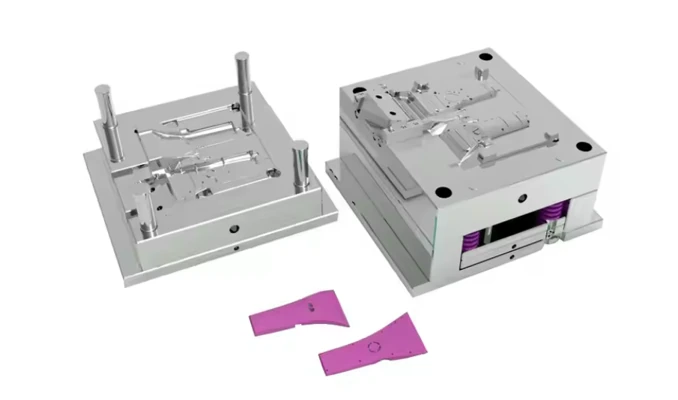
Export mold standards should define components, not replace interface review
DME, HASCO and MISUMI references can help establish recognized component conventions. The exact component, size, version and project requirement still matter. A general note that says “standard mold” does not identify the complete construction or guarantee interchangeability with every part already held by the receiving plant.
Metric and inch conventions should not be left to purchasing shorthand
A plant may maintain tooling built under more than one component system. Confirm which conventions apply to the new mold and identify any intentional exceptions. This matters for replacement hardware and maintenance as well as initial installation. A familiar supplier name should lead to a specific component reference or drawing, rather than an assumption that all dimensions will match existing stock.
The DME mold components range illustrates the breadth of standardized mold elements, including alignment, ejection and cooling categories. It is useful background for understanding why “components” is not one uniform item. It does not establish that JY Pretech uses every DME product or that a particular branded component is included without agreement.
For an export purchase, distinguish genuine specified catalog components from custom made-to-drawing items. Record the approved references and any alternatives. If availability requires a change, the receiving plant should be able to review its effect on fit and serviceability before that change becomes part of the delivered tool.
Custom cavity inserts need drawings that survive the first production team
A core or cavity insert can be accurately made yet difficult to replace if its identification and installed references are unclear. JY Pretech also supplies custom mold components. Agree which drawings and component records accompany the tool, including the relationships needed to manufacture or inspect a later replacement. Do not assume that a general mold assembly image provides every service dimension.
For a family mold, identify which insert belongs to which molded component or cavity position. A receiving plant maintaining several similar tools benefits from unambiguous identification. The aim is to preserve the approved configuration, not merely to deliver a box of parts that can be interpreted only by the original toolmaker.
Cooling and service access should be judged at the destination
Cooling interfaces deserve a practical review with the receiving molding team. Confirm the proposed connections, circuit identification and access in the installed condition. A hose or fitting that is convenient on a trial setup may need a different arrangement near another plant’s guarding, auxiliary equipment or mounting practice.
Cooling connections need both compatibility and usable access
For a plant running several molds on shared auxiliary equipment, identify the connection convention it expects before the mold is built. Ask whether the proposed arrangement can be reached and serviced after installation. The useful question is not simply whether a coolant connection exists, but whether the plant can connect and understand it in normal operation.
External component catalogs provide examples of different cooling fittings, manifolds and related elements. DME Europe’s component information is one such technical reference. Use it to frame the interface discussion, while keeping the actual connection selection and included hardware within the JY Pretech order definition.
Do not infer a guaranteed cycle time from the presence of cooling channels or a particular fitting. Part geometry, material, equipment and operating conditions affect the molding program. Any performance acceptance should be defined for the project and demonstrated under agreed conditions, rather than borrowed from a generic description of cooling technology.
A hot-runner proposal needs the receiving control arrangement identified
JY Pretech’s tooling information includes hot-runner trial options. If a hot-runner arrangement forms part of an export proposal, confirm the system and the receiving plant’s control requirements within the project. The quotation should make clear which hardware and information are supplied with the tool and which are provided at the destination. Do not leave an essential interface hidden behind a general note about mold construction.
For example, a buyer may plan to use existing auxiliary equipment at its molding partner. That plan needs an actual compatibility review; it should not depend on the assumption that all controllers and connections can be substituted freely. Ask the receiving technical team to review the proposed configuration and identify the information it needs to accept it. This is a buyer coordination task, not a claim about a particular controller brand used by JY Pretech.
Keep this decision connected to the approved tool design. If a component is substituted after the review, identify whether the receiving interface or service information changes. A successful trial at the toolmaker does not by itself demonstrate that the replacement arrangement is understood at the destination. The export release should describe the configuration that is actually being shipped.
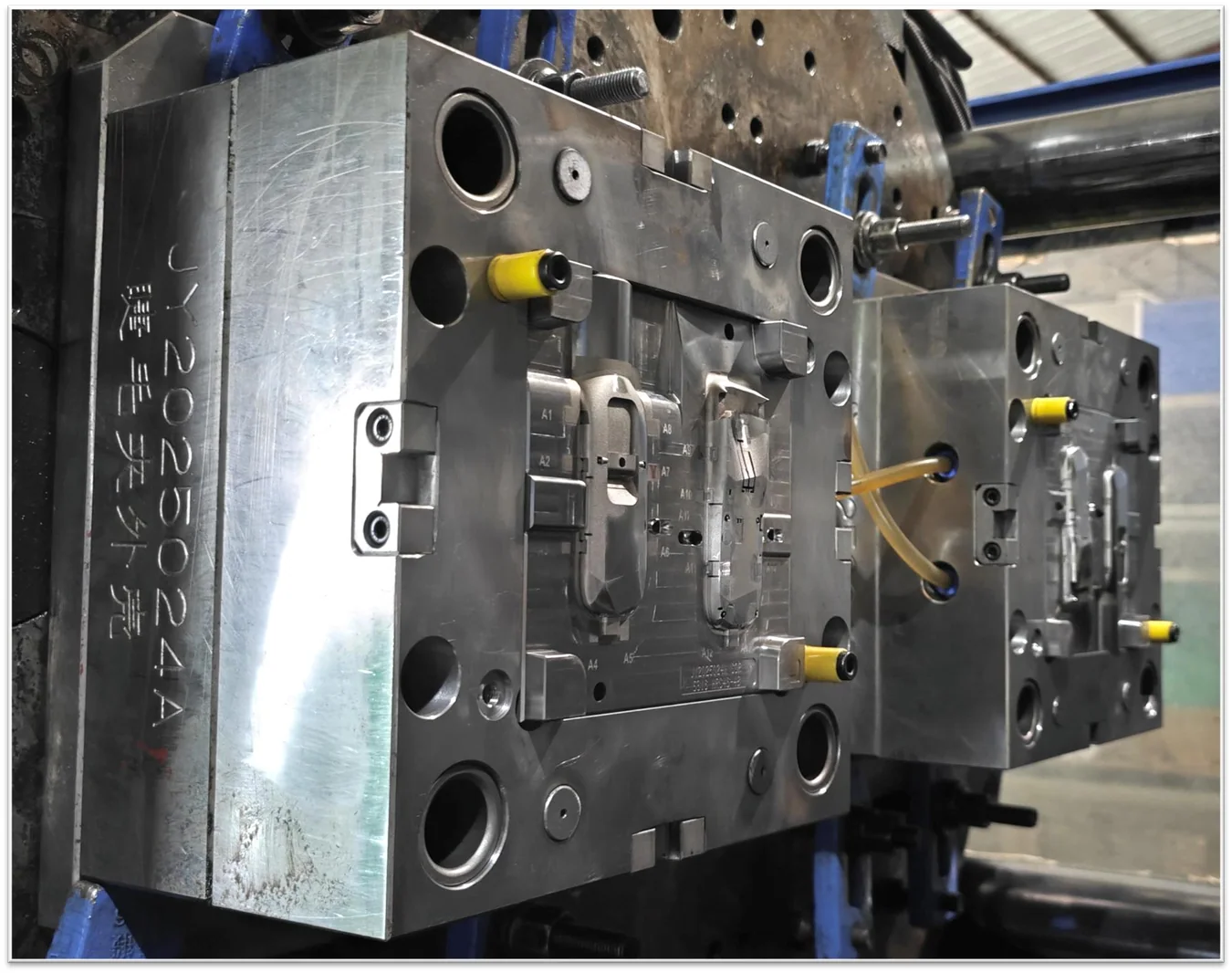
Separate molded-part acceptance from export-tool acceptance
A successful trial can provide important component evidence. It should also produce a clear record of what was evaluated. JY Pretech’s inspection approach includes dimensional review and project-specific documentation. Define the part revision, resin, finish condition and measurements relevant to acceptance. A trial in a substitute condition should be identified as such.
For a molded fitting, the customer may need to evaluate the mating arrangement or an application condition beyond dimensional checks. For a visible enclosure, the agreed appearance reference may be equally important. The export tool order should say how those results relate to permission to dispatch the mold. An early engineering approval may leave a later appearance issue open.
Part evidence: the agreed molded geometry, material, surface and inspection results.
Tool evidence: the approved construction, operating interfaces, identified components and agreed handover information.
A two-shot export tool needs the receiving process defined early
A multimaterial component introduces additional equipment and sequence questions. JY Pretech offers two-shot molding as well as other molding routes. If an exported tool is intended for that type of program, bring the receiving plant into the construction discussion before treating a final component model as a complete tooling brief.
The published two-shot project example provides context for the service. A new export mold still needs its own material combination, equipment arrangement and acceptance plan. Similar outside geometry does not establish that another plant can use the same operating sequence or that every multimaterial tool is interchangeable across presses.
A buyer coordinating a foreign molding plant should identify who approves the receiving-process arrangement. That decision should be visible alongside component approval. Otherwise, a tool can be accepted for producing a sample while the practical requirements for running it at the destination remain unresolved.
Agree the tool’s travel condition and the information that travels with it
The export package should be defined around the actual mold and any separately supplied components. Confirm protection, identification and the items included in the shipment. These are order-specific matters to review with JY Pretech. Neither the word “export” nor an overseas destination establishes a universal packing method, delivery term or documentation package.
Where parts are supplied separately, connect them to the tool identifier and their intended position. Where drawings or records are supplied electronically, identify the controlled version. A receiving engineer should be able to connect the shipped hardware, approved design and trial evidence without guessing which attachment supersedes another.
Documentation can include different things depending on the order: tool drawings, agreed component references, trial records, part inspection results or requested material information. Decide which are required and what each must contain. A broad request for “all documents” is less useful than a defined handover scope tied to installation, operation and maintenance.
On receipt, compare the shipment identification with that agreed scope before treating the delivery as an unexplained collection of hardware. If separately packed inserts or accessories are included, their identity should be traceable to the tool record. Establish the receiving plant’s installation and incoming-review responsibilities in advance, so a transport or identification issue can be distinguished from a tooling or molded-part issue.
If the buyer plans an initial production run at JY Pretech before transfer, distinguish that molding order from the tool delivery. Our prototype and bridge molding route can be relevant to an early batch, but the later transfer requirements should not remain an unspoken assumption. Identify the point at which responsibility passes to the receiving plant.
Review the export mold with the receiving team before dispatch
Our article about releasing a custom mold drawing examines the controlled files and approvals behind a tooling order. An export project adds a second practical test: can another plant interpret and use that released construction? The receiving team’s review should therefore be a planned project activity, not an installation surprise.
A useful pre-dispatch review brings the approved part definition, tool interfaces and handover scope into the same discussion. Ask the receiving plant to identify remaining installation questions while the toolmaker can still respond within the project. Keep unresolved items visible instead of treating acceptable samples as evidence that every transfer requirement has been settled.
For the tool that has already made good samples, the final purchasing decision is whether the agreed export scope is complete. JY Pretech can review that scope with the buyer and receiving team. Release dispatch when the physical tool, its identified components and the agreed records describe the same configuration that the destination is prepared to run.