

 Get a Quote
PPSU Molded Parts Supplier: Specify the Joint Before the Production Lot
Several black fittings can look like one product family while connecting to different equipment. For a distributor or industrial purchaser, that similarity creates a receiving problem long before a part reaches service. A PPSU molded parts supplier needs a controlled definition for each component, including its mating geometry and material. JY Pretech offers custom PPSU fitting manufacture through its high-heat molding range, supported by engineering review, tooling and inspection.
Use our PPSU processing service and component portfolio to begin the review. The priority is to connect each ordered part with the joint it must serve. Confirm the drawing, grade, counterpart and supplied condition before dividing the demand into purchase quantities. A family photograph or a broad product description cannot release several technically different fittings.
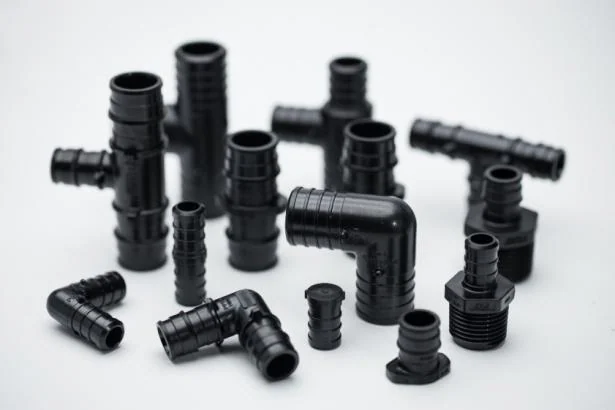
A PPSU molded parts supplier should receive a connection definition for every part number
JY Pretech’s fitting images show multiple shapes and connection arrangements. A purchaser should identify which geometry belongs to each application rather than treat external resemblance as interchangeability. The drawing needs to show the functional connection features and the references that locate them. The order then needs a clear relationship between that drawing and the part number used by purchasing.
For a newly developed fitting, send the STEP or IGS geometry with those drawing requirements. JY Pretech connects digital engineering review with in-house tooling processes including CNC machining, EDM and wire cutting. The advantage for a mixed fitting program is a consistent route from the defined connection to its mold and trial parts. Each geometry still needs its own approval; common manufacturing resources do not make the connections interchangeable.
Barbed connections should not be grouped by body size alone
A fitting body can be similar in overall size while its connection profile differs. For a hose interface, provide the relevant mating information and the assembly requirement. If the customer changes the hose or its retention arrangement, assess whether the fitting definition still applies. A routine replenishment request should not quietly introduce a different joint into an established component reference.
Imagine a distributor supplying replacement fittings for several industrial equipment models. The warehouse sees comparable black pieces, while the service engineer knows that one fits a different connection. The supplier’s manufacturing record and the distributor’s item record should preserve that distinction. It is much safer to identify the controlled geometry than to depend on a worker recognizing a small profile difference.
Sealing and locating surfaces need separate drawing instructions
A connection can include a surface that locates the part and another that participates in sealing. Identify their jobs rather than applying a general instruction to keep the entire fitting accurate. The relevant dimension may be a relationship between features rather than a single outside size. JY Pretech’s engineering review can then focus on the functional regions when considering gate, parting-line and ejection arrangements.
If a separate seal is involved, specify the mating information needed for the fitting review. Do not let a physical sample become the only explanation of how the joint should work. A sample is useful context, but the released drawing should define the target that can be reproduced for future orders. This is especially valuable when the customer’s original design owner is no longer involved in routine purchasing.
Keep the PPSU grade separate from color and commercial family names
PPSU is polyphenylsulfone. The polymer family is relevant to the material discussion, but a production order also needs the nominated grade and applicable documentation. Our materials directory includes PPSU alongside PEI, PEEK and conventional engineering plastics. Their availability gives the customer manufacturing options; it does not make the materials substitutes for the same connection.
Black appearance does not identify the polymer or the grade. For a replacement program, recover the accepted material definition instead of choosing a resin to match the old component’s color. If the grade is unknown, make that uncertainty explicit before tool development. The next sample should resolve a defined material decision rather than hide it under a broad purchasing description.
Material documentation should refer to the fitting that was actually released
Specify the material evidence required for the order and connect it with the approved component reference. A general resin brochure, a material record and a finished-part conformity document answer different questions. The document package should identify what it covers. A buyer should not interpret the existence of a producer’s application brochure as approval of every custom molded fitting.
Syensqo’s PPSU information provides useful background on the material family and the need to evaluate exposure conditions. Use current grade documentation for the actual application. If food-contact, drinking-water or medical requirements apply, identify the specific evidence needed rather than assuming that the term PPSU supplies it.
A mixed PPSU order needs a clear quantity basis
A fitting program may contain several custom geometries with different demand patterns. State the quantity for each released part number. If some pieces are intended for trials and others for accepted production, distinguish those purposes. The total number of parts in the shipment does not establish the engineering status of every item it contains.
| Receiving reference | What it should identify | Why it matters for PPSU fittings |
|---|---|---|
| Part number and drawing | The exact released connection geometry | Similar bodies can serve different mating arrangements |
| Material designation | The nominated PPSU grade and required evidence | Color alone does not establish material identity |
| Supply stage | Trial, finished production part or agreed intermediate condition | A sample for evaluation should not become ordinary replacement stock |
| Included operations | Molding plus any agreed machining, marking or assembly | The receiving team needs to know which work remains |
For a distributor managing several customers’ custom parts, preserve customer-specific drawing references as well. Do not consolidate similar fittings into a single item simply because they come from the same supplier and material family. JY Pretech manufactures against the defined requirement; the purchase record should make clear which requirement belongs to each delivered component.
The JY Pretech project process connects file review, manufacturing and inspection. In a mixed program, that process needs a clear release for each geometry. If one item is still under development, it should not delay or silently alter the definition of another item that has already been accepted.
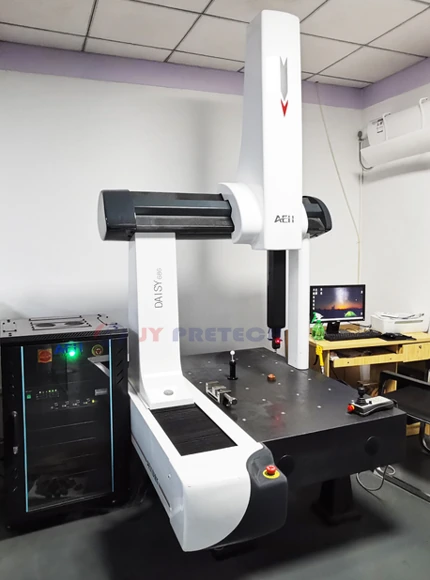
Choose PPSU fitting inspection around the connection feature
JY Pretech identifies 3D CMM and 2D projection among its inspection resources. Decide which features require records and which method can address them. An overall body measurement may be useful for packaging or clearance, but it may not establish the connection’s functional geometry. The drawing should identify the relationship the customer needs to accept.
A visual fitting sample cannot replace the dimensional release
A well-presented sample helps discuss appearance, but the critical connection details should remain in the drawing and inspection instruction. If a visible molding mark is permitted on the body but not on a joint region, identify that distinction. Our DFM and inspection approach is most useful when the team knows which surfaces can tolerate a manufacturing witness and which cannot.
For an order transferring from another supplier, separate a historical sample from the new manufacturing target. The sample might contain wear, an obsolete feature or a later modification. A buyer should explain any disagreement with the released drawing before tooling. The purpose is to reproduce the accepted component, not every incidental detail of an old physical object.
A fitting’s operating capability is a further question. If the customer requires a joint test, define its conditions and responsibility. A dimensional result establishes what was measured on the component; it is not automatically a pressure or leakage rating for the assembly. Keeping those records distinct gives the purchaser a clearer acceptance package.
Confirm secondary operations on the PPSU part before comparing supply offers
Our finishing offering includes operations such as marking and assembly-related work. Where a fitting requires a secondary operation, identify the final supplied condition in the quotation. A bare molding and a component after machining or marking are different deliverables, even when both are described commercially as the same PPSU fitting.
If a mark identifies a connection version, place it where it will remain useful without interfering with the functional region. If a later operation changes a controlled feature, specify when that feature will be inspected. The receiving team should not have to guess whether an apparently unfinished detail is intentional or represents missing work.

Release repeat PPSU supply without losing the accepted joint definition
A returned PPSU fitting should be compared with its released counterpart
If a service customer reports that a fitting no longer mates correctly, retain the returned piece, the controlled drawing and the relevant mating information. Those three references answer different questions. The returned part shows its present condition; the drawing defines the intended component; the counterpart shows the interface involved. Sending only the returned fitting with an instruction to improve it can leave the manufacturer solving the wrong problem.
For a hose connection, the customer should also establish whether the hose and assembly procedure match the released application. If the counterpart has changed, a new molding made exactly to the old drawing may not remove the problem. JY Pretech can review the fitting’s manufacturing definition and any proposed geometry change, while the equipment owner identifies the configuration that needs to work in service.
The same approach helps when a distributor receives mixed or unlabeled returns. Separate pieces by a verified component reference before using them as manufacturing samples. An unidentified fitting might belong to an obsolete product version or a different customer’s assembly. A reliable return review should recover that identity rather than use a convenient look-alike as the pattern for the next batch.
A new cleaning process can change the meaning of an unchanged PPSU order
A repeat purchase may retain the same drawing while the industrial user changes its cleaning fluid or exposure sequence. Bring that application change back into the material review. The resin family may remain PPSU, but the relevant operating assumptions have changed. The manufacturing supplier should receive the updated conditions instead of being expected to infer them from a routine order number.
This is especially relevant to distributors supplying several end users from similar-looking fitting families. Preserve the intended application information where it affects the agreed component specification. If a customer asks to substitute a fitting from another program, review its geometry, grade and required documentation before accepting equivalence. Consolidating stock is useful only when the controlled requirements actually match.
For repeat orders, refer to the accepted drawing and material rather than an informal request for the same black fitting. If the mating component or operating conditions change, bring that information back into the review. A correctly manufactured repeat part may still be unsuitable for an application that has changed since the original release.
For a development order, preserve the identity of each trial version. A customer evaluating a revised connection should be able to distinguish it from the earlier geometry before assembly. This helps both teams interpret feedback and decide whether the next action concerns the fitting design, tool development or the application itself.
Packing should follow the actual connection features and delivery scope. Discuss how projecting details and sealing regions will be protected, and how similar part numbers will remain distinguishable after receipt. The method should be agreed for those parts, not inferred from another product’s packing photograph or from a generic shipping statement.
Our article on PPSU fitting development addresses the engineering stage behind the component. For a supplier release, put the accepted joint, material and finished condition into one clear reference. That lets JY Pretech make the defined part and lets your receiving team identify it for the equipment where it belongs.