

 Get a Quote
Prototype Injection Mold Manufacturer Decisions Before the First Material Trial
The printed housing clips together, the electronics fit and the development team is ready to order molded samples. Three questions remain: will the intended resin behave as expected, can the latch be molded and released, and which dimensions are ready to freeze? These are useful reasons to involve a prototype injection mold manufacturer. The next tool should answer defined development questions rather than simply repeat the shape of the prototype.
JY Pretech offers prototype tooling and molding for projects moving toward actual molded components. Start with the current model, a dimensioned drawing, the intended material and the purpose of the trial. Our project development route connects that information with DFM, tool construction, sampling and inspection. It suits teams that need evidence from a molding process while acknowledging that part of the product may still change.
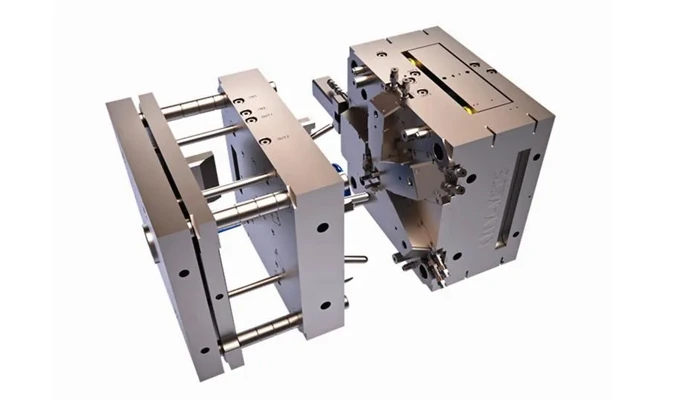
Ask the prototype injection mold manufacturer to resolve a specific uncertainty
A prototype order can serve several purposes, but they should be named separately. A housing may need an assembly evaluation in the intended resin, a fitting may need application testing by the customer, or an industrial panel may need an appearance sample. These are different trial objectives. A tool that provides useful geometry evidence does not automatically validate every material, finish or operating condition.
A printed enclosure does not prove production-resin behavior
A printed or machined development part can help establish space, access and a general interface. Injection molding introduces another route to the finished geometry. Filling, cooling and ejection need to be reviewed for the actual part. When an engineer moves from a printed housing to a molded one, the manufacturing discussion should consider its walls, bosses, ribs and release arrangement together.
For the controller example, tell JY Pretech whether the next samples will be used for connector fit, fastening trials or a customer demonstration. If the demonstration also requires finished color and markings, include those operations. If the goal is engineering access only, distinguish that limited approval from permission to reproduce the final visible product.
A changing latch deserves a different tool decision from a released mounting pattern
Not every feature has the same development status. The mounting arrangement may be fixed because it matches existing equipment, while a latch is still being refined for service access. Identify those two conditions on the model or drawing. This gives the toolmaker a basis for reviewing construction around the features most likely to change.
JY Pretech’s rapid tooling material describes hand-loaded inserts for appropriate undercuts and hydraulic sliders where the geometry requires them. Neither is a default answer for every latch. Review the operating sequence, the expected trial quantities and the consequences of a change. A prototype tool can be valuable without being the final preferred production arrangement.

Prototype injection mold construction should match the next development step
The most useful construction is the one that produces appropriate evidence at the project’s present stage. JY Pretech’s published options include P20, C50 and H13 steels, with 7075 and 6061 aluminum considered for suitable simpler parts. Those options should be reviewed against the resin, geometry, finish, quantity and expected changes, rather than selected from the material name alone.
7075 or 6061 aluminum is an option to evaluate, not a universal shortcut
An uncomplicated development component may justify reviewing aluminum tooling. A different component may have surface, wear or construction requirements that favor another route. The buyer should ask what the proposed tool is intended to support and which assumptions underlie it. A low initial tooling cost is not a useful comparison if it excludes the changes or trial scope the team expects.
Suppose a team expects one pilot assembly exercise but has not approved the external grip. Its decision should account for the uncertainty around the grip region, not just the number of samples in the first purchase order. If a redesign would alter the parting arrangement or a deep internal feature, discuss that possibility before treating the initial tool as a reusable platform for every future version.
P20 and H13 proposals need a geometry and material explanation
Steel names alone do not explain why a tool suits a development program. Ask JY Pretech to connect the proposed construction to the component’s resin, release features and intended program. Any heat-treatment requirement, surface condition or change provision should be identified in the scope. Do not assume that specifying a steel automatically defines the entire tool’s performance.
The same principle applies to a polished component. JY Pretech also identifies NAK80 and 718H among tooling options for high-gloss work. Discuss the actual visible regions and their acceptance references. A high-gloss appearance decision involves the molded surface and the chosen material, rather than a tool-steel designation considered in isolation.
For a prototype order, “what must we learn?” is a more useful first question than “which tool is cheapest?”
Choose a material trial that represents the intended component
The material information on our website provides routes for engineering thermoplastics and more demanding polymers. Define the intended grade where it is known. If material selection is still open, state the operating exposure and which comparison the trial should support. A sample in a convenient substitute material may answer geometry questions without representing the final component’s behavior.
For a fluid-handling fitting, the buyer may need to assess its mating arrangement and subsequent cleaning conditions. For a controller cover, the decision may involve appearance, toughness and the fastening interface. The required trial should follow those differences. Do not treat a successful appearance sample as evidence about chemical compatibility or a successful assembly as proof of every temperature condition.
PEEK, PPSU and PEI trials need their own approval boundaries
JY Pretech’s high-heat material processing includes PEEK, PPSU and PEI routes. Those materials may be relevant when the operating conditions justify them. A development trial should identify the exact material decision it addresses and the application checks that remain with the customer. No prototype molding order should be read as automatic approval for a regulated or safety-critical end use.
Our published PEI component discussion provides context for a technical material project. It is a reference to review, not a substitute for the new component’s requirements. Similar material families can be used in very different geometries and operating conditions, so a previous example cannot establish suitability for a new application.
Our article on PEEK molding considerations provides additional context when that polymer is involved. For general development logic, Protolabs’ designing-for-mouldability guide discusses molding-oriented design and the transition from development to production. Use external technical guidance to understand the process questions. Keep the actual JY Pretech material, construction and acceptance commitments within the agreed project scope.
Make the prototype sample useful to the team receiving it
A trial quantity should be linked to a practical evaluation plan. An assembly team may need complete enclosure sets; a material team may need specific specimens or components; a marketing review may need a finished appearance. State these needs before the samples are produced. The toolmaker cannot infer the intended test program from a quantity alone.
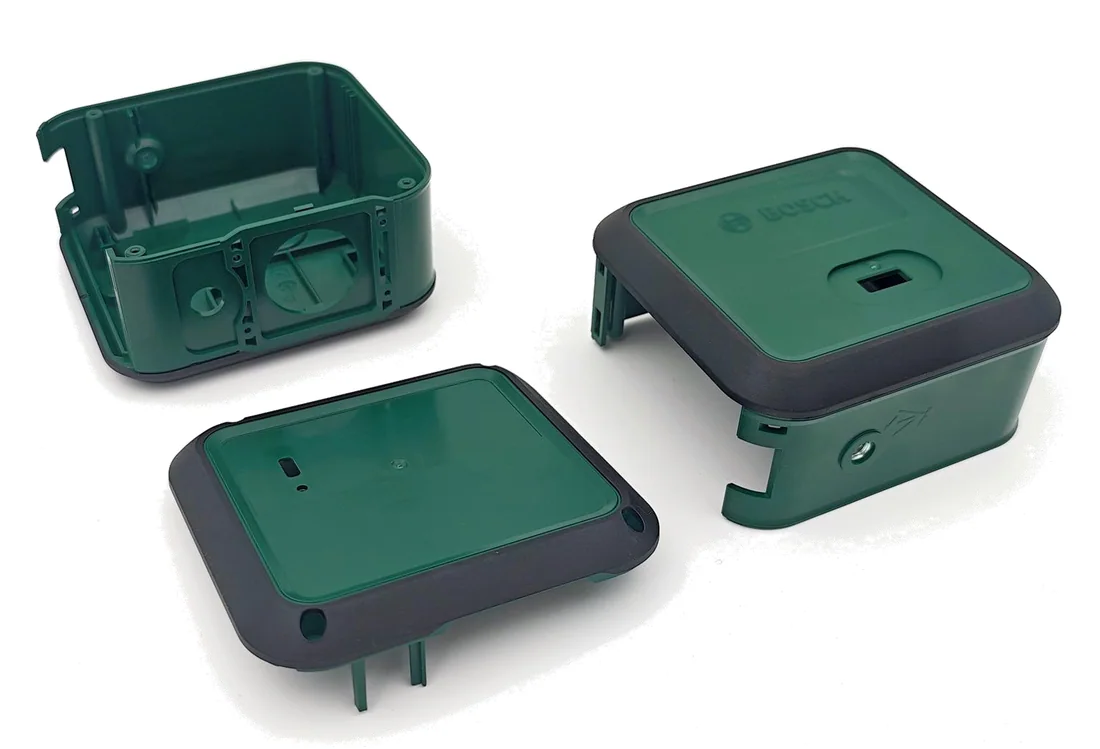
Family-mold quantities should distinguish pieces from sets
If the trial includes a cover and a base, specify the quantity of each. A family mold and a single-component mold can create different quantity and identification questions. JY Pretech’s documented PC connector project uses a 1+1 family mold, illustrating why the component arrangement should be stated explicitly. Your project still needs its own construction and sampling definition.
Keep each prototype revision identifiable when parts are sent to different evaluators. A cover from one geometry should not accidentally be paired with a base intended for another. If development parts are deliberately supplied before a remaining correction, record that limitation with the samples. Otherwise, an early compromise can become an unrecognized acceptance reference for the next order.
Where appearance matters, establish which surfaces are approved for evaluation. A prototype may be assessed before final texture, printing or coating is added. That can be a sensible staged approach, but it should be explicit. A later finish can change the way a visible joint or reference mark is judged and may require a separate finished-component approval.
Keep latch, color and material experiments from becoming one ambiguous trial
A development team can lose useful evidence by changing several conditions at once without recording them. For the controller cover, separate the reason for each sample group. This is a planning recommendation for the buyer’s trial, rather than a claim that any particular test has already been performed by JY Pretech.
- Mounting evaluation: identify the released boss pattern and the mating equipment. Use the samples to assess that interface, and record any deliberate departure from the intended final material or finish.
- Latch evaluation: identify the revised engagement geometry and the service action being assessed. Do not mix these pieces with an earlier latch revision and then attribute the difference only to molding.
- Appearance evaluation: state the material color and the finish condition being reviewed. Keep a bare engineering trial distinct from a later textured, coated or printed sample that represents the visible product.
- Next-order decision: record which combination is accepted. An approved color from one sample and an approved latch from another should not silently create an untested final configuration.
The advantage of discussing these groups with a manufacturer that offers tooling, molding and finishing is practical: the relationship between a tool change and the next supplied component can be reviewed within one project. JY Pretech’s scope still needs to identify the exact work included. A coordinated route provides a place to resolve those dependencies; it should not be interpreted as an unlimited development program or automatic validation of the end product.
Use the first trial to decide what happens to the tool next
After sampling, compare results with the questions defined at the start. Which mounting relationship was demonstrated? Which latch feature requires a change? Was the intended resin evaluated, or was the trial limited to a temporary material? A useful trial report makes those distinctions clear enough for the next engineering and purchasing decision.
Our measurement and engineering approach includes project-specific dimensional review. Agree the dimensions and methods needed for the trial rather than ordering an undefined “full report.” If fit depends on a mating item, decide whether the buyer supplies it or whether a suitable fixture and acceptance method must be established.
There are several possible next steps. The current tool may support an additional trial after a defined change. It may be suitable to discuss as a bridge route while demand develops. Alternatively, the trial may demonstrate that a different construction or geometry is justified. The right decision follows the evidence, rather than an assumption that the prototype tool must become the production tool.
JY Pretech can review those next-stage options through its tooling and molding capabilities. Identify the remaining product changes, the expected production quantities and the inspection or finishing scope. A program that now needs repeated decorated enclosure sets can present a different manufacturing question from the original bare-part trial.
Protect the trial evidence as carefully as the tool. Retain the accepted revision, material designation, relevant samples and outstanding decisions. If another team later takes over the project, it should be able to distinguish demonstrated performance from an assumption. This is especially important when a successful assembly trial creates enthusiasm to move directly into a larger order.
For the printed housing at the beginning, the next release should state three things plainly: the mounting arrangement that must remain fixed, the latch question the trial must resolve and the intended resin condition. With those decisions visible, JY Pretech can review a prototype mold around a concrete development task. The value of the order is the uncertainty it removes before the next commitment.