

 Get a Quote
A Sheet Metal Fabrication Supplier Should Quote the Whole Formed Component
A purchasing team receives a competitive price for a laser-cut blank, then discovers that the equipment order needs a bent, joined and finished housing. The apparent saving did not include the same deliverable. When choosing a sheet metal fabrication supplier, compare the completed component your next operation needs. Establish the material, formed geometry and included operations before treating the prices as alternatives.
JY Pretech’s sheet fabrication service describes cutting, punching, bending, joining and finishing discussions for custom prototypes and small batches. Its capability overview places sheet work alongside other component routes. Use the actual housing drawing to decide which operations belong in the order and which remain with the buyer.

What is the sheet metal fabrication supplier actually pricing?
A useful proposal identifies the object at delivery. It might be a flat blank, a formed loose panel or a completed enclosure. Those can all be legitimate purchases, but their prices answer different questions. A drawing package should make the requested endpoint obvious instead of relying on a short description such as custom metal housing.
| Quoted endpoint | Work still needing a clear owner | Decision for the housing buyer |
|---|---|---|
| Cut blank | Bending, joining, relevant edge work and final finish | Does the buyer have an agreed downstream route? |
| Formed panel | Any required joining, hardware installation or surface operation | Can the panel enter the planned assembly as supplied? |
| Joined enclosure | Final appearance, interface checks and any excluded internal assembly | Does acceptance describe the completed enclosure? |
| Finished component | Only the explicitly excluded receiving operations | Are final fit and appearance requirements included? |
Do not assume that each row is a standard JY Pretech package. They are ways to define the order boundary. The accepted proposal should state the actual included work for the drawing revision and quantity, including any operation that purchasing otherwise expects another team to complete.
A cut housing outline does not include a bent housing by implication
For a housing with two sidewalls and a return flange, show the final formed view as well as relevant dimensions. If the order asks only for the blank, make that intentional. If it asks for the formed item, the price should address the bending route rather than leave it outside a quotation that appears to describe the whole part.
A distributor supplying custom components to an equipment customer should resolve this distinction before confirming its own order. The customer may have no capacity to receive blanks and complete forming. A low upstream figure then creates a downstream supply problem, rather than a saving that can be passed through.
Cutting, punching and bending solve different housing requirements
JY Pretech’s sheet information discusses laser cutting and punching for material removal, and V, U and channel shapes within bending. These process families should be reviewed against the geometry. A buyer need not prescribe every machine action, but it should define the hole pattern, edges and formed relationships the accepted route must deliver.
A repeated hole pattern needs the required result, not a preferred process label
Explain what the holes do and which features need controlled location or edge condition. A supplier can review the appropriate removal route for the actual part and batch. Specifying a fashionable process name without describing the final hole requirements can make the commercial discussion precise about the method while leaving the component itself unclear.
For a panel carrying connectors, hole locations and accessible edges can matter more to the equipment builder than the cutting label. Include the mating information needed to review those features. If the proposed method changes, compare the delivered result and acceptance scope rather than assume the two quotations remain equivalent automatically.
Forming belongs in the price when the panel must arrive with flanges
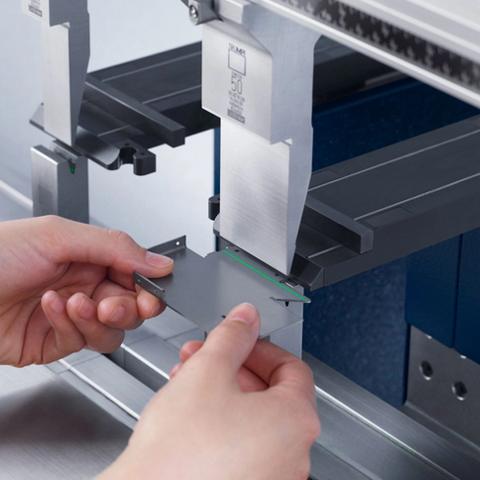
Provide material designation, thickness and the formed geometry, including important bend and mounting relationships. The supplier can then review the route as a formed panel. A flat pattern can be useful manufacturing information, but it should not silently replace the intended three-dimensional item in the purchase definition.
The enclosure development discussion examines the installed-shape problem in more detail. For the quotation, the immediate task is to make sure the buyer and supplier are pricing that accepted formed condition, including the features that must clear neighboring components.
Joined sheet metal needs a separate scope decision
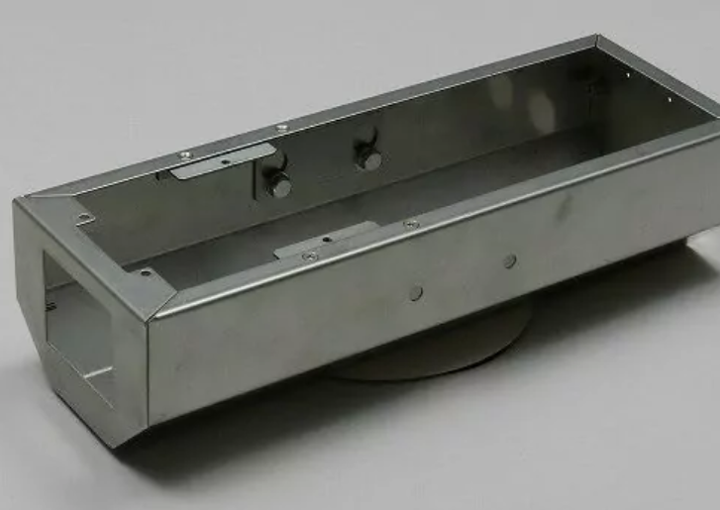
The service describes assembly and welding as ways of joining components. Their relevance depends on the housing construction. Identify the joints, the supplied assembly and the features that must remain controlled after joining. A set of individually acceptable panels is not automatically evidence for the completed housing.
A welded enclosure should identify the final mounting relationships
If joining establishes the enclosure’s structure, state which mounting faces and holes must work together afterward. Review any appearance requirement near the joints too. The supplier needs to understand whether the buyer expects a functional internal enclosure or a visible external housing with a separately defined surface expectation.
For an equipment builder ordering an early assembly, a trial housing can help check access and mating parts. Make the trial’s purpose explicit. It should reveal the relevant assembly questions before the repeat order, rather than become an undocumented substitute for the finished housing drawing.
Loose panels can be appropriate when the buyer owns the assembly
A buyer with an established joining route may prefer loose formed panels. In that case, specify the condition needed for the next operation, including identity and relevant surface requirements. Avoid paying for a supplier operation that will be repeated downstream, while also avoiding an accidental omission that leaves neither party responsible for it.
The scope should explain any supplied hardware or additional work instead of assuming it from the word assembly. Confirm what JY Pretech is proposing for this project. A broad capability discussion can identify possibilities, but the actual quotation should define the items and endpoint the buyer will accept.
Material and finish choices change what the enclosure order includes
Published sheet materials include aluminum 5052 and 5754, stainless steel 304 and 316L, mild steel 1018 and copper C110. Keep the selected designation in the order. A comparison between two prices loses meaning if one uses a different metal or an undefined substitute without explaining the effect on the required component.
An as-bent panel and a powder-coated panel have different endpoints
JY Pretech discusses deburred as-cut or as-bent surfaces alongside options such as bead blasting, brushing and powder coating. State the actual selected route and the regions it covers. A buyer expecting a visible finished panel should not accept a quotation describing only a bare formed item without accounting for the remaining work.
For a housing with a visible front and concealed rear, define those appearance zones. The same expectation may not be necessary everywhere. An agreed visual reference can help where appearance is important, while functional mounting regions need their own completed-fit definition rather than being judged solely by color or texture.
Anodizing belongs to the appropriate aluminum discussion
Type II and Type III anodizing are listed within the sheet finish information. Confirm the proposed route for the selected aluminum part and its interfaces. Do not transfer that option to every material in the same service list. A stainless or copper component requires its own appropriate finish discussion.
Where a treatment affects a mating hole or seating region, specify the final requirement and discuss any protection needed during processing. The quotation should identify the accepted solution rather than hide an interface decision inside a general line for surface finish. This is especially relevant when the housing enters assembly without further machining.
Judge the sheet fabrication proposal through its missing operations
A supplier comparison becomes more useful when purchasing traces the requested component through every relevant stage. JY Pretech’s company introduction describes a custom manufacturing business combining core capabilities and coordinated resources. Confirm which operations are included for the current housing, with responsibility clear through the agreed endpoint.
Protolabs’ sheet fabrication design resources provide general background on connecting part design with fabrication operations. Its service limits and commercial terms are not JY Pretech specifications. Use the process logic to identify questions that the actual housing proposal should answer.
A quoted inspection should describe the component being delivered
JY Pretech’s inspection overview identifies dimensional measurement resources. Discuss the appropriate evidence for the finished formed or joined item. The quotation should clarify which critical features are checked and which records are included, rather than present an instrument name as a complete acceptance plan.
Delivery protection should follow the housing’s vulnerable features
A finished panel may have a visible face requiring separation from neighboring parts. A thin flange may need support against unintended bending. Identify those features and the transport arrangement so the proposal can address suitable protection. A generic statement that parts are packed does not explain whether the completed housing will remain usable on arrival.
For a custom distributor order containing similar revisions, identification is part of the same practical review. Keep the component, drawing version and acceptance evidence connected at receiving. The goal is for the customer to recognize the correct finished item without sorting visually similar metal panels by guesswork.
Keep housing development changes visible in the fabrication quotation
A prototype housing and a repeat order can share an overall shape while needing different engineering decisions. If the cover interface, flange arrangement or finish is still open, identify it before requesting a fixed comparison. JY Pretech’s prototype and small-batch sheet scope is relevant to that stage, but the proposal should describe the revision and decisions actually included.
A changed flange can affect joining and finish as well as bending
Suppose an equipment team moves a flange to clear a connector. The change may also alter a joint or expose a surface that was previously concealed. Send the revised model and drawing with a short explanation of the affected function. The supplier can then review the complete changed component, instead of revising only a bend dimension while leaving the remaining quotation tied to an earlier construction.
Purchasing should retain that revised scope when comparing the updated offer. A price from the first drawing may still be useful historical information, but it is not automatically an alternative for the revised housing. The important question is which accepted item each figure will deliver, including its relevant joining, surface and inspection work.
Compare order quantities without silently changing the enclosure definition
If the buyer requests prices for several quantities, keep the material, drawing revision and completed condition identifiable across those options. A larger quantity may prompt a manufacturing-route discussion, but any proposed change should preserve the accepted requirements or identify the differences needing approval. There is no defensible universal discount or lead-time promise without the actual project review.
For a distributor, it can be useful to distinguish the immediate customer requirement from an uncommitted forecast. Give JY Pretech the actual batch requirement and explain the possible follow-on order separately. This supports a clearer supply discussion without making an uncertain forecast look like a released purchase or assuming that future demand guarantees today’s commercial terms.
Compare the housing price after the supply boundary is complete
Use JY Pretech’s project information workflow to provide the model, dimensioned drawing and actual project requirements. Ask the proposal to identify the requested material, forming and joining work, finish, final checks and delivery condition. Resolve exclusions against the buyer’s downstream route before treating them as harmless omissions.
Choose between offers only when both describe the same usable input to the next operation. If one stops at a cut blank and another ends at a finished enclosure, first assign the remaining work and its responsibility. That gives purchasing a defensible comparison and gives the equipment team a component it can actually use.