

 Get a Quote
A Medical Silicone Parts Manufacturer Must Separate Material Evidence From Device Approval
A material report can identify a silicone formulation and describe the tests performed on it. It cannot, by itself, release a finished medical component for a new intended use. When selecting a medical silicone parts manufacturer, the device team should establish the exact compound, contact conditions, molded geometry and downstream processing responsibilities before approving tooling. That makes the supplier discussion useful to engineering and quality teams as well as purchasing.
JY Pretech offers liquid silicone rubber molding, with a published silicone face-mask example in our portfolio. These are starting points for reviewing a custom flexible interface. The relevant question is how our manufacturing services fit the component you are developing, with its own material evidence, acceptance requirements and release responsibilities.
Define three objects separately: the silicone supplied by the material producer, the component supplied by the molder, and the finished device released by the responsible device organization.
Give the medical silicone parts manufacturer a contact description before a compound name
The application brief should explain where the silicone sits in the device and what it contacts. A flexible surface used around an external interface, a component within an equipment enclosure and a part exposed to a process fluid may need very different evidence. Include the nature and duration of the intended contact, the service environment and the processing steps the component will encounter.
In a hypothetical project, a device engineer might initially send a drawing marked only “medical silicone.” That label leaves the supplier unable to distinguish the required formulation and documentation from a general-purpose elastomer request. Provide the device team’s material criteria with the drawing. The manufacturing review can then address a defined requirement rather than treating an application label as a specification.
A mask’s flexible contact region needs its own geometric acceptance
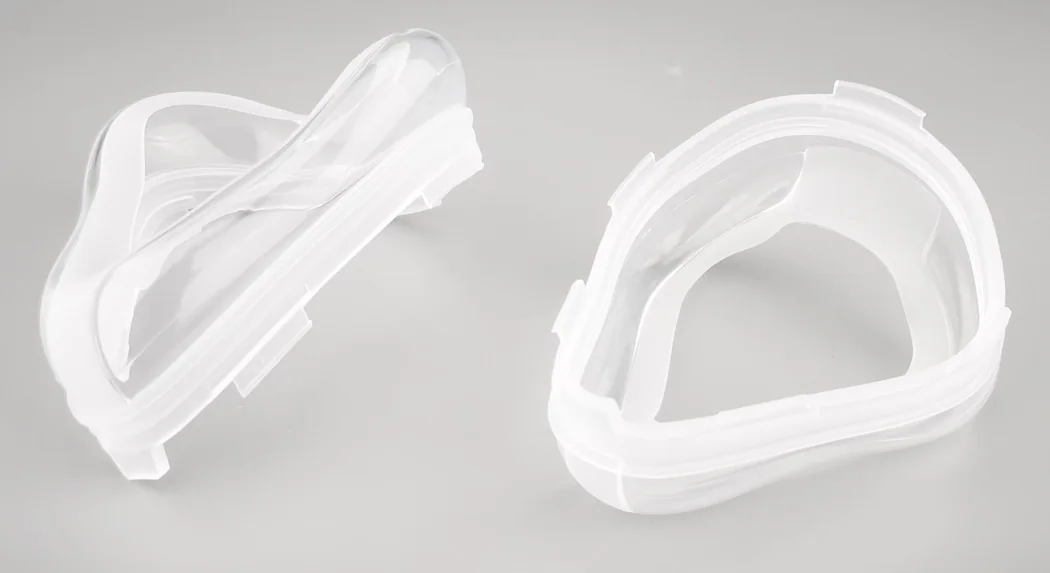
Our silicone mask example shows a flexible molded form with defined contours and interfaces. For a new design, identify the regions that must deform and the regions that locate the component. Indicate the intended assembled position and any surfaces where a gate witness or trimming irregularity would interfere with function. Similar appearance does not establish equivalent fit.
A sample should be checked in the condition relevant to that contour. A freely resting flexible component may not have the same shape as the component seated on its carrier. If the device team uses an assembly fixture or a mating part for assessment, describe it during development. This makes dimensional observations easier to interpret when the sample reaches the approval meeting.
Liquid silicone grade documentation should identify the complete formulation
Our published material references include WACKER ELASTOSIL LR 3003, SILASTIC LSR families and Shin-Etsu KE G2000. Those references provide material routes to discuss, not a blanket medical qualification for every grade. Record the complete proposed designation, color system and relevant producer documentation for the actual component. Confirm availability and suitability through the project review.
DuPont’s medical LSR information demonstrates that material evidence is formulation-specific and does not remove the user’s responsibility for the intended application. It is an industry reference for understanding the documentation boundary. It is not a statement that a DuPont formulation is included in JY Pretech’s quotation or approved for your device.
Medical silicone molding review should connect the drawing with the supplied condition
Our LSR manufacturing sequence covers tool creation, material preparation, injection, curing, demolding and secondary operations. Discuss which stages are included in the requested component supply and which requirements must be satisfied at the point of delivery. A drawing of the final shape is necessary, but it does not automatically define cleaning, handling, inspection documentation or later device processing.
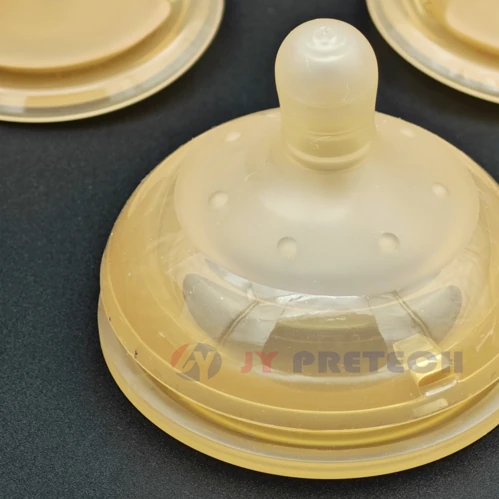
A thin silicone lip needs an agreed witness and trimming boundary
For a lip that meets another surface, identify where the tool can place its parting line and where any finishing must stop. The first paragraph of a sample report should not be the first time the team discovers that the trimming boundary crosses the intended contact region. Mark the functional zone before tool construction and include its condition in sample review.
Our quality and inspection overview describes dimensional and inspection resources, including CMM, projection and visual examination. The selected method should fit a flexible feature. Do not assume that a measuring device alone defines how the silicone is supported, how it is contacted or whether the observed dimension represents the installed state.
A rigid carrier changes the silicone component’s release question
If the silicone is integrated with a rigid plastic, establish how it is retained and how the rigid material affects the assembly. Our portfolio includes a PC and LSR mask construction, while our broader capabilities include two-shot and hard-soft molding. Each proposed material pair needs its own technical assessment.
For a removable silicone part, review installation and removal instead. A mechanical fit that is convenient during assembly can also create an exposed edge during service. Give the manufacturing team that sequence so the sample can be evaluated in a meaningful way. An overmolded construction should not be chosen simply to imitate a portfolio photograph when the device needs separate replacement.
Write the medical silicone handoff around evidence owners
A practical handoff identifies who provides each necessary record. The material producer provides information for the selected compound. The molder provides the agreed component manufacturing and inspection records. The device organization determines the evidence needed to release its product for the intended use. Agree that division in the project scope so missing documents become visible while there is time to resolve them.
- Material identity
- Complete grade, color and producer documentation applicable to the proposed silicone.
- Molded component identity
- Drawing revision, agreed finishing condition, sample identification and inspection requirements.
- Device processing
- Cleaning, sterilization if required, assembly and application validation assigned to the responsible party.
- Delivery condition
- Agreed handling and packing, with any special requirements stated explicitly in the order.
Imagine a purchasing team receiving quotations for the same flexible mask component. One offer covers molded and trimmed parts; another includes additional documentation or handling requirements requested by the device team. Comparing only the molded unit price misses that difference. Give both suppliers the same defined scope, then assess the response against the requirements that matter to the device.
JY Pretech’s project process supports an exchange of drawings, material, quantity, finish, inspection and delivery requirements. First-article and other agreed documents can be discussed within that scope. Specify which records must accompany a sample or production release rather than assuming a generic certificate will answer every qualification question.
A controlled LSR environment should be described by verified requirements
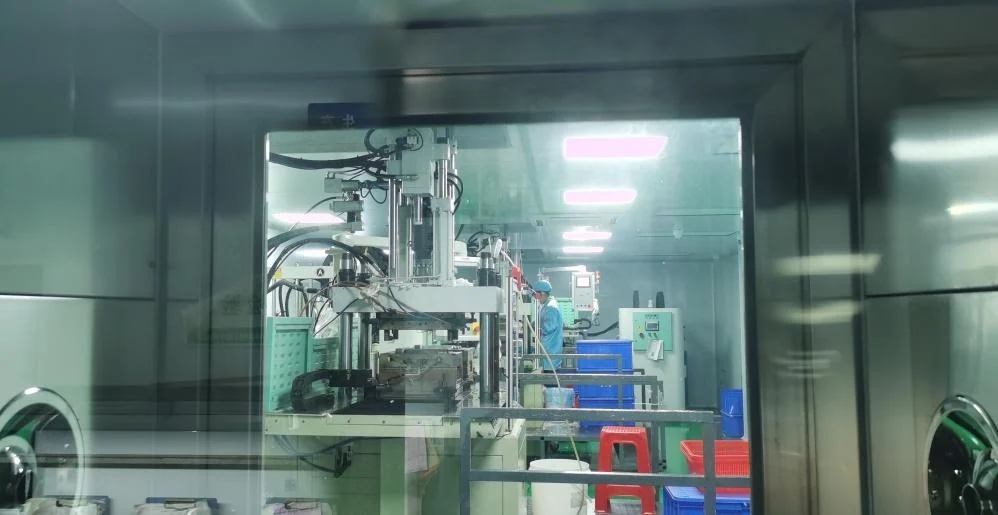
Our website shows a controlled-environment LSR workshop. That is useful evidence for a manufacturing discussion, while any requested environmental classification or procedure needs specific verification. Do not infer a named cleanroom class, a sterile supply capability or a medical quality-system certification from the appearance of a workshop photograph.
JY Pretech publishes an ISO 9001:2015 quality-management statement. During supplier qualification, request the current certificate and scope relevant to the proposed work. That company-level review serves a different purpose from compound documentation and finished-device acceptance. An application-specific requirement should be confirmed through the evidence appropriate to it.
Packaging instructions should preserve the silicone condition being accepted
For a delicate flexible contour, agree how it should be supported and identified between inspection and the next operation. The appropriate arrangement depends on the component, handling sequence and delivery requirements. Confirm the actual pack in the quotation or release instructions; the presence of a medical application does not automatically establish a sterile barrier or a special packaging validation.
If the device team will clean the part after receipt, make that responsibility clear without assuming that ordinary handling is automatically acceptable. State the required supplied condition and any agreed handling restrictions. This gives JY Pretech a defined requirement to review and keeps the receiving organization from discovering an unstated expectation after the parts have shipped.
A sterilization plan should name the silicone assembly being evaluated
If the component will undergo sterilization, give the responsible technical team the intended method and conditions, including whether the part is processed loose or assembled. An assembled mask interface exposes the silicone and rigid carrier together. Evidence for an isolated material cannot automatically answer what happens to that combination, its fit or its retained geometry after the planned process.
The component trial should preserve that distinction. Samples accepted for molded dimensions can be identified and passed into the device team’s evaluation without claiming that molding acceptance also completes the later assessment. If a contour changes after processing, record the location and compare the sample with its original condition. This gives the investigation a specific observation rather than an undefined claim that the silicone is compatible or incompatible.
For a repeated-use device, the team should also specify the intended sequence of use, cleaning and any subsequent processing. A one-time exposure and repeated cycles answer different questions. The number and conditions of assessments must come from the device requirements and responsible validation plan, rather than being invented by a parts supplier to make a quotation look more complete.
Inspection records should distinguish a silicone dimension from an appearance reference
A translucent flexible part can have an accepted visual reference as well as critical dimensions. Keep those decisions separate. Identify the viewing region and the condition in which the sample is assessed, then relate dimensional checks to the drawing. A favorable visual impression cannot establish the position of a sealing lip; a satisfactory dimension cannot establish that the whole visible contact region matches the agreed appearance.
Where both the device engineer and quality representative review the samples, record which requirement each approval covers. This is particularly useful when a sample set contains more than one trial revision. The release record should identify the actual accepted component, not simply state that samples were received and appeared acceptable.
Changes to the medical silicone component need a route back to the device team
A colorant change, a new silicone grade or a change to the rigid carrier can matter even when the outline drawing looks identical. Establish which proposed modifications require review before implementation. The material and component records should identify the accepted version so that a later order does not drift away from the basis of the device team’s original assessment.
The same applies to secondary operations. A revised trimming method may alter the local condition of a contact edge. An added marking can introduce a new material or processing step. Treat the change in relation to the actual component and its intended use; do not approve it solely because the dimensional result remains within the drawing limits.
Our discussion of PEI sample development provides a related example of keeping trial observations distinct from final acceptance. The material is different, but the project lesson is relevant: a documented manufacturing trial answers defined development questions. It should not be presented as approval of a different product or a broader application.
For the silicone component, retain a sample record that identifies what was checked, in what condition and against which requirement. If a later assembly observation raises a concern, compare the actual revision and supplied condition before deciding that the material family is unsuitable. A specific finding is easier to investigate than a general claim that the new parts “feel different.”
Bring the device quality and engineering teams into the first manufacturing review, with a short list of the evidence they need at each release stage. That allows JY Pretech to discuss a realistic molded-component scope and identify open requirements early. The strongest approval package is the one in which every material record, sample observation and delivery instruction refers to the component the device team actually intends to use.