

 Get a Quote
A Double Shot Molding Manufacturer for Hard-Soft Handheld Components
The first version of a handheld product often puts a soft surface wherever there is room on the housing. The next version has to accommodate fingers, fasteners, a cable and service access in the same space. A double shot molding manufacturer is useful when those requirements are reviewed together. JY Pretech makes custom hard-soft components, two-shot housings and overmolded parts, with tooling and secondary operations coordinated around the drawing. Begin with the hand-contact zones and the rigid structure, then decide which features genuinely belong in a double-shot molding cycle.
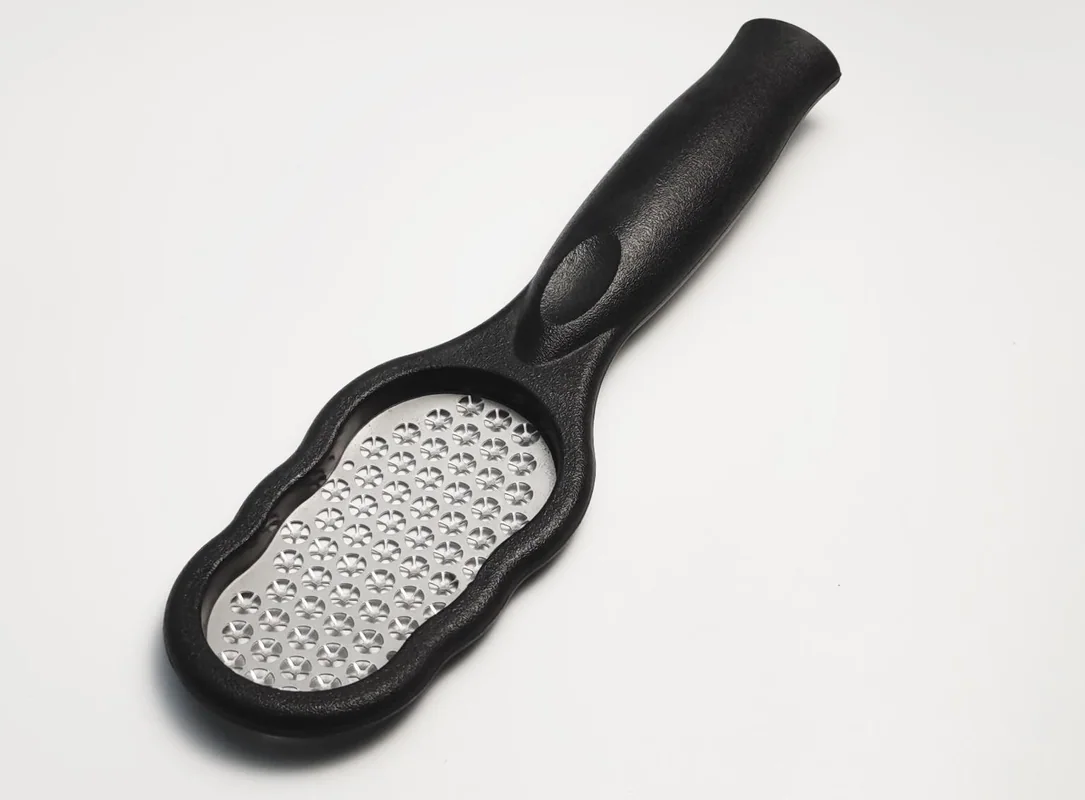
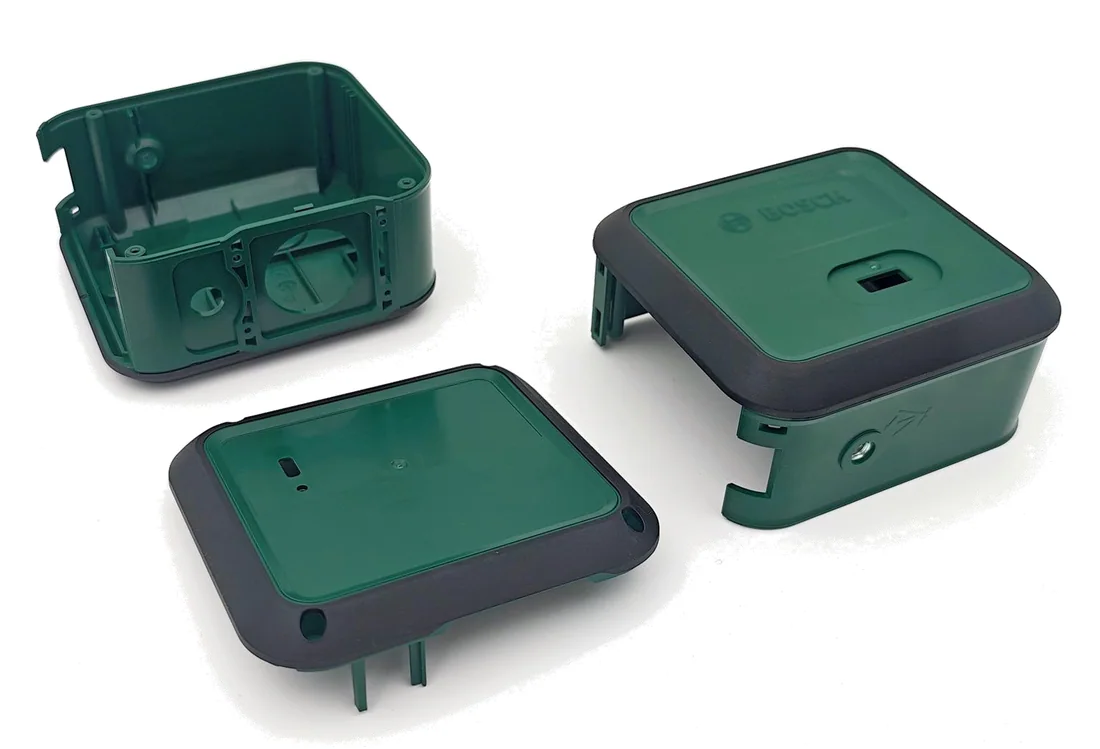
Our custom manufacturing portfolio includes a brush-handle example, device housings and other made-to-drawing components. These examples show manufacturing possibilities rather than standard products available from stock. A new handheld part needs its own material pairing, internal layout and acceptance requirements. The useful starting point is what the person holding it must do, not whether the rendering has an attractive contrasting grip.
Follow the user’s hand before designing the double-shot grip
Imagine a maintenance instrument that is lifted from a case, held while reading a display and turned to connect a lead. Each action puts a different part of the hand against the housing. A soft patch under the thumb may serve one movement but leave the main gripping edge exposed during another. Mark those contact regions on the assembly model so the manufacturer understands why the soft material occupies that particular area.
A brush handle and an instrument housing have different structural jobs
The brush-handle example in our portfolio makes the handheld format tangible. Its visible shape should not be treated as a generic design for an electronic instrument. A housing may need locating features, internal supports, an opening seam and repeated access to fasteners. The rigid portion must carry those functions while the softer portion addresses the intended surface interaction. Reducing the rigid skeleton simply to make more room for elastomer can create an assembly problem.
For a new design, provide the manufacturer with the features around the grip rather than an isolated external shell. The position of a screw boss can limit a retention feature; a battery opening can interrupt the soft boundary. JY Pretech’s DFM process reviews draft, wall thickness, gates and parting lines. Those checks become more useful when the team can see why an apparently simple local change would interfere with the product inside.
Soft edges near controls deserve a separate review
A thumb pad beside a button is a different problem from a grip on a broad sidewall. Define where the soft material must stop and what clearance the moving control needs. If an edge can be caught by a finger, its attachment matters as much as the appearance of the center. Avoid approving a photograph that conceals this edge behind the hand or the mating component.
A second hypothetical design might be a reusable handheld enclosure with a removable battery cover. A continuous soft strip across the opening seam could make servicing awkward or require damage to the grip. That conflict should be found before the grip becomes part of an integrated mold. Sometimes the better manufacturing arrangement keeps the cover separate and limits the overmold to the fixed housing.
On a handheld part, place the grip where the hand needs it and keep the assembly features where the product needs them. The molding concept has to reconcile both drawings.
A double shot molding manufacturer should define the rigid and flexible materials separately
JY Pretech’s two-shot material range includes PA, PBT, PC and PP as rigid options, alongside TPE-S, TPE-U, TPE-E, TPE-A and TPE-O families. Our homepage also demonstrates ABS with TPE 60A. These are meaningful starting points for a hard-soft component discussion, but they do not define the correct pair for an instrument used around a particular cleaner, lubricant or working temperature.
TPE 60A does not define the whole hand-contact experience
The stated hardness in our ABS demonstration identifies one characteristic of the flexible material. It does not specify the finished grip’s friction, resilience, thickness, texture or compatibility with a cleaning routine. A thin soft region on a stiff substrate can feel different from a thicker region made from a similar material. Evaluate a representative component surface instead of relying only on a resin designation.
Describe foreseeable handling conditions when the grade is discussed. A dry laboratory instrument and a tool used with gloves may need different surface judgments. These are proposed application conditions for your project, not claims that our example parts have been tested for those uses. If a numerical grip or chemical-resistance requirement is essential, supply the method and acceptance limit rather than asking the manufacturer to infer it from “soft touch.”
PC, PA and other rigid grades still control the housing’s assembly behavior
The rigid substrate is more than a carrier for the colored soft layer. Its grade and geometry influence the features that position the display, locate the cover and carry the fastening arrangement. Record the exact proposed material in the drawing package, including any customer restrictions on substitutions. A change made for purchasing convenience should not silently alter the foundation on which the grip was approved.
For broader material planning, our materials overview distinguishes rigid plastics, high-performance polymers and elastomers. PEEK, PPSU and PEI are available within our manufacturing offering, but their presence does not mean every handheld product benefits from a high-performance substrate. Start with the actual exposure and functional requirements, then assess whether a more demanding material route is justified.
Keep the rigid frame stable while the second material is molded
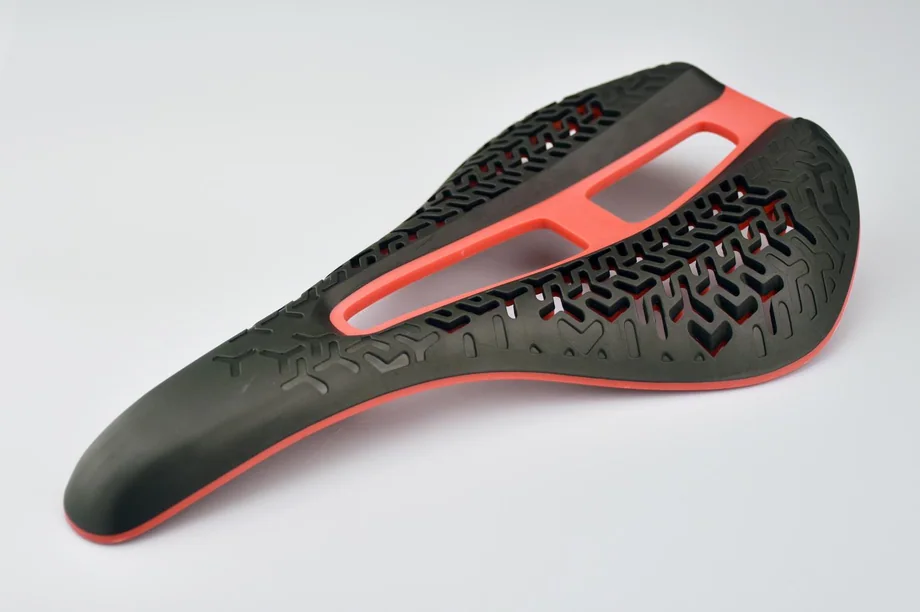
Our published bike-seat case describes the risk of the second material deforming the first shot and the challenge of limited bonding area. A handheld housing can encounter a related design question even though its geometry and materials differ. Thin walls around openings need support, and the available contact surface must be examined before the second material is added.
The two-shot bike-seat account explains that geometric changes and added contact points were part of the solution. It should be read as evidence of an engineering approach, not as a material recipe or a promise of identical results. For a handheld instrument, the appropriate revision may involve the grip edge, rigid support or retention geometry rather than the features shown in that case.
Retention details must respect the space behind the grip
Keyways, undercuts and other mechanical features can help hold a soft layer in place, and they are discussed in our two-shot guidance. Their placement needs the internal assembly model. A through-feature that improves attachment may occupy space needed by a connector or make the inner surface harder to assemble. Show the permitted change envelope so the tooling team can suggest a practical revision without moving an essential product feature.
General elastomer design guidance, such as Avient’s discussion of overmold part design, also treats edge geometry and mechanical retention as design questions. Apply that background through the proposed component and grade. It cannot establish the performance of a JY Pretech part before the actual design and material combination have been reviewed.
Choose integrated molding or a transferred substrate around the development stage
JY Pretech distinguishes 2K molding on a specialized machine from regular two-stage overmolding, in which a first molded component is moved into another tool. For a stable housing design, the integrated route may help organize repeat production around the combined component. For an unsettled grip design, a separate-stage route may offer a different development discussion. Neither answer should be assumed from the phrase “double shot” alone.
A buyer developing the maintenance instrument may need representative parts before committing the final grip shape. Our rapid and bridge tooling capability can be considered as part of that development plan. The team should identify what a proposed sample route will demonstrate and what remains unproven. A cosmetic model can help review hand position, but it does not automatically establish the performance of the intended molded interface.
Order quantities also belong in the decision. Selected services support low-volume work, while the older dedicated 2K comparison gives different batch guidance. Agree the quantity and tooling route in the actual proposal. Applying one broad no-minimum statement to every hard-soft process can lead to an unsuitable tool choice before the manufacturing conditions have been discussed.
Approve the handheld component in the condition the assembly team will receive
A grip-only sample review misses operations that occur before the component reaches its user. JY Pretech offers insert installation, printing, laser marking, ultrasonic welding and assembly among its supporting services. If a housing needs a printed legend near the grip, the artwork and surface requirements should be considered with the molding plan. If it needs installed inserts, their position must remain compatible with the soft region and access for assembly.
Fasteners and battery access should be exercised during the sample review
The person assembling the instrument may need to hold the component differently from the eventual user. A fixture or manual operation could press directly on the soft region. Discuss those contacts before the component is released, particularly when the assembly sequence includes installing a display or joining housing halves. The grip’s suitability should be assessed through the operations it will encounter, rather than only through a brief hand-feel review of an empty shell.
Where a threaded insert is involved, distinguish an insert molded into the rigid part from one installed afterward. JY Pretech offers insert molding and insert installation, and the proposed route should be explicit. Access, location and the surrounding grip geometry may make one arrangement more practical than another. The buyer should know which condition the sample represents and whether later assembly work remains within the agreed manufacturing scope.
If servicing can expose the grip edge to a removal tool, show that access path as well. A component may be comfortable during normal use yet vulnerable when someone opens the enclosure. Resolving that edge with the design team is more useful than treating every lifted corner as an unexplained molding defect.
For the serviceable enclosure, check that the approved cover and fastener arrangement still work with the molded grip present. Assess the intended operation using the correct mating parts. If the soft material obstructs a screw recess, trimming it until the sample assembles is a finding to resolve, not an undocumented production method. Update the drawing or tooling decision so the accepted condition can be reproduced deliberately.
Define the appearance zones that the user actually sees during operation. A gate witness on a concealed internal surface and a mark on a hand-contact edge deserve different treatment. Our article on injection-molded surface finishes provides context for specifying the surface. Keep the approved visual reference with the part revision rather than treating a general finish name as the complete agreement.
Packing should protect the particular exposed features of the finished housing. Identify any soft tabs that could be folded and any decorated surfaces that should not rub against adjacent parts. Confirm the arrangement with the quotation; do not assume a photographed sample establishes how production components will be separated or labeled. If several color versions share a rigid shape, make their identification part of the delivery discussion.
Before releasing the handheld design, have the assembly engineer, appearance approver and manufacturing team look at the same sample condition. A successful grip should coexist with the structure, controls and service access that made the product useful in the first place. Bring that combined requirement to JY Pretech with the full assembly geometry, and the double-shot decision can be made around how the component will actually be held and maintained.