

 Get a Quote
Liquid Silicone Rubber Injection Molding Manufacturer: Define the Flexible Function
An approved silicone prototype does not automatically define an injection-molded production part. The formulation, molding route or later treatment may differ. A liquid silicone rubber injection molding manufacturer should connect the proposed liquid compound with the tool, curing stage, demolding and finished condition that the customer will accept. JY Pretech’s LSR injection molding service covers those manufacturing stages and agreed secondary operations. Begin with the part’s flexible function and the intended production material so the trial addresses a real device requirement through a defined process.
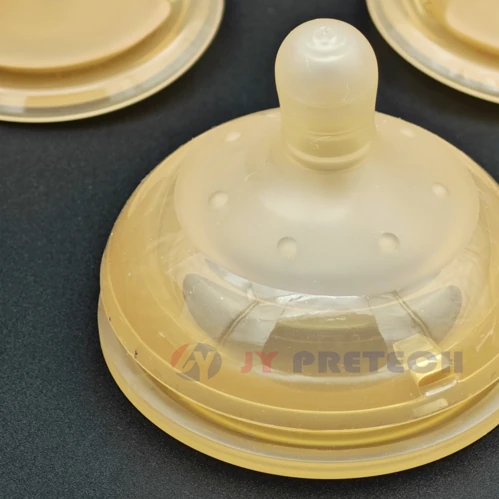
Define the molded silicone at each manufacturing stage
An electronics team moving a silicone seal from development into production should identify what the earlier prototype actually established. It may have demonstrated the outline or assembly space without using the intended liquid silicone grade. Give JY Pretech that distinction with the drawing. The production proposal can then identify which material, tooling and sample questions remain open.
A developer of a flexible mask component faces a different process question: how the thin perimeter and thicker connection region will be formed and released together. Our portfolio includes mask-shaped silicone parts and PC-plus-LSR assemblies. These are relevant manufacturing references, while the new geometry needs its own filling, curing, removal and end-use assessment.
LSR filling and release features should respect the functional surface
For a thin lip, identify the contact face before the toolmaker reviews gates, vents and the parting line. A region important to the finished component may constrain where a tooling feature can be placed. Make those priorities visible during DFM so the proposed filling and release arrangement can be discussed before machining rather than judged only from the first sample.
Where the product requires a verified seal, specify the medium, relevant operating conditions and the customer’s acceptance method. JY Pretech can review the component and agreed inspection work; the application requirement must come from the device design. Calling a material silicone does not establish a leakage limit or the finished assembly’s lifetime.
A PC carrier requires review of both molding processes
If silicone will be combined with a PC carrier, identify the exact rigid grade and the condition in which it enters the silicone operation. Review how the carrier is located and which regions the tool must protect. The proposed silicone process and rigid component must be considered together; the presence of a PC-plus-LSR portfolio example does not establish compatibility for every material pair.
JY Pretech’s manufacturing portfolio includes both conventional thermoplastic molding and liquid silicone components, as well as assembly support. This allows the project discussion to cover the hard and soft components together. The scope for manufacturing each part and evaluating the completed interface still needs to be agreed.
LSR injection molding combines liquid filling with a curing step
Liquid silicone rubber is processed as a reactive material that cures into an elastomer. It should not be treated as a thermoplastic TPE that is melted and cooled. JY Pretech’s published sequence separates tool creation, material preparation, injection, curing, demolding and subsequent operations. The distinction matters because the material definition and the molding approach must fit a curing silicone system.
Shin-Etsu’s description of liquid injection molding identifies the A and B liquid components used in its system. This is useful general context for discussing material preparation. The supplier’s system description does not establish the mixing arrangement, cycle time or production output for a particular JY Pretech component.
Silicone flow paths should be reviewed around the working perimeter
A component with a broad perimeter, a thin lip and thicker connection details gives the mold designer several competing requirements. The tool must create the intended geometry while allowing the material to fill and the cured part to be removed. Identify the faces that perform the sealing or contact function before gate, vent and parting-line decisions are settled.
JY Pretech’s DFM workflow includes review of wall thickness, draft, gates and parting lines, with mold-flow analysis where appropriate. Ask what analysis is useful for the specific silicone geometry instead of assuming every model needs the same study. A long thin perimeter and a compact flexible detail may present different uncertainties.
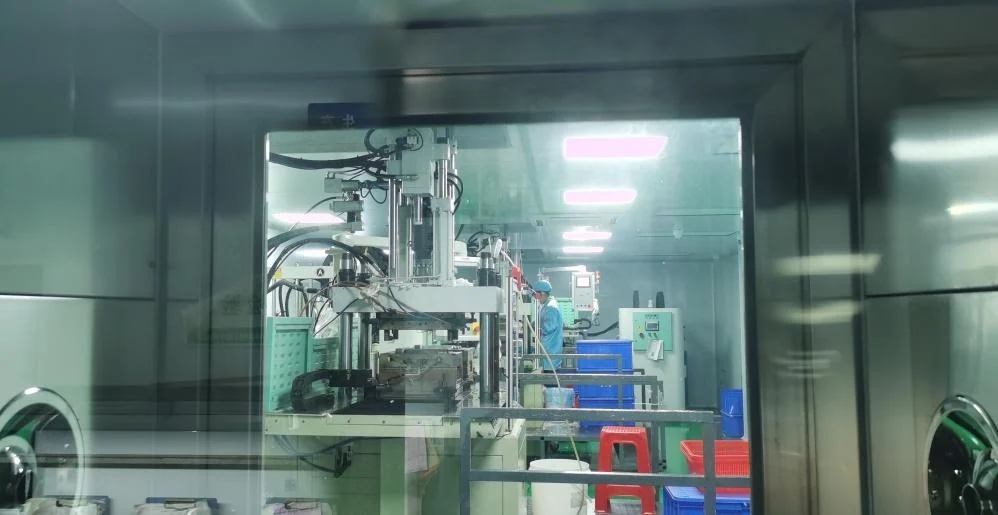
Curing and demolding must preserve the flexible feature being purchased
The buyer should identify where a flexible part is most vulnerable during removal and subsequent handling. For a mask-shaped component, that may be an extended rim. For an enclosure detail, it may be a narrow projecting feature. The tool and process review should consider the actual form rather than relying on silicone’s general flexibility to resolve every removal problem.
If the proposal includes post-molding work, describe the finished condition that the sample should represent. Any required post-cure, trimming or assembly must be confirmed for the selected material and application. A raw molded sample and a component after its agreed treatment are different acceptance objects, even when their outline appears similar.
The liquid silicone rubber injection molding manufacturer needs a complete grade request
JY Pretech lists WACKER ELASTOSIL LR 3003, SILASTIC LSR references including 591, 9001-50 and 94-595, and Shin-Etsu KE G2000 among its published LSR materials. These entries demonstrate the scope of the material discussion. Each new order still requires a precise grade, current sourcing review and the documents needed for that application.
Grade suffixes and compound documentation should stay with the silicone drawing
A family name is insufficient when the engineering team requires a particular hardness, processing condition or material declaration. Ask for the current producer documentation for the proposed full grade designation. Keep any agreed color requirement in the same material definition. A transparent reference component should not be taken as proof that every candidate grade has the same appearance or performance.
Our material capability information provides a starting list rather than a stock availability promise. If the exact nominated material is unavailable, review the alternative against the function and documentation requirements before authorizing a trial. Similar naming should not become the basis for an unapproved substitution.
A healthcare device team should also distinguish raw-material evidence from the finished component and final device evaluation. Medical suitability depends on the specified grade, processing, intended contact and the customer’s validation. The existence of an LSR process or a mask-shaped example does not prove a regulatory approval, sterile delivery condition or a particular cleanroom classification.
Compare liquid injection and compression molding without reducing the decision to price
JY Pretech also offers compression molding. That route places a material charge into a mold and forms it under compression, while the LSR route injects liquid material and cures it in the tool. A useful comparison considers the exact silicone formulation, geometry, tooling, expected quantities and accepted supplied condition.
For a simple development component, the cost and flexibility of a proposed tooling route may be a central concern. For a detailed repeat-production component, material delivery and the molding arrangement may become more significant. Neither observation supplies an automatic winner. Request proposals against the same drawing and function so that differences in scope remain visible.
A low initial tool figure is meaningful only when the proposal also identifies the material, the finished feature and the work required before the component can be used.
Do not assume that moving between compression and liquid injection leaves the component definition unchanged. Review the material, tooling and acceptance implications. If a prototype has been evaluated in a different silicone formulation, identify what that prototype proved and which questions remain for the intended production construction.
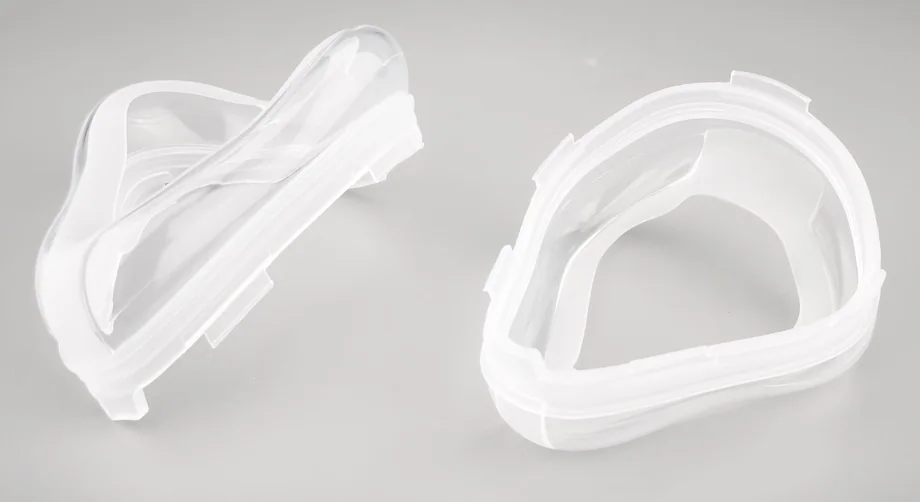
Use the LSR trial to separate filling, release and component acceptance
For the electronics seal, the tool trial can examine whether the specified lip is formed and released in the proposed arrangement. For the mask-shaped component, the review may concentrate on the thin perimeter beside a thicker connection. These hypothetical questions concern the molded feature. The customer’s installed-function assessment remains a separate decision rather than an automatic consequence of successful molding.
Identify the full grade, geometry revision and supplied sample condition when comparing trials. If one set has undergone an agreed post-molding treatment and another has not, make that difference explicit. Do not attribute every observed change to the cavity or compound without checking what else changed. The record should show which manufacturing question the next trial is intended to answer.
Dimensional checks should also reflect the part’s flexible nature. Agree how it is supported, which dimensions are assessed without load and whether any acceptance refers to an installed condition. A measuring arrangement that deforms the feature can answer a different question from the drawing. The method should be settled alongside the dimension it is supposed to verify.
Our article on the difference between tooling and molding is helpful when separating a tool correction from a process or component decision. A good trial report should reveal what needs attention, rather than treating every observation as a reason to modify the cavity.
Trace an LSR geometry revision through filling, curing and demolding
A thinner perimeter or a changed connection can require more than an outline correction in the tool. Show JY Pretech the revised regions and explain which functional requirement motivated them. The team can review the intended flow path, tool features and removal arrangement against that change. A familiar overall silhouette should not hide a locally different manufacturing problem.
A revised silicone lip should receive a stated trial question
For the mask-shaped part, identify whether the next trial is checking formation of the thin edge, its condition after removal or an agreed secondary operation. Those observations may concern the same region but answer different questions. Keep the sample condition visible so a damaged edge is investigated at the relevant stage instead of automatically prompting another material substitution.
For an electronics seal, consider a change that moves the permitted gate witness away from a working face. The review should show the new permitted location and the nearby geometry affected by it. Ask what the proposed tooling change must establish in the next trial. This is more useful than approving a cleaner-looking sample without confirming which process or tool feature actually changed.
When a trial requires correction, keep the functional requirement fixed unless the customer deliberately revises it. The tooling team may need to reconsider a local feature, while the device team still needs the same sealing or contact result. Separating those decisions helps prevent a manufacturing adjustment from quietly becoming a new component specification. JY Pretech can then review the next mold or process action against an identifiable technical question.
Plan how the molded silicone reaches the next controlled operation
Clarify whether the buyer receives individual silicone parts, an assembled component or parts prepared for another customer operation. JY Pretech offers secondary processing and assembly review, but the quotation needs to identify the selected work. Cleaning, packaging, special handling or sterilization requirements should be stated and confirmed rather than inferred from the product’s intended market.
A thin silicone perimeter needs protection from an arrangement that holds it folded or loaded during shipment. An appearance-sensitive surface may also need protection from rubbing or contamination. Explain those geometry-specific concerns when agreeing packing and delivery. The agreed solution should preserve the condition approved in the trial; it is not evidence of a universally supplied medical packaging system.
Return to the assembled function before releasing the production order. The flexible model, rigid interface, exact compound and acceptance method should resolve the same device requirement. With those decisions aligned, JY Pretech can review a manufacturing plan for a working silicone component rather than a free shape whose purpose remains uncertain.