

 Get a Quote
Low Volume Injection Molding Supplier Choices After a Successful Pilot
The pilot equipment build is accepted, and the next orders are arriving in smaller, irregular quantities. The product still needs the same mounting fit, material and appearance. A low volume injection molding supplier should be evaluated around that continuing requirement: how a defined custom component will move from an approved trial into useful repeat supply without losing the engineering decisions that made the pilot successful.
JY Pretech offers prototype and lower-volume tooling and molding, with production and finishing routes described in our manufacturing capabilities. This suits an industrial buyer developing demand, an equipment maker supporting a specialized model or a distributor ordering customer-specific parts. Begin with the approved component definition, the near-term quantity and the differences expected between orders.
A low volume injection molding supplier needs the repeat-order definition
A successful pilot creates useful evidence, but the production order should say which evidence has been accepted. Identify the drawing revision, resin designation, appearance reference and supplied condition. If the pilot included temporary features or a substitute material, separate those limitations from the requirements of the next batch. The supplier should not have to infer which compromises have become permanent.
An approved cover needs more than a remembered sample
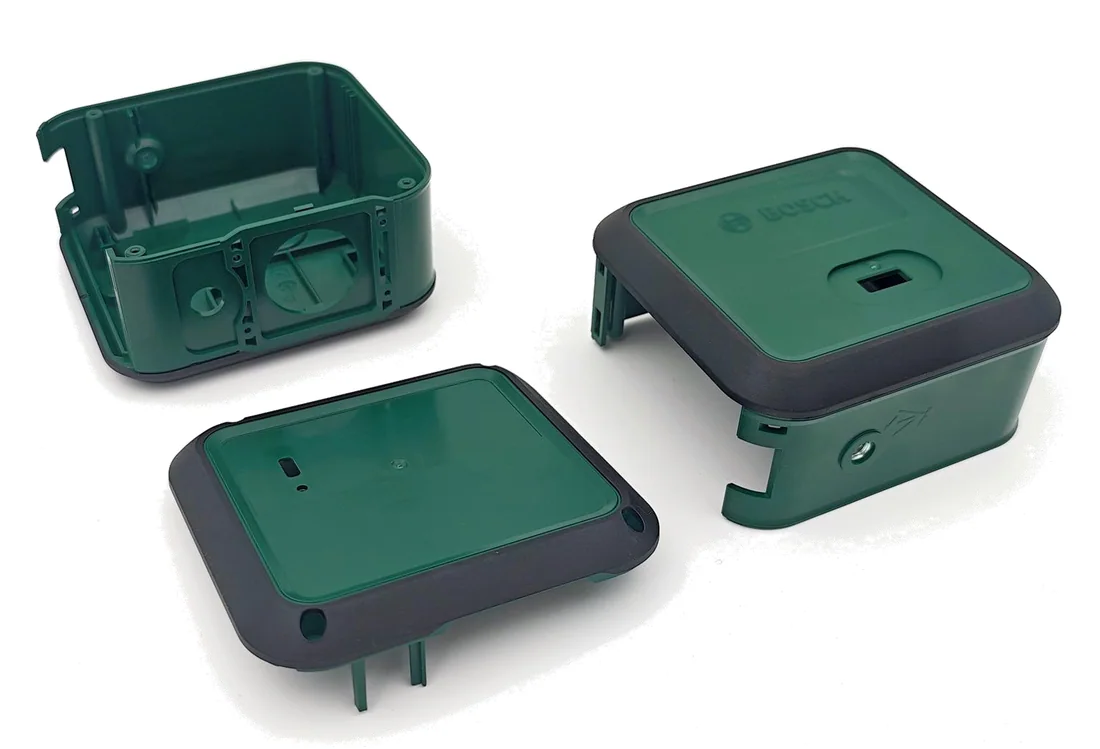
For a specialist instrument, the first build may have used undecorated covers to check mechanical assembly. The next order may need printed markings, final color and installed inserts. That is a change in supplied condition even if the base geometry remains the same. State it explicitly and establish the approval needed for the completed component.
Our project process connects customer files, manufacturing review, sampling and production. Retain that connection after the pilot. A repeat order should point to an identifiable current definition, so purchasing can request the intended part without reconstructing the development discussion from old attachments.
A PPSU fitting and a two-shot housing create different repeat-supply questions
JY Pretech’s portfolio includes PPSU fluid-handling fittings, two-shot housings, clear components and overmolded handheld parts. For a fitting, the material and mating interface may dominate the order. For a visible housing, artwork, color and a material interface may also require control. Lower quantity does not make these requirements disappear; it makes a clear scope especially useful.
A distributor ordering fittings for several equipment versions should identify the actual connection geometry for each part number. Similar appearance is not a sufficient basis for substitution. If one version changes, keep that change separate from the accepted definitions of the others. This avoids turning a small repeat order into an unintended family-wide revision.

Low volume molding should use a tool strategy that still fits the program
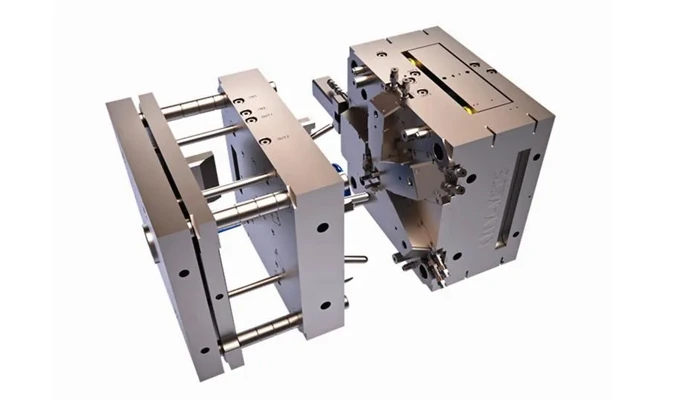
The tool selected for the pilot may remain a useful route, or the new program may justify another construction discussion. Review actual demand, expected changes and the work required from the tool. Do not assume that the first successful batch settles every later production decision, and do not replace a suitable tool simply because the program has entered another purchasing stage.
P20 or aluminum development tooling needs a defined continuing role
JY Pretech’s rapid tooling information lists P20, C50 and H13 steels and suitable simpler applications for 7075 or 6061 aluminum. The appropriate choice depends on the component, resin, finish and intended work. For an existing development tool, ask whether its construction and operation still match the repeat-order requirement. A material name alone does not establish the answer.
For example, a manually handled undercut may have been acceptable for a limited engineering batch. If the product now needs recurring orders, review the operating sequence alongside the quantity and geometry. The point is to make a deliberate manufacturing decision, rather than assume either that the tool must be replaced or that it should remain unchanged indefinitely.
A bridge mold should have a clear relationship with future demand
A bridge route can support a defined period while demand or the longer-term product configuration develops. State the present order separately from uncertain forecasts. JY Pretech can review tooling and molding against those assumptions, but a forecast should not become an unqualified capacity or tool-life promise. The confirmed program should identify the actual work being purchased.
Our rapid tooling launch guide examines this bridge decision from the perspective of a changing product release. After the pilot, the question becomes more specific: which features and supply conditions are stable enough to repeat, and which still need a controlled development step?
Keep material and finishing decisions visible when quantities are small
The material information provides routes for engineering plastics and high-performance polymers. A repeat order should carry the approved designation rather than rely on a broad family name. If a material change is proposed, review its effect on the component and the evidence needed before it becomes the new supply definition.
PEEK, PPSU and PEI orders need a project-specific material release
JY Pretech’s high-heat processing capability includes these material families. A buyer supplying specialized equipment should identify the operating exposure and exact material requirement relevant to its component. A smaller order does not justify assuming that one high-performance polymer can replace another or that a prior application test covers a changed grade.
For a component exposed to a cleaning process, identify the conditions the customer needs to evaluate. The molding supplier can review the manufacturing route and material designation, while application suitability still needs the appropriate product-level evidence. Keep that boundary explicit rather than converting a company material capability into a universal compatibility claim.
Printing and inserts should be accepted in the finished order condition
A marked panel, an overmolded handheld part and a cover with threaded inserts can require different secondary operations. JY Pretech’s associated services include printing, laser marking, coating, insert installation and assembly-related work. Identify the operations included in each repeat order and the references that control them.
For the instrument cover, a printed label may locate relative to a display opening. The relevant approval should assess that finished relationship, not only the undecorated molding. If artwork changes without a geometry change, retain the new artwork revision with the component record. This lets the order reflect the product the assembly team actually expects.
Plan mixed repeat orders around part identity rather than a total quantity
Low-volume programs often contain several variants whose demand is uneven. A purchase order for a combined total can obscure which components are required and which versions remain approved. List each part number, revision, quantity and supplied condition. This is especially important when related covers share a general appearance but serve different equipment models.
| Order item | Definition to retain | Change that deserves review |
|---|---|---|
| Instrument cover | Mounting pattern, color and artwork revision | New marking location or a changed connector opening |
| Fluid-handling fitting | Approved material and mating geometry | Different exposure or connection requirement |
| Overmolded handheld part | Substrate and soft-material configuration | Revised grip geometry or material interface |
These are purchasing scenarios based on the component families in our portfolio, not claims about particular customer orders. Their practical purpose is to show why “another small batch” can conceal different manufacturing tasks. The order should identify the actual configuration and the review required for any change.
Family-mold demand should distinguish sets from replacement pieces
If a tooling arrangement produces related components, state whether the order concerns complete sets or individual pieces. A product’s service demand can differ from its initial assembly demand. For example, replacement covers may be needed without an equal quantity of bases. Review that demand with the manufacturer rather than assuming the original arrangement matches every future purchase pattern.
The published connector project records a 1+1 family mold, showing why a cavity arrangement can matter to quantity definitions. A new low-volume program should establish its own part and set requirements. Do not infer that every order uses the same construction or that one project’s quantity establishes a standard supply minimum.
A tool retained for repeat molding needs an agreed next-order record
If the project expects later orders from the same tool, establish how the accepted configuration is identified. Keep tool identity, part revision, material and required finishing connected. This is useful even when demand is irregular. The manufacturing team should be able to distinguish a repeat of the accepted item from an order that introduces a new requirement under an old product name.
A purchaser may request a revised cover after a long gap and assume the change affects only appearance. If the revised artwork crosses a textured region or a modified connector opening, the manufacturing and acceptance discussion can extend beyond the printed file. Explain what changed and retain the earlier accepted definition for comparison. This gives JY Pretech a concrete basis for reviewing the next supply condition.
Tool ownership, retention, maintenance arrangements and any later transfer should be established commercially for the project. A molding quotation does not by itself answer every question about a future tool move. If the buyer expects production eventually to run at another plant, identify that possibility early enough to review the required interfaces and handover scope.
For an equipment maker with uncertain demand, these records make the manufacturing route easier to manage without pretending that the forecast is settled. They preserve the known product requirement while allowing quantities and timing to be discussed order by order. Any reserved capacity, material commitment or delivery arrangement still needs explicit agreement; it should not be inferred from the fact that a tool already exists.
Use repeat-order inspection to preserve the features that matter
JY Pretech’s inspection approach includes project-specific dimensional checks and measurement resources. Agree the features and records needed for the component. An order with a critical locating pattern may require a different emphasis from one whose acceptance centers on a visible clear region or decorated face.
For the specialized instrument cover, keep the mounting relationship and the final marking reference connected to the same accepted revision. If the geometry is unchanged but a secondary operation changes, decide what evidence is required for that operation. A repeat drawing number alone does not prove that the whole supplied condition remains identical.
Clear surfaces and flexible features need part-specific handling
A clear viewing component can lose its appearance value through contact marks. A soft overmold or a thin projection may need another protection discussion. Agree the arrangement around the actual geometry and supplied condition. Small quantity is not a reason to leave packing undefined, but neither does it establish one universal method for all custom components.
Identification can be equally important. Keep different revisions and closely related variants distinguishable for the receiving assembly team. If an engineering batch is intentionally supplied with a remaining limitation, identify that status. It should not become mixed with parts released for the final equipment configuration.
Confirm low-volume quantities and timing for the next molding order
For general background, Protolabs’ mouldability guide discusses development and molding-oriented design. Its principles help explain the transition from prototypes to useful parts. The actual JY Pretech quantity, schedule, material and finishing commitments should remain within the agreed quotation and release.
Some services may support orders without a fixed general minimum, subject to the project quotation. Ask JY Pretech to confirm the quantity and commercial basis for the actual component. Do not turn a flexible development service into a promise that every process, material and finishing operation is available on identical terms.
For the program receiving irregular repeat demand, retain the successful pilot evidence and turn it into a clear current order definition. Give JY Pretech the required part numbers, revisions, materials, quantities and final conditions. A useful low-volume supply relationship preserves the product decisions that are settled while making the next genuine change easy to identify.