

 Get a Quote
Stainless Steel Sheet Metal Parts Manufacturer for 304 and 316L Components
A visible enclosure can have a convincing brushed appearance and still carry an incomplete material specification. For a buyer selecting a stainless steel sheet metal parts manufacturer, alloy, exposure and finished appearance need separate decisions. Start with the required component function and environment, then define the grade, formed geometry and surfaces the equipment user will actually see.
JY Pretech lists 304 and 316L within its custom sheet metal service, alongside cutting, punching, bending and project-specific joining. The route suits a review of made-to-drawing panels, housings and brackets. Provide the model, dimensioned drawing, quantity and finish requirements so the proposal describes the intended stainless component rather than an unspecified metal shape.
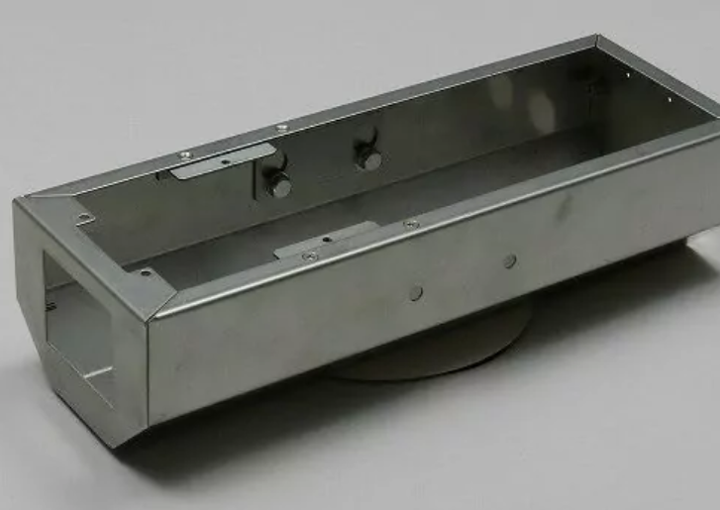
A stainless steel sheet metal parts manufacturer needs the exposure defined
The word stainless does not establish unlimited resistance to every environment. Describe where the component will operate, what may contact it and how it will be cleaned. These details allow the material discussion to address the actual equipment requirement instead of using a grade name as a substitute for understanding the service conditions.
304 is an identified option, not an anonymous standard stainless
If the equipment specification selects 304, keep that designation visible through quotation and order. It is one of the sheet options JY Pretech publishes. Its suitability should still follow the actual application, appearance and manufacturing requirements, rather than an assumption that every general-purpose industrial enclosure has the same exposure.
For an indoor equipment panel, the buyer can explain its location, likely contamination and cleaning practice. That is more useful than simply describing the panel as industrial. The actual grade decision should reflect those conditions and any product requirement established by the equipment owner, with substitutions reviewed before manufacture.
316L should be assessed against the relevant corrosion conditions
316L is another listed sheet option and belongs to the molybdenum-containing austenitic stainless family. Outokumpu’s 316-family information provides general material background. It does not establish a universal service guarantee for a JY Pretech component, whose environment, surface and fabrication details still matter.
An exposed enclosure near a more demanding environment should arrive for review with the relevant conditions identified. Avoid turning the presence of 316L in the material list into a promise that the completed housing is suitable for every chloride exposure, chemical contact or cleaning regime. Those are application decisions requiring appropriate evidence.
Custom stainless sheet parts need grade and surface recorded separately
A photograph can show a panel’s appearance without proving its alloy. A material designation can identify the intended metal without describing the visible finish. Treat those as separate parts of the accepted component definition, so the receiving team can evaluate the evidence for each requirement rather than rely on one to establish the other.
A brushed face should specify the intended visible region
JY Pretech’s sheet finish information includes brushing with a #180 reference. For a visible stainless panel, identify which faces need the agreed appearance and how the direction should relate to the installed component. A short finish label may be insufficient when several panels meet on the same equipment front.
A distributor supplying replacement front panels should consider how the new item will sit beside retained components. A finish accepted on an isolated sample may look different when its direction or visible region is misunderstood. Use the installed orientation and an agreed appearance reference where needed, without assuming that a grit reference alone guarantees an exact visual match.
A bead-blasted surface is a different appearance decision
Bead blasting is also discussed within the sheet finish options. It should be selected for the component’s actual appearance and functional requirements, rather than treated as a synonym for brushing. Confirm the proposed result for the chosen stainless part and identify the regions where a different surface requirement applies.
If a mounting contact or opening needs a particular completed condition, separate it from the cosmetic face. This allows a practical review of the component without turning every visible preference into a dimensional requirement or assuming a dimensional check can establish the approved appearance.
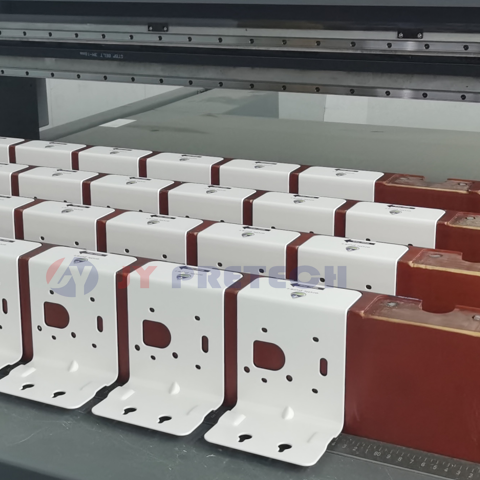
Plan stainless bends and openings around the completed housing
JY Pretech’s sheet service describes cutting, punching and V, U or channel bending. Review these operations against the actual material, thickness and formed geometry. A stainless panel with mounting flanges needs a coherent completed definition, not a flat drawing that leaves the installed relationships unexplained.
A connector opening needs its final location and edge requirement
If the panel carries a connector or passes a cable, define the opening’s function and its relationship to mounting references. Identify relevant edge requirements and the accepted finish. The supplier should be able to review the component that enters assembly, rather than infer the intended use from an outline alone.
For an equipment builder installing the same connector into several panel variants, retain a clear definition of the common interface. A change to a nearby flange or appearance zone should not accidentally alter the mating opening. Mark the actual revision and explain which relationship must remain fixed.
Return flanges should be checked in the formed condition
An inward return can affect cover clearance, fastening and access. The formed enclosure guide explores those relationships. For the stainless order, show the relevant geometry together and ask for review of the real component rather than assume a finish or material choice resolves an access conflict.
The cross-bend dimension discussion explains why a local cut feature and its installed position require different attention. Use the accepted final relationships where they matter, without copying another process’s tolerance block or imposing unsupported universal limits on the whole stainless part.
Joined stainless panels need a clear finished-joint expectation
Where the housing requires welding or assembly, identify the joint and the completed item. A buyer should distinguish a structural joining requirement from a separate appearance requirement near the joint. The supplier proposal should explain the included work and final condition rather than leave the word welded to imply every possible cleanup or finishing operation.
A visible welded corner needs an agreed appearance boundary
If a corner is visible on installed equipment, identify the surfaces and visual expectation. Confirm the actual proposed treatment after joining. Do not assume that a brush-finish note automatically describes every weld region or that all joint cleanup, passivation or other specialized work is included in a general fabrication price.
For a concealed internal bracket, the relevant requirement may be different. It still needs the accepted geometry, material and completed joint condition, but it may not need the same visible surface treatment as a front panel. Explain that difference so the quotation addresses the component’s role rather than an undifferentiated finish demand.
Corrosion-sensitive joints need more than a grade label
For a component in a demanding environment, identify the relevant joint geometry and exposure as part of the review. Stainless selection does not eliminate the importance of fabrication and surface condition. Where a specialized treatment or evidence is required, name it and confirm its inclusion rather than assume it from the presence of 316L in the order.
Outokumpu’s atmospheric-corrosion guidance explains that environment, design and surface condition affect performance. Use those general considerations to define the actual enclosure requirement. They are not test results for JY Pretech parts and should not replace application-specific approval where it is needed.
Review stainless fabrication evidence against the delivered component
JY Pretech’s project reporting information discusses material and inspection records, while its quality overview describes dimensional resources. Agree what evidence this stainless component needs, including the drawing revision and supplied condition. The useful records should answer the actual acceptance questions for grade, geometry and appearance.
Material identity should remain connected to the supplied panel
If the buyer needs material documentation, define the requirement before order release. A record should be understandable in relation to the delivered item, rather than arrive as an unrelated document for an unidentified material. Confirm the scope of the evidence needed for the project instead of assuming that every document establishes every possible material property.
A mixed order of 304 and 316L components deserves particular identification care because the grades cannot be reliably distinguished by ordinary appearance alone. Keep the component designation and relevant record connected through receiving. The packing and identification agreement should help the buyer avoid a material mix-up among visually similar parts.
Dimensional results should describe the accepted fabricated state
For a joined housing, identify the mounting relationships after the included fabrication operations. For a loose formed panel, state that endpoint. The inspection plan should address the delivered object, with an appropriate method for its actual features. Instrument names alone do not establish that every formed region can be checked in the same way.
JY Pretech’s custom component range includes other metal and molded routes, but their acceptance requirements should remain distinct. A printed stainless body’s evidence is not interchangeable with that for a cut and bent panel simply because both are described as stainless metal parts.
Check whether the stainless geometry still belongs to sheet fabrication
A material designation should not decide the manufacturing route by itself. A broad panel with formed flanges presents a different construction from a compact body with integrated internal geometry. JY Pretech also describes metal printing and precision finishing, allowing a related route discussion when the component’s actual form warrants it.
A folded stainless panel should retain its defined joint construction
For an enclosure built from flat regions and bends, identify the intended construction and any joined edges. If a proposal changes that construction, review the effect on mounting, appearance and access. A different route should not be accepted solely because it uses a familiar stainless designation; it still needs to deliver the approved component function.
A buyer replacing one panel in an existing housing should be especially clear about retained interfaces. The replacement may need to match surrounding flanges and visible surfaces without changing the rest of the equipment. That requirement can make the accepted sheet construction important even where another route could produce a superficially similar shape.
A printed 316L component has a different material and finishing history
316L appears in JY Pretech’s additive material discussion as well as its sheet service. The shared designation does not make a printed body and a wrought sheet component interchangeable in every property or acceptance requirement. Identify the actual route, supplied condition and evidence if the design is being transferred from one to the other.
A compact integrated metal feature may justify a printing review, while a straightforward cover panel may not gain a practical benefit. Compare the actual geometry and completed interfaces. The buyer should not move a simple stainless panel to another route merely to follow a process trend, or keep a difficult integrated body in sheet construction without examining the resulting joints.
For the visible enclosure in this discussion, keep the grade, construction and appearance decisions connected. If the accepted item remains a formed sheet panel, its quotation and inspection should describe that item. Any alternative should identify exactly what changes and which requirements still need the equipment owner’s approval.
Keep the accepted stainless surface intact until installation
Agree protection for the actual exposed faces, edges and mounting flanges. Finished panels can require separation to avoid contact damage, while formed features may need support against unintended deformation. Select the method for the supplied geometry and finish; do not assume one universal protective film or packing system is appropriate for every stainless component.
The completed order should identify the exact grade, visible finish, formed relationships and included joint work. If those decisions are clear, the buyer can judge the panel against the equipment’s real needs. Before release, resolve any remaining uncertainty about exposure or appearance while there is still a practical opportunity to change the requirement.