

 Get a Quote
A Small Batch Plastic Parts Manufacturer for Mixed Part Numbers and Revisions
One replenishment request contains a clear instrument cover, a soft-grip component and fittings for two equipment versions. The total quantity is small, but the manufacturing requirements are different. A small batch plastic parts manufacturer should be able to review each item as an identifiable custom component while helping the buyer coordinate the interfaces, finishing and receiving information across the order.
JY Pretech manufactures made-to-drawing plastic components through tooling and molding routes described in our capability overview. Our portfolio includes clear components, overmolded handheld parts, two-shot housings and PPSU fittings. For a distributor or equipment service organization, start with the actual part numbers, revisions, materials and quantities. This is a custom manufacturing discussion; the examples do not represent a promise of interchangeable shelf stock.
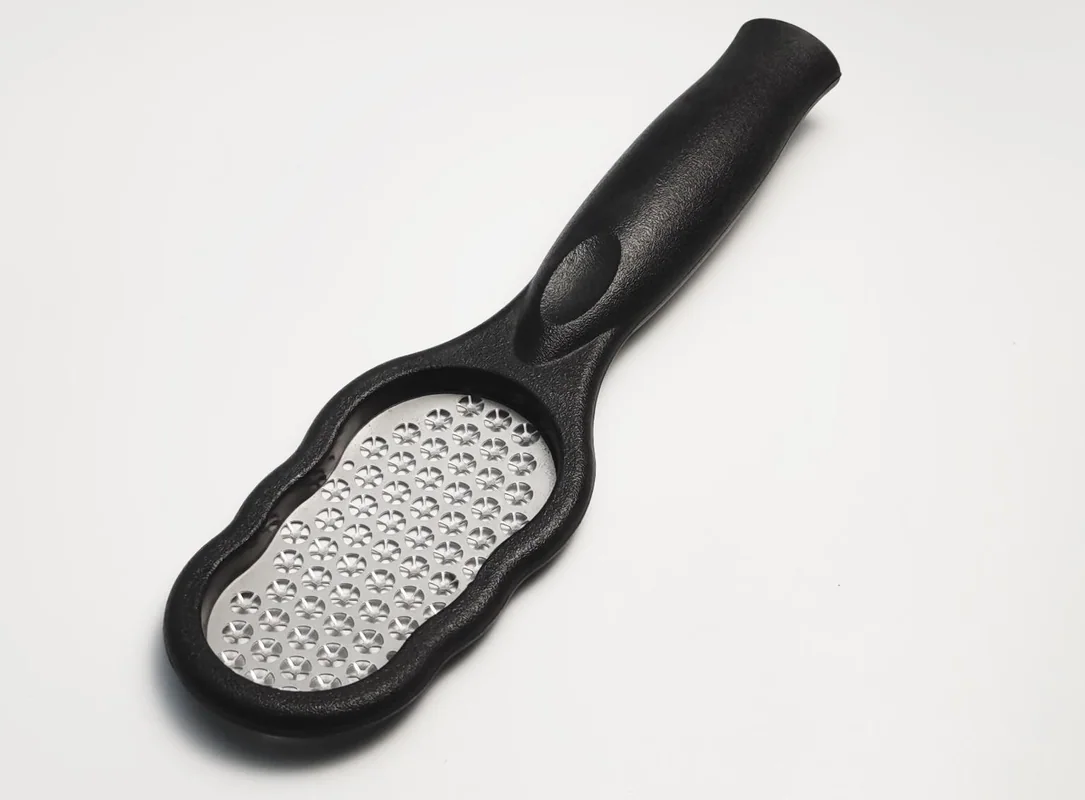
A small batch plastic parts manufacturer needs a separate definition for each item
A combined order can be convenient, but its total quantity should not replace the individual component definitions. Identify the current drawing and material for each line. If two parts look similar but serve different equipment versions, explain the difference. The manufacturing team should be able to distinguish them without relying on a buyer’s memory of the last shipment.
Similar fittings can have different mating requirements
JY Pretech’s PPSU fitting examples illustrate a family of technical molded shapes. For a distributor ordering custom fittings, identify the specific connection geometry and intended material for each component. A photograph can help recognition, but it does not establish the dimensions that control fit with the customer’s equipment.
If an equipment version changes its mating interface, retain that change under an identifiable revision. Do not assume that every fitting in the range should be updated together. The useful manufacturing brief explains which items remain unchanged and which require review. This helps keep a small order from creating an unintended substitution across several supported products.
Clear covers need a visible-region reference as well as a part number
A clear cover can be dimensionally acceptable while its viewing region fails the intended appearance requirement. Mark the important region and agree the reference used to judge it. If a printed border or marking is part of the supplied component, identify that operation and its revision too. The accepted object should match what the receiving assembly team expects to install.
Our molding finish article provides context for discussing visible surfaces. For a mixed small order, keep that appearance requirement attached to the relevant cover. It should not become an unexplained general instruction applied equally to hidden fittings, flexible grips and other components with different functions.
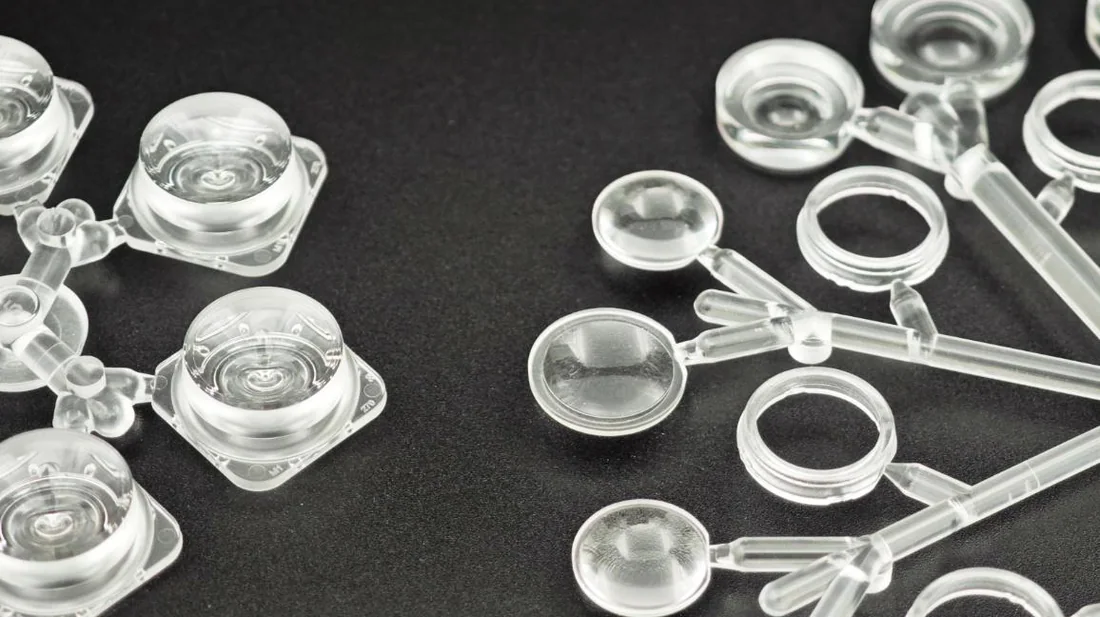
Custom small batch molding should follow the component’s construction
A single-material cover, an insert-molded part and an overmolded grip can need different tools and operating sequences. JY Pretech’s manufacturing range provides several routes, but the order should identify the configuration being purchased. An outside shape is not a complete description of the material interface or the operations needed to produce it.
An overmolded handheld part needs both material stages defined
For a soft-grip component, identify the rigid substrate, the softer region and the supplied stage. A bare substrate used for mechanical evaluation is a different order item from the completed overmolded part. If the distributor’s customer expects the final grip, make that condition explicit in the quantity and acceptance record.
JY Pretech’s portfolio includes an overmolded handheld example. Its value for a new project is showing the type of manufacturing route available to review. The exact materials, retention arrangement and application requirements still need to be established for the customer’s geometry. Similar appearance alone does not prove an equivalent bond or service performance.
Two-shot housings should not be confused with separately supplied pieces
Our two-shot molding service addresses another multimaterial route. If a component is intended to be supplied as a completed two-shot part, identify the approved material combination and finished geometry. A request that names only one material can leave the quotation and receiving requirement describing different objects.
For a distributor maintaining several product versions, a color or material-region change may also require a controlled definition. Keep it separate from an unrelated dimensional revision. A two-shot component can share its general envelope with an earlier item while presenting a different finished appearance or interface requirement.
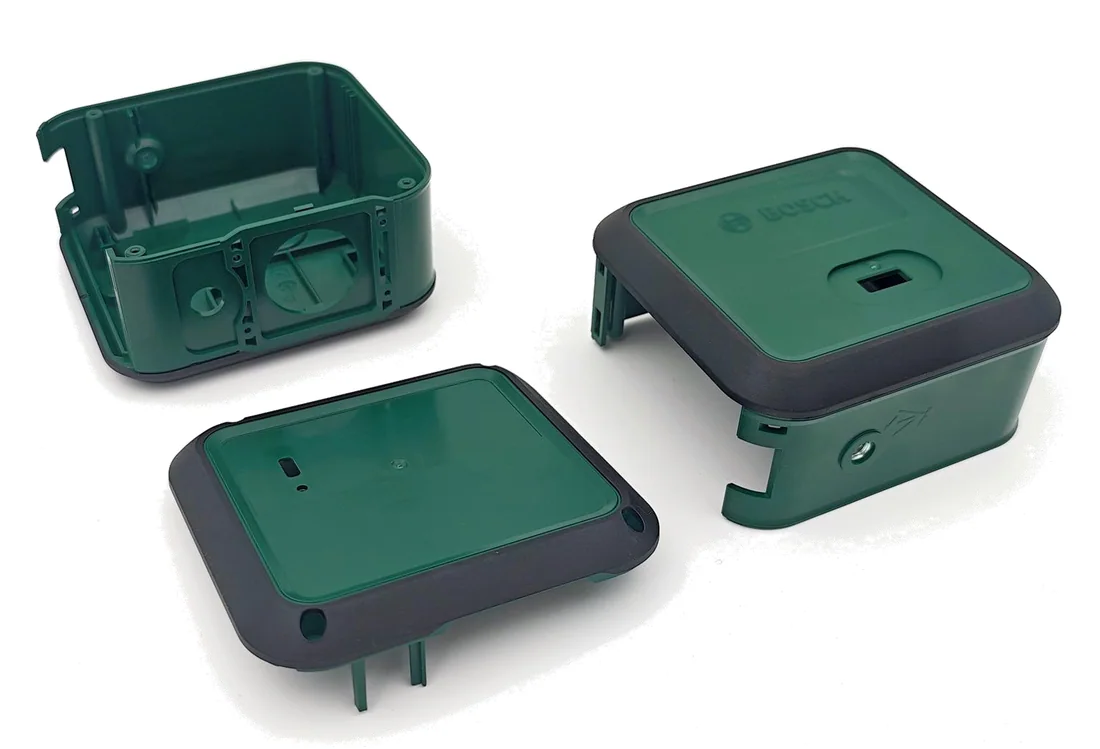
Match the tooling route to each small batch program
JY Pretech’s rapid and prototype tooling can be reviewed for development and bridge programs. Some order lines may use released tooling while others introduce a changed component. Distinguish those situations. A mixed purchase should not cause a new or revised item to bypass the engineering review that it needs.
P20 and aluminum tool options depend on the actual part
The rapid tooling information lists P20, C50 and H13 steels, with 7075 or 6061 aluminum considered for suitable simpler applications. These options provide a construction discussion, not one default tool specification for every small order. Resin, geometry, finish and expected work should influence the route.
For a revised service cover, identify which mounting features remain fixed and which region changes. For an unchanged fitting, identify the existing accepted definition. These are different tasks even when the order quantities happen to be similar. A coherent line-by-line brief allows JY Pretech to review the work each item requires.
Our low-volume repeat-order guide examines the transition after a successful pilot. A distributor’s mixed order adds the need to keep several component histories distinct. The accepted definition for one item should not silently become the instruction for another because they share a customer or a purchase order.
Material descriptions should remain precise across a mixed order
The material range includes conventional engineering plastics and higher-performance options. State the approved designation for each component. A combined phrase such as “engineering plastic parts” may be adequate as a purchasing category, but it does not define the resin to use for a fitting, a transparent cover or a rigid substrate.
PPSU and PC choices should follow the component’s operating conditions
A PPSU fitting and a PC cover can represent different functions and exposure requirements. The supplier needs the approved material and the relevant use conditions, especially if a change is being considered. A distributor should preserve those requirements from the product owner rather than choose a substitute solely because a different resin is familiar.
For a component requiring PEEK, PPSU or PEI, JY Pretech’s high-heat processing capability provides a route for technical review. The order should still distinguish material capability from end-product approval. Application suitability, cleaning exposure or other product-level requirements need the relevant evidence for the component being supplied.
Color and artwork revisions need to stay attached to the correct cover
A mixed order can include similar covers with different printed references or appearance requirements. JY Pretech offers associated decoration and marking operations. Identify the correct artwork, location and finish condition for each item. A change to one equipment label should not be inferred as a change to every cover in the range.
Where a physical or specified color reference is used, connect it to the relevant component and revision. Our tooling information includes Pantone, RAL and customer sample references among the available communication routes. Agree the actual reference for the order rather than relying on how a color appears on a screen.
Receiving information should make mixed custom components easy to distinguish
A distributor needs to connect incoming parts with the customer configuration it supports. Agree identification and separation for closely related items. A correct component that cannot be distinguished from an incompatible revision can still create an assembly problem. Receiving information should therefore follow the part definition, not merely the combined shipment total.
Unchanged item: point to its current accepted drawing, material and finish.
Revised item: identify the change and the approval needed before it joins repeat supply.
Set quantities and individual replacement quantities should be explicit
A complete housing set and an individual replacement cover are different order objects. Specify how many of each component are needed. Where a mold produces related pieces, discuss the demand pattern with the manufacturer. A service organization may need one component more frequently than another, even though the initial equipment build used complete sets.
Do not use a total quantity that leaves the manufacturer to infer the required mix. Identify any engineering samples separately from released parts. If a revised item is supplied for evaluation, its status should remain visible when it reaches a distributor or assembly team that was not involved in the development discussion.
A service replacement must be matched to the equipment version it supports
A distributor can hold a correct new cover for the current equipment and still need a different version for older units. Identify that distinction in the order. The manufacturer needs the actual component definition; the distributor also needs the application record that connects it to the supported equipment. These are related records, but one should not be used to guess the other.
For example, a connector opening may move between two instrument versions while the outside cover shape remains similar. If both versions remain in service, preserve both approved definitions rather than treating the later drawing as an automatic replacement for all demand. JY Pretech can review the custom manufacturing requirements when the requested versions and quantities are identifiable.
| Component change | Manufacturing record | Distributor decision |
|---|---|---|
| Connector opening moves | New geometry revision and relevant interface checks | Which equipment version receives the changed cover |
| Artwork changes | Controlled marking file and finished-position reference | Whether old and new markings must remain separate |
| Material is revised | Approved designation and required reevaluation | Whether the revised item is accepted for existing applications |
The distributor should obtain the product owner’s decision where interchangeability is uncertain. A molding supplier can review manufacturability and the defined component scope, but it should not be expected to infer compatibility with undocumented equipment versions. Keeping that boundary clear makes a mixed custom order more useful and prevents a general request for “the latest version” from erasing an ongoing replacement requirement.
Clear faces, thin latches and soft grips need different protection
Agree the handling arrangement around the actual parts. A visible clear face should not be treated like an unexposed technical fitting; a slender latch or softer grip can introduce another protection concern. These are component-specific decisions to confirm for the shipment, rather than assumptions that follow automatically from a small batch quantity.
For decorated covers, consider the supplied finished surface when agreeing protection and separation. For mixed revisions, identification can matter as much as physical separation. The receiving team should be able to connect each delivered item with the correct drawing and intended use without opening a new engineering investigation.
Inspect fittings, covers and grips against their own acceptance requirements
JY Pretech’s measurement and inspection approach can be reviewed around the relevant features. A fitting interface, a cover mounting pattern and a printed reference need different acceptance evidence. Specify the checks that matter for each item rather than request one undefined quality standard for the entire mixed shipment.
For general design background, the Protolabs molding toolkit explains why geometry and manufacturing requirements should be considered together. Apply that principle separately to the components in the order. Another manufacturer’s guidance does not establish JY Pretech’s tolerances or replace the agreed drawing and sample references.
The distributor’s next replenishment request should make its complexity readable: each part number, the accepted revision, the material, the completed condition and the required quantity. Give JY Pretech that itemized definition with the relevant assembly context. A coordinated small batch order becomes useful when the components remain distinct enough to manufacture, inspect and deliver correctly.