

 Get a Quote
What a Compression Molded Parts Supplier Should Deliver Beyond the Molded Shape
One proposal covers a molding removed from the tool. Another covers a trimmed component ready for the customer’s assembly review. Both may be described as “compression molded parts,” yet the receiving team will face different work. A compression molded parts supplier should define the actual delivery object before the buyer compares price, timing or approval obligations.
JY Pretech offers compression molding for custom components, including silicone and rubber routes within its wider manufacturing portfolio. The published process describes charge preparation, forming between mold halves and finishing such as flash removal. Start with the condition required by the next operation. Our capability overview provides context for coordinating related parts and operations without assuming that every service is automatically included.
| Object being purchased | Receiving work to clarify | Approval object |
|---|---|---|
| An initial molded sample | Any remaining trim, treatment or application evaluation | The specific development question it represents |
| A finished custom component | Agreed incoming inspection and assembly | Material, geometry and completed supplied condition |
| Tooling plus parts | Tool ownership, records and any later transfer | The mold scope as well as the component scope |
A compression molded parts supplier should define the finished boundary
The useful manufacturing requirement is the component that the buyer expects to receive. Identify its material, geometry, working surfaces and completed edge condition. A process name describes how the shape is formed; it does not settle the amount of subsequent work included or the way the part will be judged.
Trimmed sealing edges and clearance edges can need different treatment
For a rubber pad under an equipment cover, a local edge may lie near the sealing land. Another edge may sit in a hidden clearance. Mark those regions on the drawing. A single note requiring an unspecified good finish can leave the supplier and assembly team interpreting different requirements.
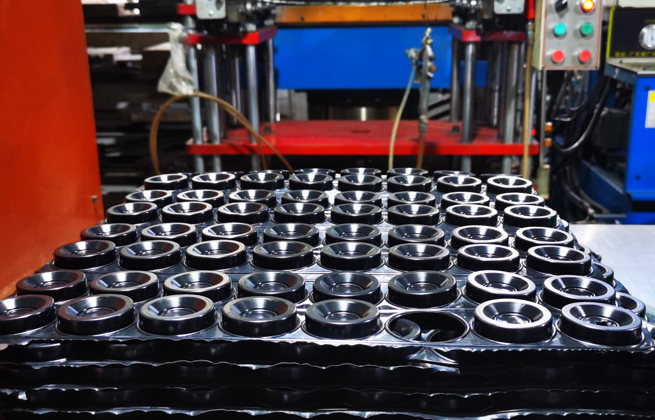
JY Pretech’s compression information describes excess material and manual trimming where required. Agree the acceptable finished boundary for the actual part. Do not assume that a photographed molding establishes a universal flash limit, trimming method or surface requirement for every silicone and rubber component.
A formed profile needs its attachment regions included in acceptance
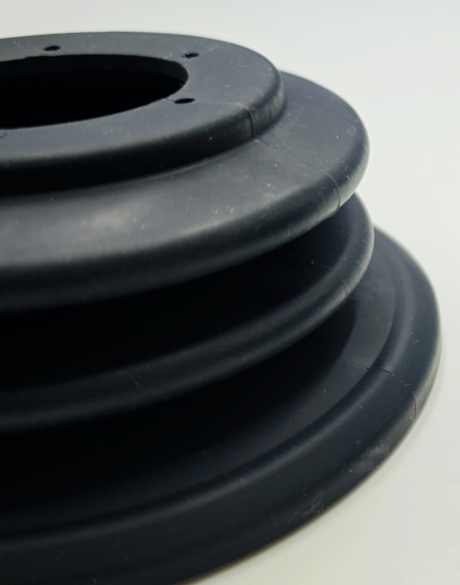
The portfolio includes bellows-type profiles with formed sections and attachment features. For a new protective component, identify which edges locate or retain it and which regions move. The acceptance scope should preserve those functions after any trimming, rather than inspect only the broad outside envelope.
A purchaser may need a sample installed on the intended mating hardware. Define that evaluation separately from the supplier’s component checks. An acceptable loose part and an acceptable installed assembly are related decisions, but they require different information and may have different owners.
Compression molded component supply includes a material and process basis
State the nominated compound and the requirements relevant to its use. If selection remains open, provide the exposure and performance questions that need review. JY Pretech can discuss a project-specific manufacturing route; an unspecified flexible material should not become an assumed substitute simply because it can fill a similar mold.
Prepared charge, pressure and curing should support the agreed part
The compression route uses a material charge placed between mold halves and formed under pressure. Heat and curing depend on the material system. The supplier’s process proposal should be connected to the accepted component, while the buyer should avoid prescribing a generic recipe without a relevant technical basis.
WACKER’s silicone processing guidance explains the relationship between material systems, processing and secondary finishing. This is useful industry background when silicone is involved. Its grades and processing conditions are producer information, rather than default settings or approved compounds for a JY Pretech order.
Post-curing or cleaning should be included only where specified
If the material or application calls for additional work, identify the required operation and supplied condition. Do not assume a bare molding includes a particular treatment, cleanliness level or customer-specific preparation. The quotation should state what JY Pretech supplies and what remains with the receiving organization.
For a component entering a sensitive assembly process, the buyer should define its actual incoming requirements. A general reference to silicone or rubber does not establish a cleanroom environment, sterile delivery or regulatory approval. Required evidence should be tied to the specific product and agreed responsibility.
Make component and tooling responsibilities visible in the purchase scope
A buyer may purchase parts from an existing accepted tool, commission new tooling or expect a tool to be delivered elsewhere later. Those arrangements create different obligations. Identify which applies before comparing proposals. A component unit price does not answer every question about the physical tool and its future use.
A custom mold order needs its own defined delivery object
JY Pretech’s tooling and mold component service supplies broader construction context. For a compression project, agree the actual tool scope and the geometry it is intended to produce. If tooling itself will be delivered, define the receiving arrangement and records rather than assume they are covered by a parts order.
If the buyer expects future changes to a pad or attachment flange, identify them as development uncertainty. Discuss what the initial construction is intended to support. A prototype arrangement can be useful for a defined task without being an unlimited platform for every later revision or production quantity.
Model and drawing revisions should identify the current component
Our project handoff process emphasizes coherent files and requirements. A solid model communicates shape, while a dimensioned drawing identifies the relevant interfaces and acceptance notes. Keep them at the same released revision, especially when a flexible profile has been revised after an installation trial.
For replacement work, separate the approved target from a worn sample. Our rubber replacement guide examines that distinction. A supplier should know whether the order restores an accepted geometry or introduces a deliberate change; those should not be concealed within the same informal part description.
Separate an engineering sample from a finished-component release
A sample can answer a limited question and still be useful. The difficulty arises when that limited approval is interpreted as acceptance of every later operation. Identify the material, revision, trim condition and intended evaluation represented by the sample. Keep any remaining requirement visible before production is released.
Fit sample: identifies the geometry and installation question being evaluated.
Finished supply approval: includes the accepted material and completed operations required for delivery.
A silicone pad approved for closure may still need a final edge review
Suppose an equipment developer accepts the way a trial pad fits inside a cover recess. If the supplied production condition later includes a different edge treatment, identify whether another review is needed. The first trial establishes the condition it actually represents, not an untested combination of geometry and subsequent work.
Keep retained samples and records connected to the correct version. A photograph without an identifiable material and revision can become an ambiguous reference for a repeat order. The receiving team should be able to distinguish the accepted component from a development sample that still carries an open limitation.
Protective profiles should be evaluated in their required movement
For a bellows-type component, installation fit may be only the first evaluation. The buyer should define the relevant movement and clearance conditions for the application. The supplier’s dimensional checks and the customer’s operational evaluation can then be understood as separate evidence rather than interchangeable approvals.
The Trelleborg compression molding explanation describes a general sequence from prepared material through curing and finishing. It helps frame the process discussion, while the particular component’s acceptance and delivery requirements remain part of the JY Pretech agreement.
Inspect the completed flexible part in an agreed condition
A flexible component can change shape when supported, compressed or pulled onto a fixture. State the checking condition for dimensions that depend on handling. The report should describe an interpretable measurement rather than a number detached from how the part was held. This matters for openings, thin lips and broad pads.
Relaxed geometry and installed geometry should not be mixed in one result
If a free-state drawing controls the supplied part, agree a suitable way to assess it. If the acceptance concerns a defined installed constraint, identify that arrangement instead. A component forced to fit a fixture can appear acceptable while answering a different question from the one on the drawing.
JY Pretech’s quality review information provides a route for discussing project records and checks. The method should suit the component. Equipment used for a rigid tool insert does not automatically establish a meaningful result for a soft profile, so agree the relevant evidence before the order depends on it.
Material records should be requested for a defined purpose
If the buyer needs material identification, a certificate of conformity or particular project records, state that requirement in the order. A broad request for all quality documents can leave both the scope and the expected evidence unclear. Identify which information the receiving process needs and how it connects to the supplied component.
These records should not be expanded into unsupported product approvals. A material document can support material identity within its scope; it does not by itself approve the customer’s complete equipment. Keep manufacturing evidence and end-product acceptance connected without treating them as the same decision.
The order quantity should refer to accepted finished components
If the buyer needs a specific number of assembly-ready pads, describe the quantity in that supplied condition. A count of initial moldings can represent a different scope if trimming or another agreed operation remains outside the order. Clarify the unit being purchased before the schedule and receiving plan are built around it.
For a multi-part flexible assembly, distinguish individual pieces from complete sets. A protective profile supplied with a separate companion item should be identified by the actual items included. The manufacturer should not need to infer the required mix from a total quantity, and the receiving team should not discover an omitted item after the assembly line expects complete sets.
Changes to the supplied condition can also affect what constitutes an accepted sample. If the project moves from bare moldings to trimmed finished parts, review the reference used for release. Keep the quantity, approval object and delivery description aligned. This makes a quotation comparison concrete without inventing a general yield, inspection rate or production capacity for the supplier.
Delivery should preserve the part’s accepted shape and identity
A flat gasket, thin lip and formed protective profile can require different handling arrangements. Agree support and separation for the actual geometry and final condition. A part that was acceptable at inspection should remain identifiable and suitable for the next operation after transport. The packing method needs to follow the object being supplied.
A mixed shipment should distinguish compounds, revisions and sample status
Similar flexible parts can be difficult to identify by appearance. Connect the delivered components with the accepted part number and material basis. Separate development samples from released items where both exist. If several equipment versions remain supported, make the intended component definitions distinguishable to the receiving team.
For a recurring program, retain the accepted definition for the next order. JY Pretech’s custom manufacturing model, described in its company profile, allows the actual scope to be reviewed around the project. Confirm quantity, operations, records and timing for the component rather than infer one universal supply arrangement.
Where another silicone route is being compared, review our LSR capability as a separate complete proposal. Material, tooling, finishing and acceptance can differ. A useful comparison places both offers at the same required delivery stage instead of comparing a bare molding with a completed component.
Write the purchase line so the receiving team can recognize the object it authorizes: the current component, approved material, completed trim and any agreed treatment or records. That definition lets JY Pretech review the full compression-molded supply task. The shape leaving the mold then becomes one controlled stage on the way to the part the assembly actually needs.