

 Get a Quote
When a Metal Additive Manufacturing Supplier Should Recommend Another Route
A flat protective panel, an accessible solid housing and an integrated body with difficult internal geometry do not ask the same manufacturing question. A metal additive manufacturing supplier should explain where printing adds useful capability and where another route deserves review. For an industrial buyer, the strongest proposal preserves the component’s function through a practical complete process.
JY Pretech offers metal printing with post-machining, CNC work within its manufacturing portfolio, and custom sheet metal fabrication. This range gives a buyer real alternatives to discuss. Begin with the functional envelope, material, critical interfaces and quantity, then compare the completed component rather than select a process from its name.

A metal additive manufacturing supplier should identify the geometry that earns printing
Additive manufacture can be worth reviewing when the function requires complex integrated geometry. It does not remove the need to consider supports, powder removal, finishing and inspection. If the same function can be provided by a simpler accessible construction, include that option in the comparison before committing to the printed form.
An integrated internal feature needs a defined functional benefit
Consider an equipment body proposed with an internal path and several combined attachment features. Explain why those features belong together and what the internal geometry must do. A visually complex model is not itself a requirement. The useful design question is which function would be difficult or inconvenient to provide through another practical route.
JY Pretech’s SLM service creates metal geometry layer by layer and connects it with post-processing. A proposal should identify how unused powder and temporary supports are removed, and which interfaces require machining. The ability to build the outside shape does not automatically establish the hidden condition or final assembly fit.
Consolidation should be compared with the real assembly
A combined component can change how items are assembled and serviced. Identify the joints removed, access retained and object replaced during maintenance. Our metal component assembly guide develops those questions. The comparison should follow the equipment’s actual configuration needs rather than assume fewer individual pieces always provide the better product.
If one attachment varies across equipment versions while the main body remains common, a separate item may retain useful flexibility. Alternatively, integration may solve an important space or interface issue. Either decision needs an explanation tied to the component, not a universal statement about additive manufacture.
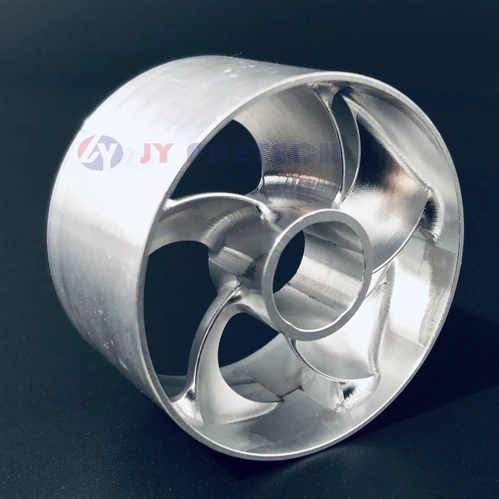
Metal additive manufacturing supply should be compared with accessible CNC geometry
A component with reachable surfaces and straightforward features may be worth reviewing as a machining job. JY Pretech describes CNC work for parts, tooling and mold components, alongside post-machining of printed metal. Provide the final model and dimensioned drawing so the discussion addresses the real access and tolerance requirements.
A solid housing with reachable pockets can present a machining alternative
For a housing whose internal surfaces can be reached by cutting tools, compare the required geometry with a practical machining route. Identify deep regions, internal corners and the surfaces establishing assembly position. The supplier should explain the constraints of the proposed route without assuming every feature in the model is equally easy to manufacture.
Do not import another job shop’s stock list or tolerance range into the order. Confirm the actual material and manufacturing scope with JY Pretech. Its capability description establishes relevant work to review, while the accepted quotation defines the proposed component and delivery condition.
A printed body with machined interfaces is a combined route
Printing and machining need not be treated as exclusive choices. The JY Pretech metal service specifically connects additive geometry with CNC work on precision holes and threads. A complex body may therefore be printed while its final locating features are machined. Identify which portions of the component justify each operation.
For a mounting bore related to a finished face, the final drawing should express that relationship. The intermediate build needs a route to reach it. The buyer can compare the combined proposal with the practical machining alternative once both describe the same accepted interfaces and material condition.
Sheet metal fabrication deserves review for panels, brackets and enclosures
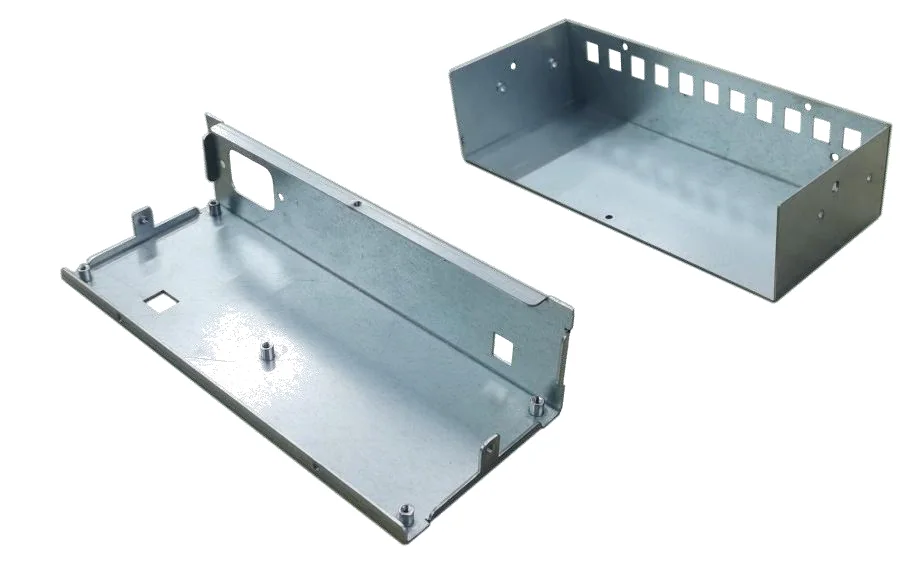
JY Pretech’s sheet metal service covers cutting, bending and punching for prototypes and smaller production programs, with assembly and welding discussed where relevant. A component whose function is served by formed sheet may not need a complex printed solid. Provide the installed geometry and interfaces so the fabrication discussion protects the actual function.
A formed cover can follow the installed envelope through bends
Imagine a protective cover with accessible openings and mounting flanges. Its material thickness, bend geometry and assembled clearances may be the important requirements. A sheet metal route can be reviewed around those features. The comparison should include the finished component, including any treatment and the dimensional relationships across the bends.
The sheet metal information lists aluminum 5052 and 5754, stainless steel 304 and 316L, mild steel 1018 and copper C110. These are distinct routes within the portfolio. Their presence does not make them interchangeable with an additive alloy or establish suitability for every part that shares a general metal family.
Welded or assembled features should be included in the comparison
A fabricated alternative can require joining or assembly. Identify those operations and their effect on the final requirement. A quotation for cut blanks is not the same delivery object as a completed enclosure. Compare both alternatives at the stage the next operation actually needs to receive.
For general background, Protolabs’ sheet metal design toolkit explains the relationship between forming geometry and manufacturing constraints. Its numerical rules belong to that producer’s process. The actual JY Pretech proposal should identify suitable construction and acceptance for this order.
A formed bracket and a printed body can remain separate by design
A buyer may find that the useful answer combines routes instead of assigning the whole assembly to one process. A formed support can establish accessible mounting flanges while a separate printed body provides a difficult geometry. Identify the joint between them and compare that arrangement with the proposed integrated component. The service requirement and assembly access may justify retaining the separation.
For that combined proposal, define the mounting pattern and installed references across the two components. A correct individual flange size does not necessarily establish the assembled position of the printed body. The drawing package should communicate the relationship the equipment needs, so fabrication and post-machining can be reviewed against a common interface.
JY Pretech’s range makes this a relevant discussion, but the scope should identify the actual supplied items. Do not assume that two available processes automatically include a completed assembly or an application test. The quotation should say whether the components are supplied separately, whether any assembly work is included and which party approves the installed relationship.
Material designations can change when the manufacturing route changes
JY Pretech’s metal printing material information includes 316L, 17-4PH, S136, ASSAB Corrax, Ti6Al4V and AlSi10Mg. The sheet range contains different designations. A route comparison should therefore state the actual material and final condition under each proposal, rather than reduce the decision to aluminum versus steel.
AlSi10Mg printing and 5052 sheet describe different component bases
An aluminum family name does not establish identical properties, forming behavior or surface requirements. If a developer changes a lightweight cover from formed sheet to printing, review both the geometry and material basis. Preserve the required application function without pretending that an unchanged outside envelope proves equivalence.
The reverse change deserves the same attention. A printed integrated body may not translate into a single bent sheet. A practical fabricated alternative can involve several pieces or another arrangement. Compare that real proposal rather than an imaginary process switch that leaves every feature and property unchanged.
A prototype made by another route should have a limited approval purpose
A development team may use a convenient early process to evaluate an envelope or mounting arrangement. That can be useful if the trial’s purpose is clear. It should not be treated as evidence that the later printed, machined or fabricated material condition has already been accepted. Identify which observations concern geometry and which still require evaluation in the intended production configuration.
For example, an early cover can establish access around equipment while the final route and material remain open. A later component may need different joining, finishing or dimensional checks. Retain the accepted envelope information, but review the manufacturing-specific requirements as the proposal develops. The project should not lose useful early evidence, nor should it extend that evidence beyond what the sample actually demonstrated.
This staged approach is particularly relevant to JY Pretech’s prototype and smaller-batch work. The buyer can explain the next decision it needs to make, and the supplier can review a suitable component route for that task. The final release should still identify the production material, completed operations and accepted interfaces, rather than inherit an undefined approval from an earlier development shape.
Stainless steel should retain its grade and supplied-condition requirements
A component specified as 316L in one route still needs an appropriate material and acceptance definition in another. The process and final condition can matter alongside the designation. Any equivalence or substitution should be reviewed against the application rather than inferred from the shared word stainless.
For background on the additive side, Protolabs Network’s metal printing guide discusses why geometry should be designed for the process. Use that principle to frame the comparison. Do not transfer its material data or production limits into a JY Pretech order.
Place the alternatives beside the component’s acceptance requirements
The buyer’s drawing should identify the geometry, material and finished interfaces needed by the product. Each proposal should explain how it reaches those requirements and what evidence accompanies delivery. This makes the decision more useful than a general list of advantages associated with printing, machining or fabrication.
| Component requirement | Additive proposal should explain | Alternative proposal should explain |
|---|---|---|
| Complex integrated region | Build, removal access and verification | A feasible construction preserving its function |
| Critical mating features | Post-machining and final references | How the same accepted interfaces are established |
| Visible exterior | Confirmed post-processing and appearance reference | Finishing after machining or forming |
| Equipment maintenance | The component replaced and access retained | The assembled items and service arrangement |
Inspection evidence should follow the final supplied component
JY Pretech’s quality review information provides a route for agreeing dimensional and project records. Identify the checks relevant to the selected component. A build-stage measurement, an unfinished cut profile and an accepted finished part are different objects and should not be compared as if they represent the same release.
If a hidden passage or another inaccessible region controls function, discuss the verification needed. If the part mainly depends on mounting faces and holes, focus the dimensional plan on those relationships. The inspection scope should make the chosen manufacturing route understandable rather than simply generate more data.
Choose the route that keeps its value through finishing and delivery
Cost and timing should refer to complete proposals. Include the operations required after printing, machining or forming, along with the agreed records and receiving stage. Our finished-deliverable guide explains why an intermediate body should not be compared directly with a completed component.
Protection also follows the final object. Machined locating faces, finished enclosure surfaces and delicate integrated features can need different arrangements. Agree handling and identification for the selected component so the receiving team can connect it to the accepted drawing and use it at the intended next operation.
For the flat panel, accessible housing and complex integrated body, ask JY Pretech to explain the route that preserves each component’s useful function. Keep additive manufacture where its complete logic is strong, and review another process where that proposal is clearer. The decision should remain traceable from the required part to the work actually included in its supply.