

 Get a Quote
Silicone Compression Molding Manufacturer: Start With the Sealing Face
A soft silicone pad can look uncomplicated until its edge crosses the sealing land or its thickness changes the way a cover closes. A silicone compression molding manufacturer needs to understand that installed function before the component is reduced to an outside outline and a hardness request. For an industrial buyer, the first useful inputs are the mating geometry, the intended material and the condition in which the pad must work.
JY Pretech offers compression molding within its custom manufacturing range. The published process includes preparing a material charge, placing it into the mold, forming the part under pressure and removing excess material as required. Our LSR injection molding service provides an alternative route to review when the component and program call for it. Choose between routes around the actual geometry and supplied condition.

A silicone compression molding manufacturer should identify where the component works
A pad used as a spacer, a flexible cover and a gasket can share a similar material appearance while performing different jobs. Tell JY Pretech whether the component cushions, locates, protects or seals. Identify the mating items and the surfaces that carry the function. This helps establish which dimensions, edges and material properties require particular attention.
Silicone pad thickness should relate to the installed gap
Consider an equipment cover closed against a silicone pad. The free-state pad thickness is only one part of the assembly. The installed gap and the way the cover locates also affect how the material is compressed. Provide that context rather than asking the manufacturer to infer the intended compression from an isolated part drawing.
A buyer may need application checks using its actual cover and fasteners. Define that evaluation separately from dimensional acceptance of the molded pad. A component manufacturer can review the defined part, but a thickness result alone does not establish that an undocumented assembly seals under every operating condition.
The sealing land needs a different edge requirement from a clearance region
Compression molding can leave excess material at a mold interface that requires trimming. Mark the regions where an edge condition matters to sealing or assembly. A hidden clearance edge and a working sealing surface should not be left under one vague appearance instruction. The drawing should identify the function that makes a local requirement important.
JY Pretech’s compression process description includes charge preparation and subsequent removal of flash. That is a useful manufacturing basis for discussing the finished boundary. Agree the accepted edge condition for the actual pad or gasket rather than assuming that “trimmed” has one identical meaning for every component.
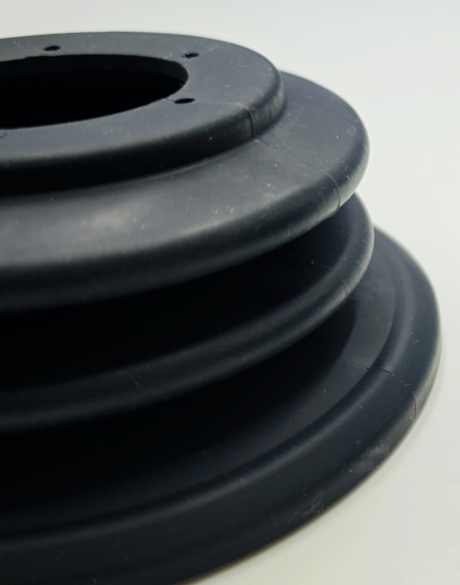
Silicone compression molding and LSR injection molding answer different production questions
JY Pretech offers both service routes. Their suitability should be reviewed against geometry, material, expected quantities and the operations needed after molding. A simple-looking silicone component is not automatically assigned to one process, and a more involved shape should not be accepted solely because its model can be displayed on a screen.
A defined charge and heated mold are part of the compression route
The compression service describes placing a prepared charge between mold halves, applying pressure and allowing the part to form or cure as appropriate to the material. Charge preparation and the mold arrangement influence the manufacturing plan. The buyer should agree the supplied component requirements without prescribing an unsupported universal cure recipe.
WACKER’s silicone processing guide provides primary technical background on solid and liquid silicone materials, processing and secondary finishing. It helps explain why material form and curing requirements matter. Its grades, numerical recipes and product approvals are WACKER information, not default JY Pretech specifications.
An LSR route should be reviewed for the actual flexible component
Our LSR portfolio includes flexible molded shapes and a documented silicone face-mask project. These demonstrate a service family to discuss, not automatic suitability for a new industrial seal. Identify the exact component, its mating interface and the requirements that make an injection route worth reviewing alongside compression molding.
For a thin flexible feature integrated with a more involved component, the route discussion may differ from that for a relatively simple pad. The manufacturer should review the drawing and intended program. The buyer should understand which operations and approval stages are included, rather than compare process names as if they describe identical delivery objects.
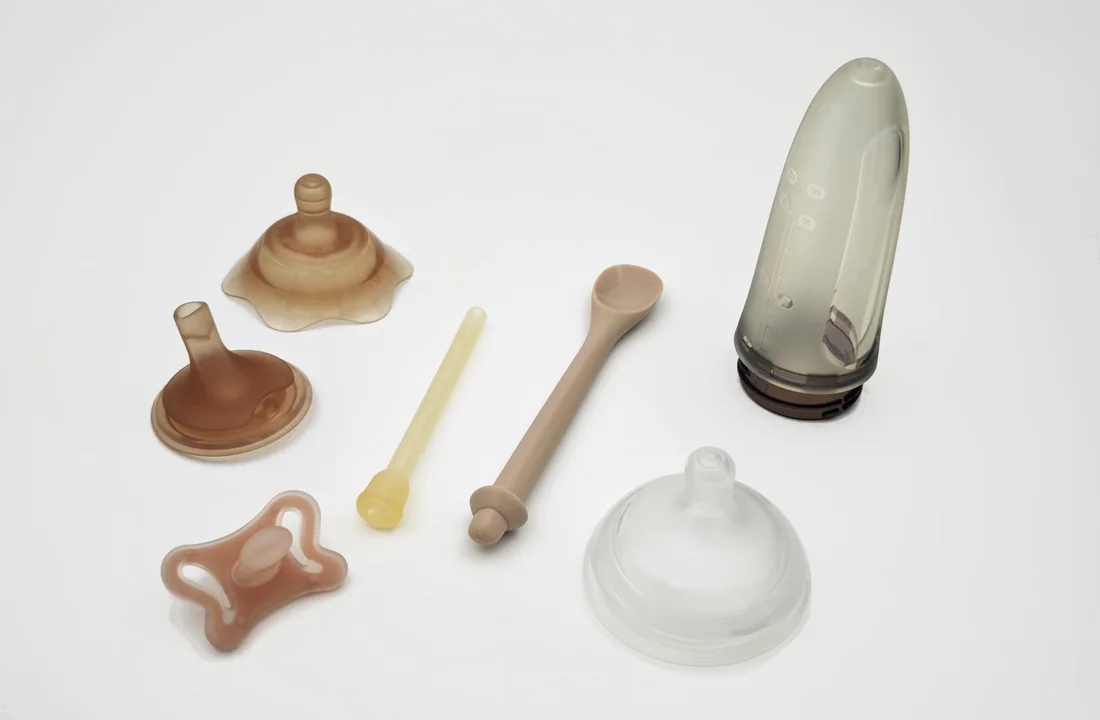
Define the silicone compound through its operating exposure
Bring the material designation if it is already selected. Otherwise, explain the operating exposure and properties that require review. A silicone pad in a static enclosure and a flexible component repeatedly moved during service can present different requirements. The proposal should identify the actual material basis before samples become an acceptance reference.
Hardness alone does not define a silicone sealing component
A hardness requirement can be relevant, but it does not describe the entire application. Temperature exposure, contact media, movement and the installed geometry can matter too. State the conditions the product owner needs to evaluate. Do not treat a matching hardness label as evidence that two compounds will behave identically in an assembled device.
For an industrial enclosure pad, the buyer may need to assess closure behavior and recovery after its intended use. For a flexible protective component, movement and contact with neighboring parts can be more important. These are application-specific questions. The material review should reflect them without claiming that an unspecified silicone grade is universally suitable.
Post-curing and cleaning requirements should be agreed for the selected material
Some silicone component routes involve additional work after molding. Determine what is required for the selected material and application rather than assuming one treatment applies to every order. The agreed scope should identify which operations JY Pretech supplies and which cleaning, testing or product-release activities remain with the buyer.
The Trelleborg compression molding description explains a general sequence involving a prepared preform, pressure, curing and finishing. This is industry process context. It should not be expanded into a claim that JY Pretech holds Trelleborg’s approvals, uses its compounds or follows one identical treatment schedule.
Develop the compression tool around the accepted component boundary
JY Pretech’s broader tooling and mold component capability provides context for custom tool construction. For a silicone compression project, identify the component definition and required forming arrangement in the quotation. A general tooling service description does not replace review of the actual elastomer geometry.
Parting and trimming should preserve the gasket’s working edge
Show the sealing land, mounting holes and clearance regions on the drawing. Discuss where the mold interface and trimming operations may affect them. If a local edge must remain free from a particular defect or projection, define that requirement with an appropriate acceptance reference. An unlimited instruction to remove every visible mark can be difficult to interpret and verify.
For a protective bellows-type geometry, the buyer should explain where the part attaches and how it moves. A feature that seems cosmetic in a photograph may be important to attachment or clearance. The examples on the compression service illustrate why the component’s working shape deserves a more specific review than a general request for a flexible part.
For the sealing-face review: bring the pad drawing and the mating arrangement together. Mark the installed gap, working surface and permitted edge condition so the material, tool and inspection discussions address the same function.
Flexible geometry needs an agreed free-state measurement condition
A soft component can change shape when held or compressed. Define the condition in which thickness, profile and other dimensions are assessed. A measurement taken under an unexplained load may be difficult to compare with a free-state drawing. The inspection method should suit the material and feature, rather than be selected from an equipment name alone.
JY Pretech’s manufacturing overview describes measurement and coordinated component work. For an elastomer order, agree the actual checking scope and any fixtures or application evaluation needed. Do not infer that a measurement method used for a rigid metal component automatically answers every question about a flexible pad.
Mounting holes should be defined in the relaxed silicone part
For a gasket located by holes or pins, identify how its position is assessed before installation. Pulling a flexible component to align it with a fixture can conceal a free-state mismatch. If the part is intentionally designed to be installed under a defined constraint, describe that arrangement and the acceptance method. The drawing and the assembly evaluation should refer to understandable conditions.
A maintenance cover may be opened repeatedly, exposing the silicone component to handling between service visits. Explain whether the pad remains attached, is removed or is replaced. Those actions can influence which features deserve application review, including attachment holes or a thin edge near the opening. The manufacturing brief should capture the intended use without assuming an untested service life.
If the pad must sit inside a recess, supply the mating geometry that establishes its available space. A free-state perimeter dimension does not describe every installed clearance. Review where the component is permitted to move and where it must remain located. This helps the buyer distinguish a geometry issue from a material or assembly-force question during sample evaluation.
For JY Pretech, the useful input is a coherent part and interface definition. For the buyer, the useful output is a sample that can be assessed against that definition. A staged evaluation can first establish fit and then address the relevant operating exposure, provided the record keeps those decisions separate and identifies what remains unapproved.
Approve the silicone component in the condition the next operation receives
Sample approval should identify material, geometry, edge treatment and any agreed secondary work. A bare molded shape and a trimmed, cleaned component are different supplied conditions. If an early sample is used only to assess fit, record that limited purpose. It should not silently approve a later cleanliness or appearance requirement that has not been evaluated.
For an equipment manufacturer, a practical trial may involve assembling the pad with the actual cover and checking the intended closure arrangement. The buyer should define that trial and its acceptance conditions. It is a hypothetical project scenario, not a claim that JY Pretech has already validated the customer’s device or its sealing performance.
Protect sealing faces from deformation and unwanted contact during delivery
Agree packing and handling around the component’s geometry and required condition. A flat sealing face, a thin flexible lip and a bulky protective profile can require different arrangements. Discuss separation and support where needed, especially if the part can be distorted before it reaches assembly. No single packing method should be inferred as the default for every silicone order.
Identification should connect the delivered parts with the approved material and revision. If the program includes several similar pads, the receiving team needs to distinguish them. A correct component supplied under unclear identification can still be installed in the wrong equipment version, so preserve the part definition through the delivery record.
Release the silicone pad against its installed sealing requirement
Our repeat custom-component supply guide discusses retaining the accepted definition between orders. The same principle is relevant here: keep the silicone material, drawing, trimmed condition and application approval identifiable. If the component or mating cover changes, decide what needs to be reviewed again.
For the pad beneath the equipment cover, begin with the working face and installed gap. Give JY Pretech the material requirement, component drawing and the part’s actual role. A useful compression molding proposal connects those facts with charge preparation, tool construction, finishing and acceptance, so the delivered flexible shape has a defined job in the assembly.