

 Get a Quote
Stainless Steel 3D Printed Parts Manufacturer: Grade and Condition Come First
A corrosion-sensitive component and a highly loaded component can both be described as stainless steel, yet they do not necessarily need the same alloy or final condition. A stainless steel 3D printed parts manufacturer should receive the actual material and application requirements before the geometry is treated as released. The word stainless is the beginning of the discussion, rather than a complete specification.
JY Pretech’s metal printing and post-machining service lists 316L and 17-4PH alongside tool steel and other metal routes. For a custom industrial component, begin with the approved designation, required condition, service exposure and critical interfaces. Our material information provides a route for discussing the listed families, while the project agreement establishes the actual supplied component.
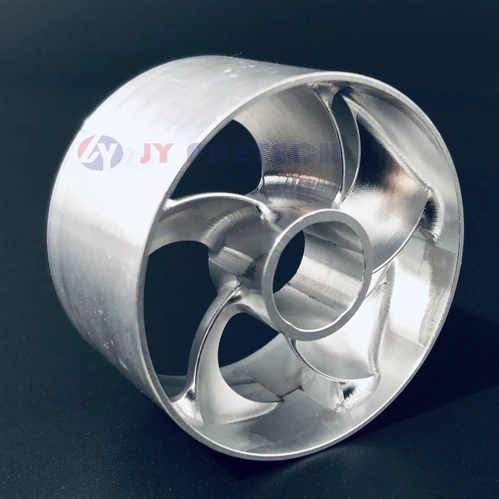
A stainless steel 3D printed parts manufacturer needs the material decision explained
A buyer should identify what drives the choice: exposure, a mechanical requirement, a tooling function or another application need. Give the supplier the relevant conditions and the accepted designation where it is known. A request for the strongest stainless material can conceal conflicting requirements and leave the approval basis unclear.
316L should be specified through the intended exposure and final component
316L belongs to the austenitic stainless steel family and is commonly reviewed where corrosion behavior is an important consideration. Its name does not establish suitability for every chemical or service environment. Identify the contact media, relevant operating conditions and any required product-level evaluation.
Outokumpu’s Supra material information provides producer context for 316L as a molybdenum-alloyed austenitic grade. That general material background should not be expanded into a guaranteed corrosion result for a printed JY Pretech component. Geometry, condition and the application still require their own review.
17-4PH needs an agreed condition as well as the grade name
17-4PH is a precipitation-hardening stainless steel, making its condition particularly relevant to a meaningful specification. Identify the required final state and the evidence needed for the application. Do not infer every mechanical property from a label on a quotation or assume an undefined treatment means the part has been qualified for its intended load.
EOS stainless steel material information distinguishes additive material designations and associated data. It is useful primary background, but its machines, processing conditions and test results belong to EOS. They are not JY Pretech equipment or finished-part performance claims.
| Material route listed by JY Pretech | Question for the component | Requirement to agree |
|---|---|---|
| 316L | Which exposure and surfaces control suitability? | Exact designation, condition and relevant application evidence |
| 17-4PH | Which mechanical requirement drives selection? | Final condition and the evidence establishing acceptance |
| S136 or ASSAB Corrax | Is the component serving a specific tooling role? | Tooling requirement, material condition and finished interfaces |
Stainless metal printing should retain its complete manufacturing route
JY Pretech describes SLM printing together with powder and support removal, treatment discussion, machining and surface work. The material decision belongs within that complete route. A printed shape still needs a defined final condition and a way to establish the features the equipment requires.
A material change can reopen treatment and finishing decisions
If a purchaser proposes another stainless grade, review more than whether the same model can be built. The application basis, treatment requirement and accepted surface condition may need attention. Keep the proposed change visible as an engineering decision rather than treat all stainless designations as commercial substitutes.
For an industrial housing, the buyer may require particular mounting features and an agreed exterior finish. A change in material should remain connected to those final requirements. The accepted proposal should identify how the component reaches its delivery condition rather than leave a receiving team to interpret an unexplained alloy substitution.
A fluid-contact housing and a loaded mount need different material briefs
For a fluid-contact housing, the brief should identify the medium, the regions it reaches and the conditions the product owner needs to evaluate. The discussion can then connect a nominated 316L route with the component’s actual surface and internal-geometry requirements. A polished outside appearance is not enough to define that acceptance.
For a mechanically loaded mount proposed in 17-4PH, identify the load-related requirement and final condition that control the engineering decision. The supplier needs the approved component definition and requested evidence. A material name associated with strength does not replace the product owner’s analysis or establish a particular load rating for an untested geometry.
These are hypothetical buyer situations using the listed material routes, not claims about completed JY Pretech projects. They show why one general stainless specification can be insufficient. The material brief should state the question the alloy is intended to answer, then identify the machining, treatment and checking scope needed for the actual component.
If a purchasing team combines both parts in one order, keep their material and condition records distinct. Similar appearance or a shared supplier does not make them interchangeable. The receiving organization should be able to identify which accepted designation belongs to each component without relying on a general shipment description.
S136 and ASSAB Corrax belong in a specific tooling discussion
These listed materials should not be selected for a general end-use component simply because they appear near stainless options. Explain the actual role of the part. JY Pretech’s tooling and mold component service provides relevant context where the geometry works inside a tool and must satisfy its locating, forming or other requirements.
A printed insert and a fluid-contact housing are different engineering objects. They can need different surface, material and acceptance decisions even if both are metallic and complex. The manufacturing review should follow the actual role rather than reduce the choice to a familiar steel name.

Exposure requirements should identify the surfaces that matter
A component can have external surfaces, recessed regions and internal passages with different contact conditions. Describe where the medium or environment reaches the part. An accessible exterior and a hidden internal region can require different verification or surface discussions. The drawing and application brief should make those differences visible.
A fluid-contact region needs more than an attractive exterior
Consider a custom body with an internal path and a polished outer surface. The exterior appearance does not establish the state of the internal region. Identify powder-removal access, the required internal condition and any application checks that the buyer needs. Do not infer cleanliness or suitability from an outside photograph.
JY Pretech’s printing service describes removal and post-processing operations, but the project should define the actual verification scope. If an inaccessible feature controls acceptance, discuss the evidence needed before manufacture. A dimensional report on external faces should not silently stand in for an internal-condition requirement.
Surface treatments need a material-specific and geometry-specific scope
The service includes discussion of blasting, plating, polishing and machining. Confirm which treatment is appropriate and included for the selected component. A general instruction to improve the stainless surface does not identify which region needs appearance control or which interface must remain dimensionally functional.
If additional surface preparation is required by the application, state it as a requirement for review. Do not assume an unspecified operation is included or that it establishes a universal corrosion guarantee. The supplier’s scope and the product owner’s acceptance conditions should describe the same final component.
Precision interfaces still need post-machining and clear references
JY Pretech identifies CNC work for precision holes and threads within the metal printing route. Mark those features and their reference relationships on the drawing. Selecting a stainless grade does not remove the need to establish mounting fit, thread function or the position of a bore relative to the component’s locating face.
A mounting face and threaded opening should be accepted together
For the custom housing, identify how it locates in the equipment and how the connection feature relates to that position. An accurate thread or bore size alone may not establish the assembled relationship. The proposed machining and measurement should address the functional references that the drawing actually requires.
Our SLM build and surface guide explains why those features should be considered during build preparation. If post-machining is needed, the intermediate geometry and access must support it. The accepted final drawing remains the target for the completed component.
Final-condition inspection should follow the agreed sequence
If the route includes treatment, machining and surface work, identify which result establishes delivery acceptance. An intermediate measurement can be useful without proving the final condition. Keep records connected to the material, revision and stage they describe so the receiving engineer can interpret them correctly.
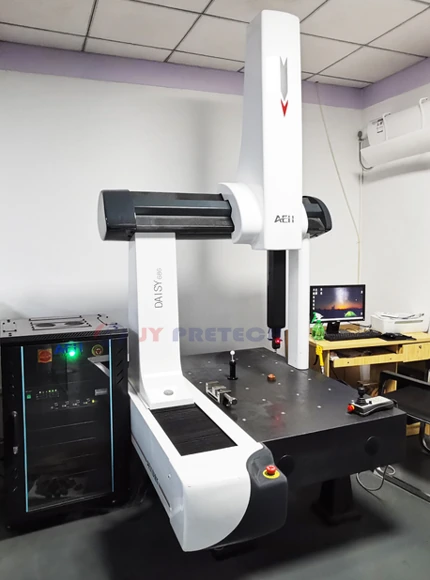
Request stainless material evidence without inventing a qualification
JY Pretech’s quality review information provides a route for agreeing documents and checks. Identify the evidence the order needs, such as defined material information or dimensional records. A general request for certification should be translated into an understandable scope before the quotation is accepted.
A powder document and a finished-component result answer different questions
A document associated with input material does not automatically establish every property of the final component. If the buyer requires a particular finished-part characteristic, define the relevant evidence and acceptance conditions. Keep the material identity and process-dependent requirements connected without treating them as interchangeable records.
Any mechanical-property requirement needs an agreed evidence basis
If the order requires a specific property, identify the method and scope needed to establish it before production is released. A published value from another machine, material system or condition should not become the assumed result for the component. The relevant question is what evidence the buyer needs for this design and how it will be connected to the agreed supply.
A separate specimen and the finished part can answer different questions. The acceptance plan should make any relationship between them understandable rather than imply that one automatically proves every local feature. Additional testing or qualification is a project matter to agree, not a default capability claim introduced merely because the part is stainless.
This gives JY Pretech a clear requirement to review and gives the buyer a defensible boundary for acceptance. Where evidence is outside the agreed manufacturing scope, keep it identified as an additional responsibility. A specific unresolved requirement is more useful than an unsupported declaration that the alloy is suitable for every demanding application.
Likewise, a component intended for a demanding industry is not automatically approved for a regulated end use. The product owner should identify the required qualification and responsibilities. No medical, aerospace or other application approval should be inferred solely from the alloy name or a portfolio photograph.
A trial should identify the actual alloy and condition it represents
A sample can support a defined development decision, but its material and supplied state should be identifiable. If another grade or condition is later proposed, review which observations remain relevant. An accepted fit sample should not silently establish the performance of an untested final material configuration.
Our finished metal supply discussion examines how those approval boundaries connect to the quoted delivery stage. For stainless work, retain the exact material basis alongside the finished interfaces and agreed records.
Keep stainless components identifiable through delivery and repeat orders
Agree handling and packing around the actual surfaces and geometry. A machined mounting region and a visible exterior can have different protection needs. Confirm the method for the order rather than infer a universal stainless packing arrangement or an unverified cleanliness level.
For repeat supply, retain the approved designation, condition, drawing and relevant sample record. Similar-looking metal parts can represent different grades or stages. Identification should allow the receiving team to connect the delivered component with the accepted requirements without attempting to determine material identity from appearance.
JY Pretech’s manufacturing portfolio provides several routes for custom metal work. Select the stainless printing route through a complete specification: what material it uses, which condition is required and how the critical surfaces are completed and accepted. That definition is more useful than an order whose only material instruction is stainless steel.