

 Get a Quote
An Aluminum 3D Printed Parts Supplier Should Explain the AlSi10Mg Route
Moving a lightweight component from bent sheet to an integrated printed form changes more than its outside shape. The alloy, finishing route and assembly interfaces may also change. An aluminum 3D printed parts supplier should explain those differences before the buyer treats the new model as an interchangeable replacement. Start with the function that justifies printing and the requirements that must remain satisfied.
JY Pretech lists AlSi10Mg within its metal printing and post-machining service. It also offers sheet metal fabrication, including aluminum 5052 and 5754. These real routes create a useful comparison for industrial housings, supports and custom components. The selected proposal should identify the actual alloy and final supplied condition rather than rely on a general aluminum description.

An aluminum 3D printed parts supplier needs the reason for changing routes
A developer may want integrated features, a different envelope or a geometry difficult to produce as a simple formed component. Explain which function matters. If the requirement can be served by an accessible fabrication or machining route, include it in the comparison. Printing should be chosen through the component’s useful geometry and complete manufacturing logic.
A printed housing can combine features that a formed cover separates
Consider an equipment housing with several mounting and connection features. A printed proposal may combine elements that previously existed as separate pieces. Identify which relationships become integrated and which interfaces still need to be machined. The change should preserve assembly access, service needs and the accepted installed position.
JY Pretech’s manufacturing portfolio provides the broader route comparison. A combined proposal can be reviewed around the actual part, but the quotation should identify the work included. Several available processes do not automatically mean that a complete assembly or an application evaluation is part of the order.
A weight objective needs a component comparison rather than a borrowed percentage
If reducing mass is an objective, define the practical alternative and the requirements that remain fixed. Compare the actual proposed geometries and material basis. Do not infer a specific saving from an unrelated additive example or assume that a more intricate rendering is automatically the lighter useful component.
For a support, the mounting arrangement and relevant load requirements still need engineering review. Any claimed benefit should be connected to the actual design and evidence. The supplier’s ability to create the form is one part of the decision; acceptance of the completed component remains tied to its function.
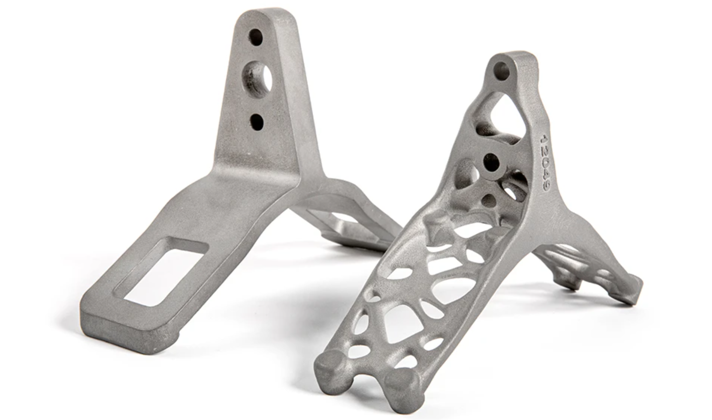
AlSi10Mg and 5052 or 5754 sheet are different material decisions
AlSi10Mg identifies an aluminum-silicon-magnesium alloy route used in metal additive manufacture. The 5052 and 5754 designations in JY Pretech’s sheet service describe different material routes. A shared aluminum family name does not establish identical properties, forming behavior or finishing results.
Retain the exact alloy designation in the printed-part order
JY Pretech’s metal material information provides a starting point for the listed printing options. The order should name the approved material and required condition. If the customer originally specified another alloy, treat a proposed AlSi10Mg route as a technical change requiring review, rather than an automatic substitution.
EOS AlSi10Mg technical information gives primary background for an additive alloy under defined conditions. Its particular machine, parameters and test values are EOS data. They should not be copied into a JY Pretech quotation as finished-part performance.
A formed aluminum alternative should be evaluated as a real construction
A printed housing may not translate into one bent sheet. A practical alternative can require several formed items or another joining arrangement. Compare that actual proposal with the integrated body. The decision should consider the useful function and supplied condition instead of assume the process changes while every other feature stays identical.
The reverse comparison also matters. A simple cover with accessible flanges and openings may not need a printed solid. Provide the installed envelope and interface requirements so JY Pretech can review an appropriate route. The buyer benefits from a clear explanation of why the proposed process suits the component.
The same housing function can require different construction details
Compare the actual design proposals feature by feature. The printed route can integrate geometry, while a formed route establishes its shape through sheet thickness, bends and any joining work. Neither should be evaluated as an unexplained copy of the other. The buyer should retain the functional requirement and allow each proposed construction to explain how it meets it.
| Housing feature | 5052 or 5754 sheet proposal | AlSi10Mg printed proposal | Shared acceptance question |
|---|---|---|---|
| Mounting region | Formed flanges and installed dimensions | Integrated region with any required machining | Does it locate correctly in the equipment? |
| Connection opening | Cut or punched feature relative to bends | Printed region and finished connection geometry | Is the required interface usable and positioned correctly? |
| Visible wall | Sheet surface and selected finish | Build surface and confirmed post-processing | Does the completed appearance meet the reference? |
For JY Pretech, that comparison begins with the model and dimensioned requirements. The supplier can review the manufacturing route while the product owner confirms the functional target. The final proposal should identify the material and construction it actually supplies, rather than imply that a route change preserves every original detail automatically.
Printed aluminum needs a removal and finishing plan
The JY Pretech additive route includes discussion of powder and support removal, treatment and subsequent machining. Define the final object the receiving team needs. An intermediate build awaiting substantial work is not the same purchase as a component supplied with accepted mounting faces and threads.
Internal spaces should remain compatible with powder removal
An integrated body can create enclosed or recessed geometry. Explain its purpose and review how unused powder is removed and the relevant condition verified. A smooth external surface does not establish the state of a hidden region. If that region controls function, identify the acceptance evidence before manufacture.
For an equipment housing, a design change that closes an access region can affect more than the envelope. It may change the removal or verification route. Keep such revisions visible in the model and drawing package so the supplier can review the actual current geometry.
Support contact should be considered beside the final surface requirement
Where temporary structures are used, discuss removal access and any later work needed on affected surfaces. A critical mating region may need a different finishing plan from a general exterior. The build arrangement should be reviewed against those roles, rather than accepted solely because the complete shape appears buildable.
The SLM orientation guide examines that relationship between surfaces and build preparation. For an aluminum order, keep the selected material and condition attached to the same review. A suitable arrangement for one component does not establish a universal route for every geometry.
Machined interfaces should be defined before printing starts
JY Pretech describes CNC finishing for precision holes and threads within the metal printing service. Identify the features that need that work and their relationship to the locating surfaces. The final drawing should establish the accepted geometry; the manufacturing proposal should explain how the intermediate build reaches it.
A mounting face and bolt pattern should share functional references
For the integrated housing, the relevant question may be how the bolt pattern locates relative to the mounting face. An accurate isolated hole size does not establish the whole installed relationship. Provide the references needed for a useful machining and inspection plan.
If a critical region is difficult to reach after consolidation, review that issue while the geometry can still change. A combined form may create advantages elsewhere while complicating one finishing operation. The buyer should understand that tradeoff before treating integration as an unconditional improvement.
An aluminum route change should preserve assembly and service access
A printed housing may combine a mounting boss, cover support or cable guide that previously existed separately. Identify the hardware and technician access required around those regions. A more integrated form should not leave a fastener unreachable or make an ordinary service action depend on removing unrelated equipment. Those access needs belong in the engineering definition used for the comparison.
If the equipment exists in several versions, decide which interface remains common and which changes. The new printed component may need a separate revision rather than become an automatic replacement for every formed housing already in service. Keep the accepted material and geometry linked to the correct equipment configuration so a future purchasing order remains understandable.
A development sample can help examine that installed relationship before the whole release is complete. Record the alloy and condition it represents, the hardware used and the question evaluated. If finishing or geometry changes afterward, identify which observations remain applicable. This preserves useful trial evidence without turning one fit check into approval of every later aluminum configuration.
The finishing supplier needs the final condition, not an unexplained intermediate model
If JY Pretech completes machining, state the final requirements in its scope. If the buyer completes an intermediate item, agree the stock and locating arrangement needed for that later work. Our finished-deliverable guide explains why these are different purchasing objects.
Do not transfer a sheet-aluminum finish to a printed alloy without review
JY Pretech’s sheet service describes options including Type II and Type III anodizing, powder coating and other finishes. Its metal printing information describes machining, blasting, polishing and plating routes. The treatment proposed for a particular printed alloy and geometry should be confirmed, rather than assumed from a finish used on another aluminum component.
A visible aluminum housing needs an agreed appearance reference
Identify the visible regions, treatment and reference used to judge them. A general instruction to match an existing aluminum cover may be insufficient if the route and material change. Review whether an appearance sample is needed and which condition the approval represents.
A dimensional approval and an appearance approval perform different jobs. If a treatment affects a critical interface, include that finished condition in the review. The receiving team should not be asked to interpret an accepted bare part as proof of a later untreated or differently treated version.
Required treatment evidence should remain specific to the component
If the product owner needs a particular surface characteristic or document, identify it in the order. The supplier can review the requested scope, but the presence of a finish name does not establish every corrosion, wear or application requirement. Keep any additional evaluation visible rather than assume an automatic qualification.
For general process background, Protolabs Network’s metal printing guide discusses designing around the additive route. Its broad principle helps frame the decision, while its numerical limits and material properties remain within that producer’s scope.
Release aluminum printing through a complete acceptance definition
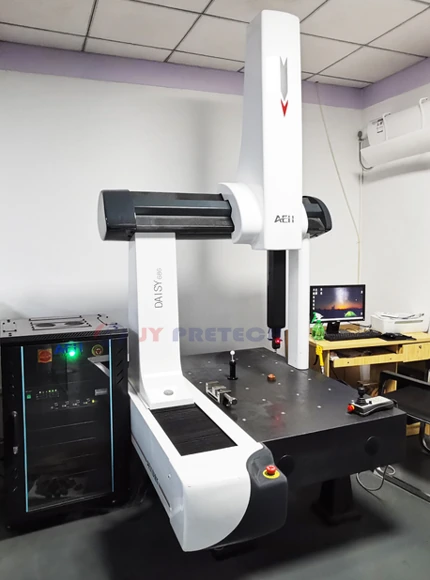
JY Pretech’s project quality information provides a route for agreeing dimensional checks and records. State the selected alloy, final condition, critical features and required evidence. A material document, an intermediate measurement and a completed component result should remain distinguishable.
Agree protection for finished locating faces, exposed threads and any delicate integrated geometry during delivery. Confirm identification for similar versions or trial parts. The accepted material and revision should remain connected to the delivered object even where several aluminum components look alike.
For the housing moving from sheet to printing, retain the installed function as the reference. Compare AlSi10Mg, geometry, finishing and final interfaces together with the actual fabricated alternative. Release the route when those decisions describe one coherent component, so the change in manufacturing produces a defined object the assembly can use.